
Table of Contents
- 1. The Science of Fat Loss After 50: Visceral vs. Subcutaneous Fat
- 2. Why Mountain Climbers Realistically Outperform Gym Machines
- 3. Flawless Execution: How to Perform a Classic Mountain Climber
- 3.1. The Step-by-Step Technique
- 4. Joint-Friendly Modifications for Beginners and Seniors
- 4.1. The Elevated Mountain Climber (Low-Impact)
- 4.2. The Low-Velocity March
- 5. Maximizing Your At-Home Results
- 6. The Bottom Line
- 7. Frequently Asked Questions
Rev Up Your Metabolism: Why Mountain Climbers Are the Ultimate At-Home Belly Fat Burner for Adults Over 50
As the body ages, fitness goals naturally shift. Staying active after the age of 50 is less about chasing aesthetic extremes and far more about preserving mobility, protecting bone density, and maintaining a healthy metabolic rate. Yet, many older adults find themselves hitting a frustrating wall: despite spending hours on gym treadmills or stationary bikes, stubborn midsection fat remains incredibly difficult to shed.
While traditional weight machines have their place in a balanced routine, they are rarely the most efficient way to rev up your fat-burning potential. Emerging insights from top tier fitness professionals suggest that the most powerful weapon against midsection fat isn’t a piece of high-tech gym equipment at all. Instead, it is a single, dynamic bodyweight exercise you can perform right in your living room: the mountain climber.
By understanding the physiological mechanics of this movement, learning how to execute it with flawless form, and discovering how to tailor it to your joints, you can unlock a faster, safer path to structural fitness and fat loss without a gym membership.
Rev Up Your Metabolism Why Mountain Climbers Are the Ultimate At-Home Belly Fat Burner for Adults Over 50

The Science of Fat Loss After 50: Visceral vs. Subcutaneous Fat
To understand why bodyweight compound movements are so effective for mature adults, it helps to look at how our bodies store fat as we age. The body accumulates two distinct types of fat:
Subcutaneous Fat: The soft layer of fat found directly beneath the skin that you can physically pinch.
Visceral Fat: The deeper, dangerous layer of fat that wraps around your internal abdominal organs.

As hormones shift after age 50, both men and women experience a natural drop in metabolic rate and an increased tendency to store visceral fat. This deep abdominal fat is highly metabolically active and has been linked to elevated systemic inflammation, cardiovascular challenges, and insulin resistance.
Traditional, isolated gym exercises—like a seated bicep curl or a leg extension machine—only engage one muscle group at a time. They don’t demand enough total oxygen or energy to create a significant cardiovascular challenge. To burn away stubborn visceral fat, you need to recruit large clusters of muscles simultaneously. This triggers a high metabolic demand, elevates your heart rate, and stimulates the release of fat-burning hormones.
Why Mountain Climbers Realistically Outperform Gym Machines
According to certified personal trainer Jarrod Nobbe, mountain climbers are a powerhouse movement because they act as a bridge between structural strength training and high-intensity cardio.

“Mountain climbers torch the abs and serve as cardio, which helps burn fat over time,” Nobbe explains. “When done with good form, they improve endurance, coordination, and metabolism—but you have to move quickly and with control.”
When you perform a mountain climber, your body is engaged in a complex, multi-joint task. Your shoulders, chest, and arms work statically to hold your upper body weight off the floor. Meanwhile, your lower abs, hip flexors, and quads act dynamically to drive your knees forward. This comprehensive muscle recruitment means your body burns significantly more calories per minute than it would using a standard gym machine.
Furthermore, mountain climbers are entirely functional. They require your core to stabilize your spine against gravity, building the exact type of deep abdominal strength that improves balance, protects the lower back from injury, and supports everyday mobility.
Flawless Execution: How to Perform a Classic Mountain Climber
Because the risk of joint strain increases with age, maintaining proper form is paramount. Speed should never be prioritized at the expense of structural alignment.
   [ Straight Line: Head to Heels ]
   [ Hands Statically Stacked Under Shoulders ]
          │
          ▼
   [ Core Engaged / Hips Locked Down ]
          │
          ▼
   [ Alternate Knees to Chest With Control ]
The Step-by-Step Technique
The Starting Position: Begin on all fours on a comfortable exercise mat. Push up into a high plank position, exactly like the top of a standard push-up. Your hands must be positioned directly underneath your shoulders, not out in front of you.
Establish the Alignment: Create a perfectly straight line from the back of your head, down through your spine, passing your hips, all the way to your heels. Lock your eyes on the floor about six inches in front of your fingers to keep your neck neutral.
The Dynamic Drive: Flex your abdominal muscles tightly. Drive your right knee forward toward your chest in a smooth, controlled motion. Your foot should hover slightly off the ground.
The Controlled Switch: Return your right leg back to the starting plank position while simultaneously driving your left knee forward toward your chest.
The Routine: Nobbe recommends targeting four sets of 20 repetitions per leg. Move at a steady, rhythmic pace that causes your breathing to deepen significantly by the end of the set.
Joint-Friendly Modifications for Beginners and Seniors
If a standard floor plank causes discomfort in your wrists, lower back, or shoulders, you should not force your body through the pain. The beauty of the mountain climber lies in its adaptability. You can easily modify the angle of the exercise to reduce joint pressure while retaining all the cardiovascular and fat-burning benefits.
The Elevated Mountain Climber (Low-Impact)
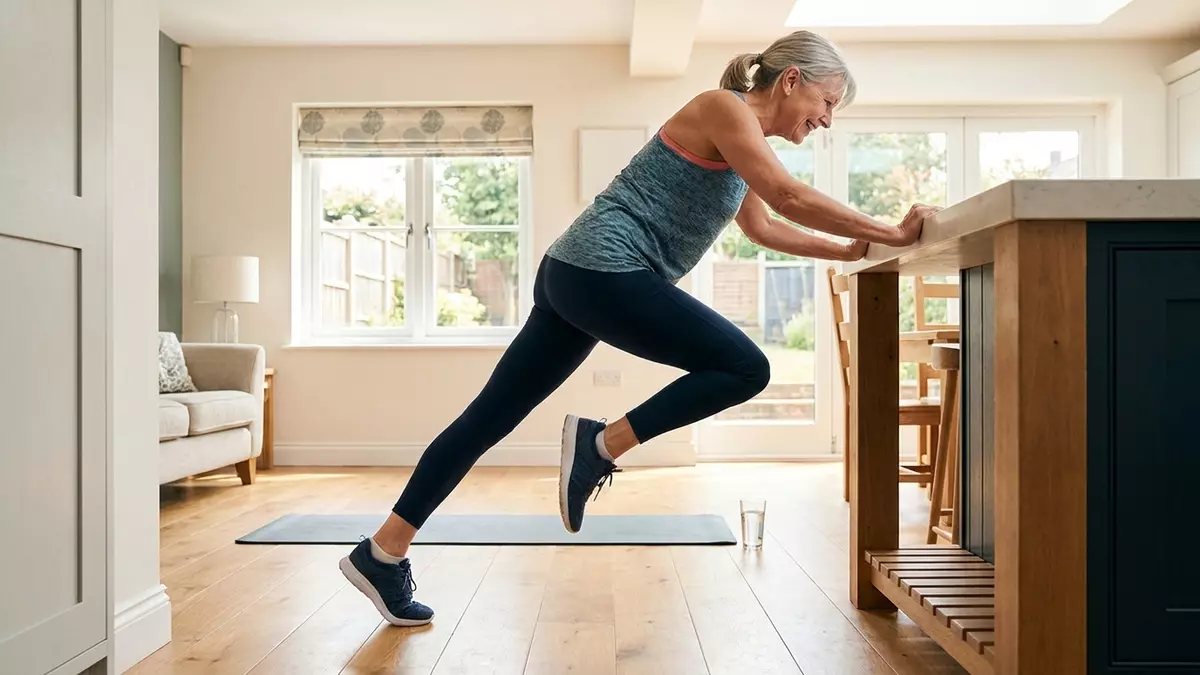
If going down to the floor is too intense, place your hands securely on a sturdy, non-slip elevated surface such as a kitchen counter, the back of a heavy sofa, or a secure workout bench. Step your feet back until your body forms an angled line. From this position, drive your knees up toward the incline. This reduction in gravitational force drastically lowers the weight bearing on your wrists and shoulders, making it a perfect starting point for beginners.
The Low-Velocity March
Instead of running or bouncing your legs quickly, treat the movement as a deliberate, slow-motion march. Hold your knee at your chest for one full second before switching sides. This slow cadence eliminates momentum, forcing your deep core muscles to do 100% of the stabilization work while keeping the physical impact on your toes and ankles at zero.
| Modification Level | Structural Set-up | Key Benefit | Target Group |
| Incline / Countertop | Hands resting on a high counter or bench | Drastically reduces pressure on wrists & shoulders | Beginners / Those with mild arthritis |
| The Slow March | Floor plank position with a 1-second hold | Maximizes core muscle contraction; zero impact | Individuals managing low back sensitivity |
| Traditional Rhythmic | High floor plank with quick, fluid switches | Optimizes caloric burn and cardiovascular endurance | Active adults with established core strength |
Maximizing Your At-Home Results
While mountain climbers are an exceptional tool, true body transformation after 50 requires a holistic strategy. To amplify your belly fat loss, consider pairing your at-home workout with these three foundational habits:
Integrate Complementary Moves: Combine your mountain climbers with other multi-joint bodyweight exercises. Alternating sets of mountain climbers with air squats or wall sits will stimulate the large muscles of your lower body, pushing your metabolism even higher.
Prioritize Lean Protein: As we age, muscle mass naturally declines (a process known as sarcopenia). To maintain your fat-burning muscle tissue, ensure your daily diet includes clean sources of lean protein such as poultry, fish, eggs, tofu, or legumes.
Keep Stress and Sleep in Check: High stress and poor sleep cause your body to overproduce cortisol, a hormone that actively encourages the storage of visceral belly fat. Aim for seven to eight hours of restful sleep each night to allow your muscles to recover fully.
The Bottom Line
You do not need an expensive gym membership, complicated weight stacks, or high-impact workout routines to burn stubborn belly fat and improve your physical health after 50. By committing to a simple, consistent, and well-executed routine of at-home mountain climbers, you can build a stronger core, improve your cardiovascular fitness, and reclaim your vitality right from the comfort of your own home.
Frequently Asked Questions
Are mountain climbers safe if I have lower back pain?
They can be, provided you use an elevated modification (like a kitchen counter) and perform the movement slowly. Lower back pain during a floor climber usually means your hips are sagging, which strains the spine. Keeping your core locked tight is critical.
How many times a week should a senior over 50 perform this workout?
For optimal metabolic results, aim to perform mountain climbers three to four times a week. Always allow at least one day of rest or light walking between intense core sessions to let your muscles repair.
My wrists ache when I try to hold a floor plank. What can I do?
Wrist discomfort is very common. You can drop down to your forearms to perform an abbreviated version, hold onto a pair of push-up handles to keep your wrists perfectly straight, or transition to the elevated countertop modification to shift the weight back into your lower body.
How long does it take to see changes in belly fat with this exercise?
When combined with a balanced, calorie-conscious diet and consistent execution, most adults over 50 begin to notice improvements in their core stability and waistline measurements within four to six weeks.
Can mountain climbers help with bone density?
Yes. Because it is a weight-bearing exercise where your upper body supports its own weight against gravity, it places a healthy, low-impact stress on the bones of your wrists, arms, and shoulders, which helps stimulate bone retention.