
Table of Contents
- 1. The Chemical Power of White Vinegar
- 2. Distinguishing a Freshener from a Disinfectant
- 2.1. The Reality of Dust Mites
- 3. Disrupted Trails: Vinegar as a Pest Deterrent
- 4. How to Prepare and Apply the Under-Bed Spray Safely
- 4.1. The Standard Formulation
- 4.2. Step-by-Step Application
- 5. Mindful Cleaning and the Bottom Line
- 6. Frequently Asked Questions
Why People Are Misting Vinegar Under Their Beds: The Science and Strategy Behind the Trend
If you keep up with modern household hacks, you might have noticed a surprising trend gaining momentum online: people are actively spraying a mixture of white vinegar and water directly beneath their beds. While launching a spray bottle into the dark corners of your bedroom might sound unconventional at first, thousands of homeowners are adopting this ritual to tackle a very specific household problem.
The space beneath the bed frame is one of the most neglected areas in the modern home. Even if your sheets are freshly laundered and your carpets are thoroughly vacuumed, the hard-to-reach void under your mattress silently accumulates hair, pet dander, lint, and dust. Over time, this stagnant pocket of air develops a distinct, closed-room mustiness right where you sleep.
Using diluted white vinegar offers a cheap, rapid, and chemical-free alternative to heavy aerosol air fresheners to revitalize this forgotten zone. But before you grab a spray bottle, it is vital to separate internet hype from scientific reality to understand exactly what this method can—and cannot—accomplish.
Why People Are Misting Vinegar Under Their Beds The Science and Strategy Behind the Trend

The Chemical Power of White Vinegar
White vinegar is far more than a simple culinary ingredient; it is a mild acetic acid. This acidic profile is exactly what makes it a staple in natural cleaning regimens. According to data published by the Michigan State University Extension, vinegar is highly effective at cutting through everyday grime, breaking down mineral buildup, and neutralizing alkaline-based household odors.
Instead of masking stale bedroom smells with synthetic floral perfumes, vinegar acts as an odor neutralizer. When misted lightly into a dusty or poorly ventilated corner, the acetic acid bonds with volatile odor molecules, neutralizing them as the liquid evaporates. The sharp, initial scent of vinegar dissipates rapidly, taking the trapped, musty smells along with it.
Distinguishing a Freshener from a Disinfectant
While vinegar is a fantastic tool for a quick cosmetic refresh, consumers frequently fall into the trap of treating it as a cure-all. One of the most critical distinctions to make in household care is the difference between cleaning and disinfecting.

   [ CLEANING ]  ───► Removes visible dirt, dust, and debris
   [ SANITIZING ] ───► Reduces bacteria to safe public health levels
   [ DISINFECTING ] ──► Destroys 99.999% of targeted pathogens & viruses
The U.S. Environmental Protection Agency (EPA) strictly regulates biological disinfectants, requiring them to meet rigorous lab-tested standards before they can claim to kill harmful pathogens. White vinegar is not an EPA-registered disinfectant.
If a member of your household is currently sick, possesses a compromised immune system, or if you are dealing with a surface that demands true sterilization, vinegar is insufficient. In these scenarios, official Centers for Disease Control and Prevention (CDC) guidance dictates a two-step process:
Clean the surface thoroughly with soap and water to remove physical debris.
Apply an EPA-registered disinfectant or a properly measured bleach solution to destroy remaining germs.
Crucially, never mix household chemicals or cleaning agents together.

The Reality of Dust Mites
Many homeowners adopt the under-bed vinegar spray hoping to eradicate dust mites. However, the National Institute of Environmental Health Sciences warns that dust mites cannot be thoroughly eliminated with a simple acidic mist. Because dust mites thrive on shed human skin cells and humidity, controlling them requires a multipronged approach:
Encase pillows and mattresses in allergen-impermeable zipper covers.
Wash all bedding weekly in hot water reaching at least 130°F (54°C).
Maintain indoor humidity levels below 50%.
Remove dust accumulation using a damp microfiber cloth or mop rather than a dry broom.
Disrupted Trails: Vinegar as a Pest Deterrent
Where vinegar does provide immediate, practical support is in basic pest management—specifically when dealing with household ants. As documented by the University of Minnesota Extension, a mild solution of vinegar and water is an excellent tool for disrupting ant scouting patterns.
Ants rely completely on invisible pheromone scent trails to guide their colony members from a nest to a food source. If a scout ant finds its way under your bed, wiping or misting the baseboards with diluted vinegar completely dissolves that chemical pathway.
Important Note: This tactic is a deterrent, not an eradication method. While a light mist under your bed frame can erase an active highway along your baseboards, it will not destroy an established colony nested deep inside your drywall, flooring, or exterior foundations. If an insect problem persists, you must seal structural entry cracks, remove underlying food incentives, and consult a certified pest management professional.
How to Prepare and Apply the Under-Bed Spray Safely
If you want to integrate this natural hack into your weekly deep clean, execution is everything. Excess moisture can easily damage delicate flooring and sub-flooring.
The Standard Formulation
In a clean, dedicated spray bottle, mix a simple 1:1 ratio of standard white distilled vinegar (or specialized cleaning vinegar) and room-temperature water.
Step-by-Step Application
Clear the Zone: Slide out any under-bed storage boxes, shoes, or luggage. Vacuum the area completely to remove large dust bunnies, pet fur, and lint.
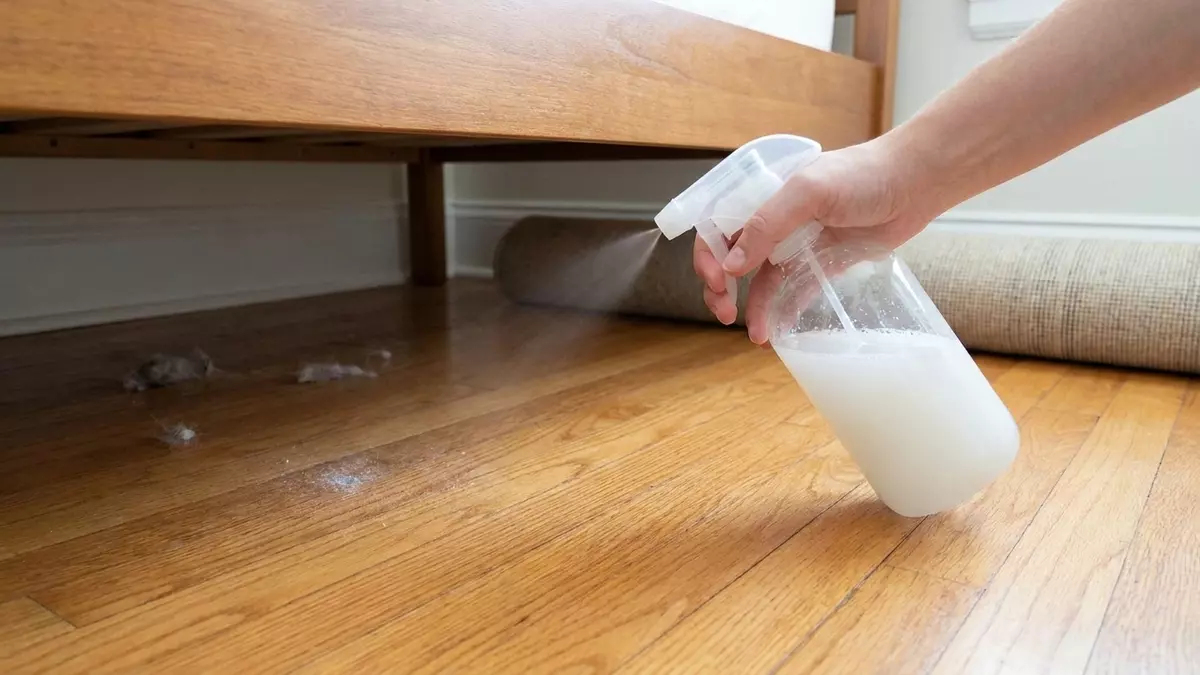
Lightly Mist: Adjust your spray bottle nozzle to a fine mist setting. Lightly spray the floor, focusing primarily on the perimeter baseboards, dark corners, and the floor directly beneath the center support beams.
Ventilate and Dry: Immediately crack open a bedroom window or turn on a ceiling fan. Never let the liquid puddle. The area must dry completely before you slide storage bins back under the bed.
| Surface Type | Safety Level | Precautionary Advice |
| Ceramic Tile & Linoleum | Safe | Ideal for vinegar cleaning; cuts through dust films easily. |
| Sealed Hardwood | Caution | Use a highly diluted mist; dry immediately to protect the finish. |
| Unfinished Wood / Stone | Unsafe | Acetic acid can etch natural stone and warp unsealed timber. |
| Mattresses & Electronics | Unsafe | Moisture can trigger mold inside mattresses and ruin circuitry. |
Mindful Cleaning and the Bottom Line
Beyond the physical chemistry of acetic acid, spraying vinegar under the bed has also found a home in “energy cleaning” and mindfulness rituals. Many cultures utilize natural elements like vinegar, salt, or citrus to symbolically clear away stagnant, heavy energy from a home. Whether you view this practice through the lens of ancient spiritual traditions or modern home economics, the tangible benefits remain identical: you are actively preventing a neglected corner of your sanctuary from becoming a haven for dust and debris.
At the end of the day, misting vinegar under your bed is a stellar supplementary habit, but it cannot replace fundamental home hygiene. A quick spray will make your bedroom feel crisper and more inviting, but the heavy lifting of healthy sleep hygiene still relies on the basics: washing your sheets, vacuuming your carpets, opening your windows for fresh airflow, and managing household humidity.
Frequently Asked Questions
What is the main difference between cooking vinegar and cleaning vinegar?
Standard food-grade white vinegar found in the grocery aisle typically features a 5% acetic acid concentration. Specialized cleaning vinegar is formulated with a higher concentration—usually around 6% to 7% acidity—making it slightly stronger and more effective at cutting through tough household grime.
Will the strong, sour vinegar smell ruin my bedroom’s atmosphere?
No. While the smell is intense for the first few minutes during application, it neutralizes odors and completely vanishes as the liquid dries. Within 15 to 30 minutes, your room will simply smell neutral and clean.
Can I spray the vinegar solution directly onto my mattress or pillows?
It is highly recommended that you avoid spraying mattresses, pillows, or upholstered headboards. Saturating these materials with moisture can trap humidity deep within the fabric fibers, inadvertently creating a perfect breeding ground for mold, mildew, and dust mites.
How often should I apply this vinegar mixture under my bed?
For most households, incorporating this step once every one to two weeks—ideally right after your regular vacuuming routine—is more than enough to maintain a fresh environment and deter common crawling insects.
Can I add essential oils to the vinegar spray to improve the scent?
Yes. If you dislike the temporary smell of vinegar, you can add a few drops of pure essential oils, such as lavender, tea tree, or eucalyptus, to your spray bottle. Shake the mixture thoroughly before each use to ensure the oils distribute evenly throughout the water and vinegar solution.