
Table of Contents
- 1. 1. Select the Right Lettuce Varieties for Continuous Growth
- 1.1. Loose-Leaf Varieties (The Regrowth Champions)
- 1.2. Romaine and Head Lettuces
- 2. 2. Master the “Cut-and-Come-Again” Harvesting Technique
- 3. 3. Harvest Early in the Morning for Peak Flavor and Textures
- 4. 4. Provide Proactive Post-Harvest Aftercare
- 4.1. Hydration and Nutrition
- 4.2. Temperature and Soil Management
- 5. 5. Avoid These 4 Critical Gardening Mistakes
- 6. Bonus Pro-Tip: Implement Succession Planting
- 7. Final Thoughts: Reclaim Your Backyard Salad Bowl
- 8. Frequently Asked Questions
- 8.1. 1. How many times can you harvest from the same lettuce plant?
- 8.2. 2. Why does my regenerated lettuce taste incredibly bitter?
- 8.3. 3. Can you use the cut-and-come-again method on store-bought living lettuce?
- 8.4. 4. How long does it take for lettuce leaves to grow back after cutting?
- 8.5. 5. How do I clean and store my freshly harvested morning lettuce?
5 Expert Tips to Harvest Endless Crisp Lettuce All Summer Long
Few things match the simple joy of stepping out into your backyard and plucking fresh, crisp greens for a homegrown salad. If you have ever grown lettuce only to harvest it once and face an empty garden bed, you are missing out on one of gardening’s best-kept secrets.
Lettuce is a remarkably resilient, fast-growing crop. When you employ the correct harvesting strategies, you do not need to pull up the entire plant and replant seeds every few weeks. Instead, a single planting can act as a continuous, living salad bowl that regenerates leaf after leaf. By mastering the art of the sustainable harvest, you can enjoy an abundant, never-ending supply of delicious greens all season long.
5 Expert Tips to Harvest Endless Crisp Lettuce All Summer Long
1. Select the Right Lettuce Varieties for Continuous Growth
Before you grab your garden shears, it is crucial to recognize that your harvest potential depends entirely on the specific variety of lettuce growing in your garden beds or containers.
Loose-Leaf Varieties (The Regrowth Champions)
If your goal is a continuous, multi-week harvest, loose-leaf lettuces are your absolute best option. Varieties such as Red Salad Bowl, Black Seeded Simpson, and Green Leaf do not form a central, compact core. Instead, they grow in open, loose clusters of individual leaves. These open shapes make them perfectly adapted to repeat harvesting.
Romaine and Head Lettuces
While Romaine can be carefully managed for a multi-stage harvest, it naturally takes a bit longer to bounce back and regenerate new foliage. Conversely, tight-headed varieties like Iceberg and Butterhead (Bibb) are typically grown for a single, final harvest. Once these plants reach maturity, you slice them off at the base, meaning they are a “one-and-done” crop.
2. Master the “Cut-and-Come-Again” Harvesting Technique
To keep your loose-leaf lettuce plants happily producing for weeks on end, you must use a method known in the gardening community as cut-and-come-again. This approach takes advantage of the plant’s natural growth pattern to secure multiple yields.
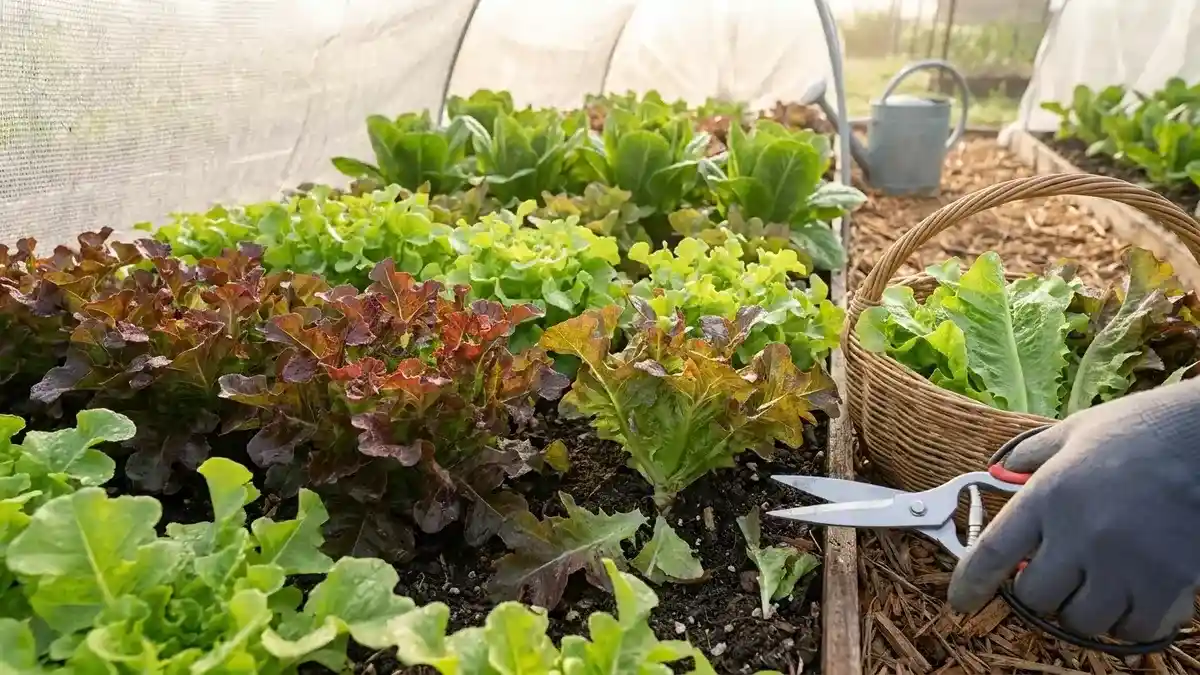
Utilize Clean, Sharp Tools: Always use sterilized garden shears or sharp kitchen scissors. Dull blades crush the delicate stems rather than slicing them cleanly, leaving jagged wounds that are highly susceptible to plant diseases and pest infestations.
Work from the Outside In: Focus exclusively on the mature, fully expanded outer leaves of the cluster. Snip these leaves off individually, roughly one inch above the soil line.
Protect the Growing Crown: The absolute golden rule of continuous lettuce harvesting is to leave the center of the plant completely untouched. This central area is the growing crown. If you cut into this core, you destroy the plant’s biological engine, ending its ability to generate fresh leaves.
Using this careful, selective method allows the hidden inner leaves to rapidly mature, setting you up for another substantial harvest in just a matter of days.
3. Harvest Early in the Morning for Peak Flavor and Textures
When it comes to leafy greens, timing your harvest is everything. The quality, crispness, and sweetness of your salad greens change dramatically throughout the course of a single day.
Always aim to harvest your lettuce in the early morning hours, right after the sun rises but before the heat of the day sets in. Overnight, the root systems efficiently draw up moisture from the cool soil, fully hydrating the cells of the plant. Morning-picked lettuce is crisp, sweet, and bursting with moisture.
If you wait until the blazing afternoon sun hits the garden, the leaves lose moisture through transpiration, leaving them limp, wilted, and significantly more bitter to the taste.
4. Provide Proactive Post-Harvest Aftercare
Harvesting takes a physical toll on your plants. To minimize environmental shock and trigger rapid structural regrowth, give your lettuce patch some targeted attention immediately after you cut your greens.
Hydration and Nutrition
Give your plants a gentle, deep drink of water right after harvesting to help them recover from the stress of the cuts. Because you are asking the plant to continuously manufacture brand-new foliage, it requires plenty of nitrogen. Every two weeks, feed your lettuce with a diluted, liquid organic fertilizer, such as compost tea or a balanced fish emulsion, to power the next wave of leaf production.
Temperature and Soil Management
Lettuce is fundamentally a cool-season crop that thrives in temperatures between 60°F and 70°F. When summer temperatures spike, lettuce plants naturally protect themselves by “bolting”—a process where they send up a thick central flower stalk, turn incredibly bitter, and go to seed.
To prevent bolting, spread a thick layer of organic mulch (like clean straw or shredded leaves) around the base of the plants to keep the root systems cool and moist. In the height of summer, hang a lightweight shade cloth over your lettuce beds to protect them from the harsh afternoon sun.
5. Avoid These 4 Critical Gardening Mistakes
Even experienced gardeners can occasionally slip into bad habits that stunt their lettuce production. Avoid these common pitfalls to maximize your yields:
Pulling the Whole Plant: Unless you are clearing space at the very end of the growing season, never yank the entire root system out of the ground.
Cutting Too Close to the Ground: Slicing the plant off right at the dirt line decapitates the growing crown. Always maintain that crucial one-inch safety zone above the soil.
Letting Leaves Grow Too Large: Gigantic lettuce leaves might look impressive, but they quickly become tough, leathery, and intensely bitter. Harvest leaves when they are young, tender, and roughly 4 to 6 inches tall.
Harvesting Stressed Plants: If your lettuce is visibly drooping or parched from an afternoon heatwave, do not harvest it. Wait until the plant has fully recovered and rehydrated the following morning.
Bonus Pro-Tip: Implement Succession Planting
If you want an uninterrupted, summer-long assembly line of pristine salad greens, pair your cut-and-come-again harvesting technique with succession planting.
Instead of planting your entire seed packet all at once in the spring, sow a small, fresh patch of lettuce seeds every 2 to 3 weeks. By the time your first batch of lettuce begins to slow down after three or four rounds of harvesting, your second batch will be reaching peak maturity. This simple rotation system guarantees that your kitchen will never run out of homegrown salad greens.
Final Thoughts: Reclaim Your Backyard Salad Bowl
Harvesting lettuce so that it keeps growing is an incredibly rewarding practice that saves money, reduces food waste, and elevates your culinary creations. By understanding the difference between loose-leaf and head varieties, protecting the growing crown, and shielding your garden beds from summer heat stress, you can easily maintain a vibrant backyard grocery store. Grab your shears, step outside in the morning air, and enjoy the ultimate sustainable harvest.
Frequently Asked Questions
1. How many times can you harvest from the same lettuce plant?
When utilizing the cut-and-come-again method on healthy, loose-leaf varieties, you can reliably expect to get 3 to 4 full rounds of harvests from a single plant before the leaves begin to degrade in quality or the plant shows signs of bolting.
2. Why does my regenerated lettuce taste incredibly bitter?
Bitterness in lettuce is typically triggered by environmental stress, most notably high summer heat or lack of water. When the plant gets too hot, it prepares to produce seeds, releasing a milky sap called lactucarium, which tastes bitter. To combat this, ensure your plants get plenty of water, afternoon shade, and are harvested early in the morning.
3. Can you use the cut-and-come-again method on store-bought living lettuce?
Yes! If you purchase “living lettuce” from the grocery store that still has its root ball attached, you can plant it directly into a pot of rich potting soil or your backyard garden. Once it acclimates to the environment, you can harvest the outer leaves using the exact same cut-and-come-again rules.
4. How long does it take for lettuce leaves to grow back after cutting?
Under ideal conditions—ample moisture, cool weather, and nutrient-dense soil—loose-leaf lettuce grows back remarkably fast. You will generally see noticeable new growth within days, and the plant will be ready for another substantial harvest in 7 to 10 days.
5. How do I clean and store my freshly harvested morning lettuce?
Submerge your freshly cut leaves in a bowl of ice-cold water to crisp them up and wash away any garden soil or small bugs. Gently pat them dry with a clean kitchen towel or use a salad spinner to remove excess moisture. Wrap the dry leaves loosely in a paper towel, place them inside a breathable storage bag, and keep them in your refrigerator’s crisper drawer for up to a week.