
Table of Contents
- 1. The Science of Digestion: Glycemic Index vs. Glycemic Load
- 2. The Ripeness Factor: Starch vs. Sugar Transformation
- 2.1. Underripe (Green) Bananas
- 2.2. Overripe (Spotted) Bananas
- 3. 5 Ways to Eat Bananas Safely Without a Glucose Spike
- 3.1. 1. Pair with Healthy Fats and Clean Proteins
- 3.2. 2. Prioritize Slightly Underripe Fruit
- 3.3. 3. Practice Portion Control
- 3.4. 4. Strategize the Timing of Consumption
- 3.5. 5. Utilize Cold Storage
- 4. Nutritional Breakdown of a Medium Banana
- 5. Frequently Asked Questions
- 5.1. Can individuals with Type 2 diabetes still eat bananas?
- 5.2. Does mashing or blending a banana affect its blood sugar impact?
- 5.3. Is the sugar found in a banana the same as table sugar?
- 5.4. Does cooking a banana alter its glycemic index?
- 5.5. How can I precisely track how bananas affect my unique metabolism?
The Glycemic Impact of Bananas: What Science Says About Your Blood Sugar
Bananas are a staple in households worldwide. They are highly portable, naturally sweet, and packed with vital micronutrients like potassium, vitamin B6, and vitamin C. However, because they are a carbohydrate-dense fruit, many health-conscious individuals and those managing metabolic conditions often wonder how bananas truly impact blood sugar levels.
According to nutritional science, while bananas do cause a rise in blood glucose, the speed and intensity of that rise are not uniform. The metabolic impact depends heavily on variables such as fruit maturity, portion size, and dietary pairings. Understanding the biochemistry of how your body processes this fruit allows you to enjoy its health benefits without triggering unwanted glucose spikes.
The Glycemic Impact of Bananas What Science Says About Your Blood Sugar

The Science of Digestion: Glycemic Index vs. Glycemic Load
When you consume a banana, your digestive system breaks down its complex and simple carbohydrates into glucose. This glucose enters your bloodstream, triggering your pancreas to release insulin so your cells can utilize the sugar for cellular energy.
How rapidly this process occurs is measured by two primary nutritional metrics:
Glycemic Index (GI): Measures how quickly a carbohydrate-containing food raises blood glucose levels compared to pure glucose.
Glycemic Load (GL): Factors in both the glycemic index and the actual amount of carbohydrates in a typical serving, offering a more accurate real-world picture of a food’s metabolic impact.

A standard, medium-ripe banana carries a GI score of roughly 51, classifying it as a low-glycemic food. Its GL score sits around 13, which is considered moderate. Consequently, a banana will not cause the erratic, aggressive blood sugar spike associated with refined processed sweets like soda or candy, but it will still produce a distinct, steady rise in blood glucose—particularly when consumed entirely on its own.
The Ripeness Factor: Starch vs. Sugar Transformation
The internal chemistry of a banana changes dramatically as it sits on your kitchen counter. This maturation process directly alters how your metabolism responds to the fruit.

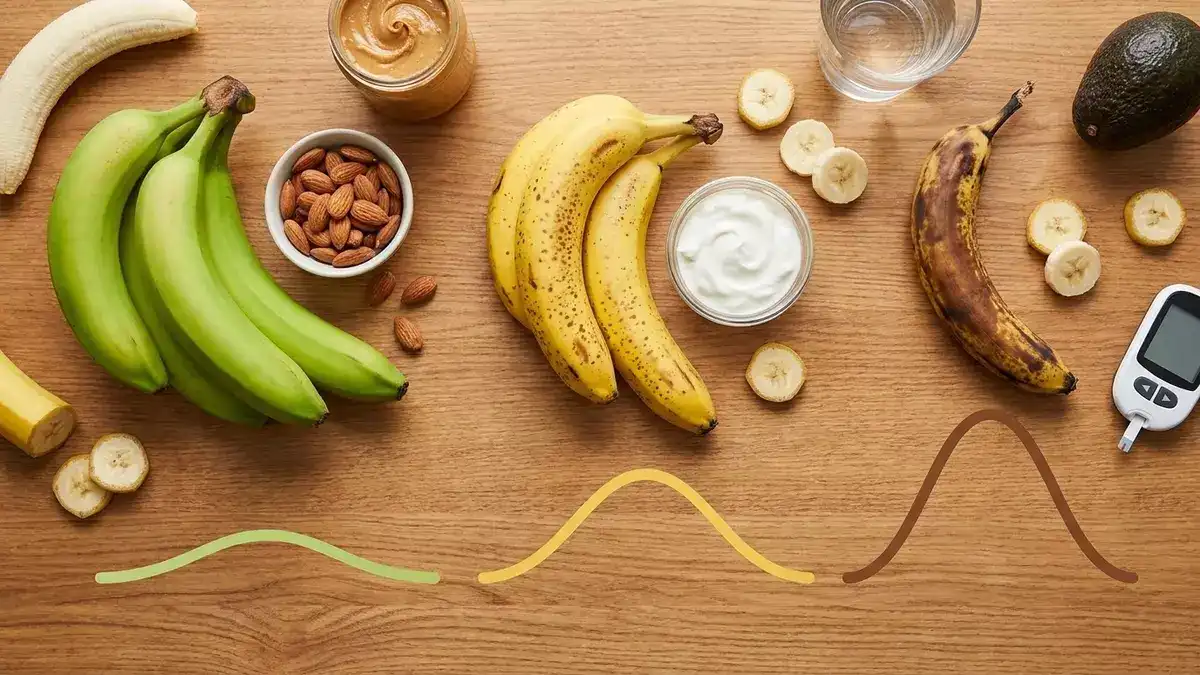
[ Green / Underripe ] ──> High Resistant Starch ──> Slow Digestion ──> Stable Blood Sugar
                                  │
                       ( Natural Ripening Process )
                                  │
                                  ▼
[ Spotted / Overripe ] ─> High Simple Sugars ────> Fast Digestion ──> Sharper Glucose Rise
Underripe (Green) Bananas
Green bananas are packed with resistant starch, a type of carbohydrate that resists enzymatic breakdown in the small intestine. Instead, it moves slowly into the large intestine, functioning similarly to dietary fiber. Because resistant starch digests at a gradual pace, underripe bananas provide a highly stable, prolonged release of energy with a minimal impact on blood glucose.
Overripe (Spotted) Bananas
As a banana ripens, a natural enzyme process converts those complex resistant starches into simple, easily absorbable sugars: glucose, fructose, and sucrose. As a result, a fully yellow banana with brown spots has a significantly higher glycemic index than a green one. It digests rapidly, making it more likely to cause a swift blood sugar spike.
Storage Tip: Placing yellowing bananas into the refrigerator slows down the enzymatic ripening process. While the cold temperature will turn the outer peel dark brown, it preserves the internal flesh and protects the remaining resistant starch from degrading into simple sugars too quickly.
5 Ways to Eat Bananas Safely Without a Glucose Spike
You do not need to eliminate bananas from your diet to maintain stable, healthy blood sugar. Utilizing strategic food synergy can alter how your body processes the fruit.
1. Pair with Healthy Fats and Clean Proteins
Never eat a banana completely isolated on an empty stomach. Instead, pair it with a handful of raw almonds, a spoonful of natural peanut butter, or a serving of unsweetened Greek yogurt. The addition of healthy fats and protein physically slows down gastric emptying and decelerates carbohydrate absorption in the digestive tract.
2. Prioritize Slightly Underripe Fruit
When shopping, choose bananas that still display a touch of green on the stems and tips. These fruits retain a higher percentage of resistant starch, ensuring a flatter, more manageable post-meal glucose curve.
3. Practice Portion Control
A large, modern grocery store banana can easily equal two servings of fruit. Opt for smaller bananas, or simply slice a larger banana in half, saving the remainder for a later meal to easily halve your immediate glycemic load.
4. Strategize the Timing of Consumption
The optimal time to eat a banana is immediately before or right after an intense physical workout. During exercise, your skeletal muscles utilize glucose for fuel with minimal reliance on insulin, allowing your body to clear the sugar from your bloodstream with high efficiency.
5. Utilize Cold Storage
Incorporate cold temperatures into your routine. Chilling your bananas helps stabilize their chemical structure, preventing the natural carbohydrates from converting into fast-acting sugars before you have a chance to eat them.
Nutritional Breakdown of a Medium Banana
| Nutrient | Average Amount | Health Benefit |
| Potassium | 422 mg | Supports healthy blood pressure and nerve function |
| Vitamin B6 | 0.43 mg | Aids in energy metabolism and brain health |
| Dietary Fiber | 3.1 grams | Slows digestion and promotes a healthy gut microbiome |
| Vitamin C | 10.3 mg | Acts as an antioxidant to boost immune defense |
Frequently Asked Questions
Can individuals with Type 2 diabetes still eat bananas?
Yes, individuals with diabetes can absolutely include bananas in a balanced diet. The key is monitoring portion sizes (such as sticking to half a medium banana), selecting less mature fruits with green skin, and always pairing the banana with a protein or healthy fat to buffer the glycemic response.
Does mashing or blending a banana affect its blood sugar impact?
Yes. Physically mashing or blending a banana into a smoothie breaks down the fruit’s structural cellular walls. This mechanical processing allows your digestive enzymes to access and absorb the natural sugars much faster than if you chewed a whole banana, which can result in a quicker blood sugar rise.
Is the sugar found in a banana the same as table sugar?
While a ripe banana contains sucrose, fructose, and glucose (the same chemical components found in refined sweeteners), it behaves differently in the body. Because the sugar in fruit is bound within a structural matrix of water, dietary fiber, vitamins, and antioxidants, it digests far more slowly than empty, processed sugars.
Does cooking a banana alter its glycemic index?
Yes. Applying heat to a banana breaks down its complex resistant starches into simple sugars instantly. This means cooked banana dishes, such as baked or grilled bananas, will have a notably higher glycemic index and a faster impact on your blood sugar than a raw banana.
How can I precisely track how bananas affect my unique metabolism?
Because biometrics vary from person to person, the most accurate way to understand your personal tolerance is to test your blood glucose using a standard finger-prick glucometer or a continuous glucose monitor (CGM). Test your levels immediately before eating a banana and again roughly two hours afterward to observe your personal glucose curve.