
Table of Contents
- 1. The Catalyst: Salmonella and the Out-of-State Connection
- 2. Misleading Labels Ignite Customer Outrage
- 3. What Consumers Need to Know: Affected Product Details
- 4. Urgent Action Steps for Home Kitchens
- 5. Frequently Asked Questions
- 5.1. Does cooking a contaminated egg thoroughly kill the Salmonella bacteria?
- 5.2. How do I locate the Julian date on my egg carton?
- 5.3. Have there been any documented illnesses linked to the Kenz Henz batch?
- 5.4. How can I verify if an egg brand is truly local?
- 5.5. What should I do if I suspect I have contracted a foodborne illness?
Kenz Henz Egg Recall: Sourcing Controversy Sparks Backlash Over “Locally Pastured” Claims
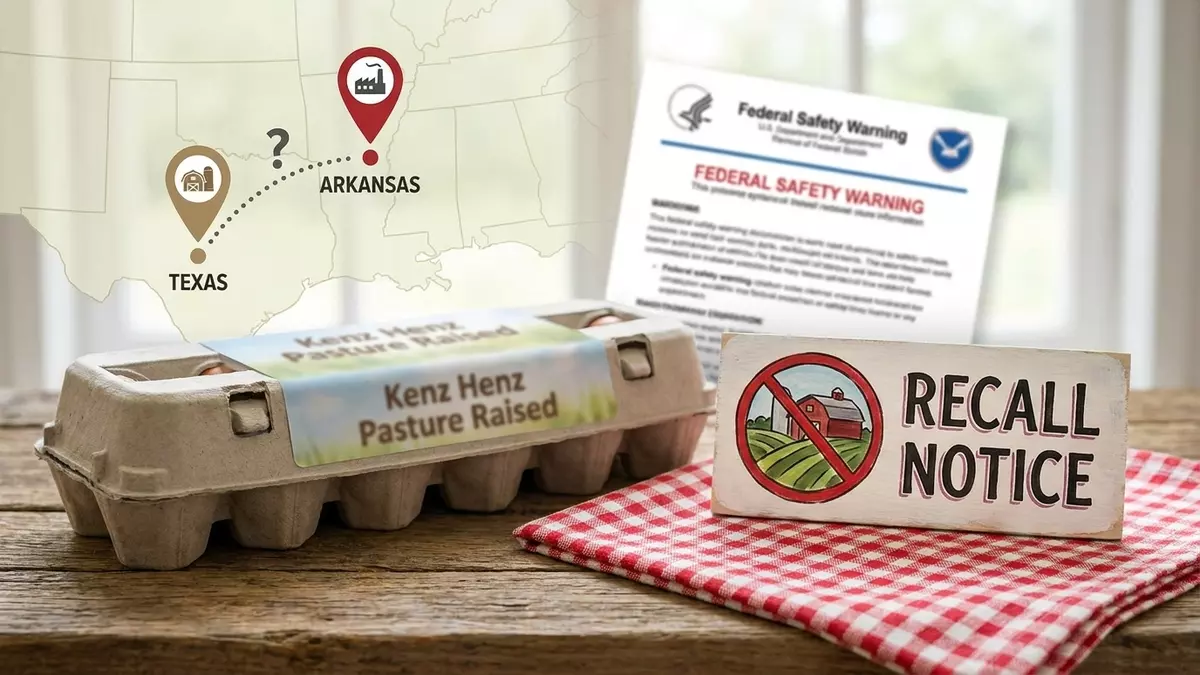
A major food safety warning from the Food and Drug Administration (FDA) has thrust a popular Texas egg brand into a brewing controversy over labeling transparency and supply chain integrity. Kenz Henz, an egg producer long celebrated by Texas consumers for its locally sourced, pasture-raised image, is facing severe backlash. The scrutiny intensified after federal regulators connected a batch of its eggs to an out-of-state contamination risk, revealing that some of the company’s products did not originate on its Texas farm.
The revelation has sparked intense frustration among loyal shoppers who willingly paid premium prices under the impression they were supporting a small, local operation in Santa Fe, Texas. Instead, the regulatory trail exposed a complex repackaging pipeline that bypasses local pastures entirely.
Kenz Henz Egg Recall Sourcing Controversy Sparks Backlash Over Locally Pastured Claims

The Catalyst: Salmonella and the Out-of-State Connection
The FDA’s public safety notice stemmed from a massive environmental investigation at an out-of-state facility. Regulators initiated a targeted inspection at the processing plant of Black Sheep Egg Company, an agricultural supplier based in Walnut Ridge, Arkansas.
During the site inspection, federal authorities uncovered systemic sanitation failures. Lab testing confirmed that 40 separate environmental samples at the Arkansas facility tested positive for Salmonella, including seven distinct bacterial strains known to trigger severe human illness.
[ Black Sheep Egg Co. (Arkansas) ] ──> Contaminated Processing Facility (40+ Salmonella Positives)
                                                │
                                    ( Bulk Out-of-State Shipment )
                                                │
                                                ▼
[ Kenz Henz Facility (Texas) ] ───────> Repackaged into "Santa Fe, Texas Pastured" Cartons
                                                │
                                                ▼
[ Houston Grocery Shelves ] ──────────> Distributed to Consumers as Locally Sourced
Following the positive pathogen findings, Black Sheep Egg Company was forced to halt operations and issue a sweep of recalls for its bulk distributions. Traceback data compiled by the FDA quickly revealed that Kenz Henz had purchased substantial quantities of these unpasteurized Arkansas shell eggs, transported them across state lines, washed and sorted them, and packaged them directly into cartons destined for Texas grocery store shelves.

Misleading Labels Ignite Customer Outrage
What transformed a routine food safety recall into a public relations crisis for Kenz Henz was the explicit wording printed on the brand’s retail packaging. For years, the company built its identity on community-centric, regional farming. Its distinctive cartons prominently stated that the contents were “Pastured in Santa Fe, Texas.”
The discovery that the cartons actually contained mass-produced eggs from a commercial supplier in Arkansas has left consumers feeling deeply deceived. Longtime patrons have publicly expressed a sense of broken trust, noting they relied on the integrity of the label when choosing the brand over conventional options.
The controversy deepened when former farm employees came forward, suggesting that the practice of outsourcing and repackaging out-of-state eggs was not an isolated emergency measure, but rather a long-standing logistical routine. Former workers allege that large commercial freight trucks arriving from Arkansas several times a month were a standard fixture at the Santa Fe facility for years. According to these accounts, workers routinely unloaded the out-of-state shipments, processed them through the farm’s washing stations, and packed them directly into Kenz Henz-branded boxes.

When pressed by regional media outlets regarding the validity of these employee accounts and the true percentage of their inventory that is locally laid, the ownership of Kenz Henz declined to comment.
What Consumers Need to Know: Affected Product Details
While major Texas grocery chains, including regional powerhouse H-E-B, have confirmed that all potentially contaminated products were pulled from inventory as soon as the federal advisory was published, the FDA warns that many affected cartons may still be sitting in consumer refrigerators.
If you regularly purchase premium eggs in the Houston metropolitan area, check your refrigerator for products matching these exact manufacturing metrics:
| Attribute | Identifying Recall Specifications |
| Brand Name | Kenz Henz Grade AA Large Pasture Raised Eggs |
| Packaging Size | 12-Count Cardboard/Plastic Cartons |
| Universal Product Code (UPC) | 86949400030 |
| Impacted Julian Dates | 241 through 244, and 246 through 247 |
| Stamped Best-By Dates | 10/11 through 10/14, and 10/16 through 10/17 |
Safety Warning: Salmonella exposure poses severe health risks, particularly to vulnerable demographics including young children, the elderly, pregnant women, and individuals with compromised immune systems. Standard infection symptoms typically manifest between 12 to 72 hours post-consumption and include severe abdominal cramps, persistent fever, acute nausea, and watery or bloody diarrhea.
Urgent Action Steps for Home Kitchens
If you identify a recalled carton of eggs in your kitchen, prioritize these food safety protocols immediately:
Do Not Consume: Under no circumstances should these eggs be cracked, cooked, or eaten, even if they appear entirely fresh and lack any off-odors.
Secure a Refund: Return the partial or full carton directly to your point of purchase (such as H-E-B or Kroger) to claim a full cash or credit refund. Alternatively, dispose of the eggs securely by sealing them in a plastic bag before placing them in an outdoor trash receptacle.
Sanitize Contact Surfaces: Thoroughly wash your hands with warm, soapy water for at least 20 seconds after handling the packaging. Use a food-safe sanitizing spray or a diluted bleach solution to scrub down any refrigerator shelves, countertops, or plastic egg drawers that came into direct contact with the recalled carton.
Frequently Asked Questions
Does cooking a contaminated egg thoroughly kill the Salmonella bacteria?
While high-temperature cooking to an internal temperature of 160°F can eliminate Salmonella bacteria, public health officials strongly advise against attempting to cook and eat any explicitly recalled food item. The risk of accidental cross-contamination to your hands, kitchen counters, and cooking utensils during preparation is exceptionally high.
How do I locate the Julian date on my egg carton?
The Julian date is a three-digit code stamped on the side or lid of the carton, representing the exact day of the consecutive calendar year the eggs were washed and packed. For example, a Julian date of 001 corresponds to January 1st, while a code of 241 indicates the 241st day of the year (August 30th).
Have there been any documented illnesses linked to the Kenz Henz batch?
According to the latest compiled data from the FDA and the Centers for Disease Control and Prevention (CDC), no confirmed cases of human salmonellosis have been officially tied to the consumption of Kenz Henz eggs. The recall remains a proactive, precautionary measure driven by the environmental contamination discovered at the source facility.
How can I verify if an egg brand is truly local?
Verifying local claims requires looking past standard front-of-pack marketing phrases. Check the carton for a USDA plant shield number (preceded by a “P”). You can look up this unique plant number on official USDA databases to identify the exact physical location of the facility where the eggs were graded and packaged.
What should I do if I suspect I have contracted a foodborne illness?
If you develop a high fever, severe abdominal pain, or signs of dehydration after consuming eggs, contact a qualified healthcare professional immediately. Inform them of your potential exposure to a recalled Salmonella product so they can perform appropriate diagnostic screening and coordinate supportive medical care.