
Table of Contents
- 1. The Circadian Mismatch: Why Total Darkness Backfires
- 2. The Reality of Sleep Inertia
- 3. The One-Inch Blind Trick
- 3.1. A Gentle, Automated Wake-Up Cue
- 4. Balancing Privacy, Noise, and Temperature
- 5. The Technological Middle Ground: Sunrise Alarm Clocks
- 5.1. What the Clinical Science Demonstrates
- 6. Establishing a Complete Circadian Routine
- 7. Conclusion: A Gentler Biological Transition
- 8. Frequently Asked Questions
- 8.1. Will leaving my blinds cracked an inch ruin my melatonin production at night?
- 8.2. Can I achieve the same morning light effect using regular overhead bedroom lights?
- 8.3. How long before my actual wake-up time should a sunrise clock begin to brighten?
- 8.4. Does this light trick work during the dark winter months?
- 8.5. What should I do if morning light consistently wakes me up too early?
Why You Shouldn’t Close Your Blinds Completely at Night
For most people, preparing the bedroom for sleep involves a predictable, automatic routine: shutting the door, turning off the lamps, and pulling the window blinds completely closed. It feels like the most practical way to establish a peaceful sanctuary, especially if your bedroom window faces a glaring streetlamp, passing car headlights, or an early summer sunrise that threatens to cut your sleep short.
However, sleep scientists and circadian biology experts warn that establishing an absolute, pitch-black fortress can backfire when morning arrives. While total darkness is highly beneficial for helping you drift off to sleep, it can severely confuse the brain’s natural waking mechanisms. When your morning alarm blares in a room that still looks like the middle of the night, you force your body into a harsh physiological conflict that can ruin your energy for hours.
Why You Shouldn’t Close Your Blinds Completely at Night
The Circadian Mismatch: Why Total Darkness Backfires
The human body was never biologically engineered to wake up purely to the sound of an auditory alarm. For hundreds of thousands of years, the primary catalyst for human wakefulness has been the gradual, ambient introduction of morning light. According to data from the CDC’s National Institute for Occupational Safety and Health, the natural light-and-dark cycle is the primary external cue (zeitgeber) that keeps our internal biological clocks aligned with the physical world.

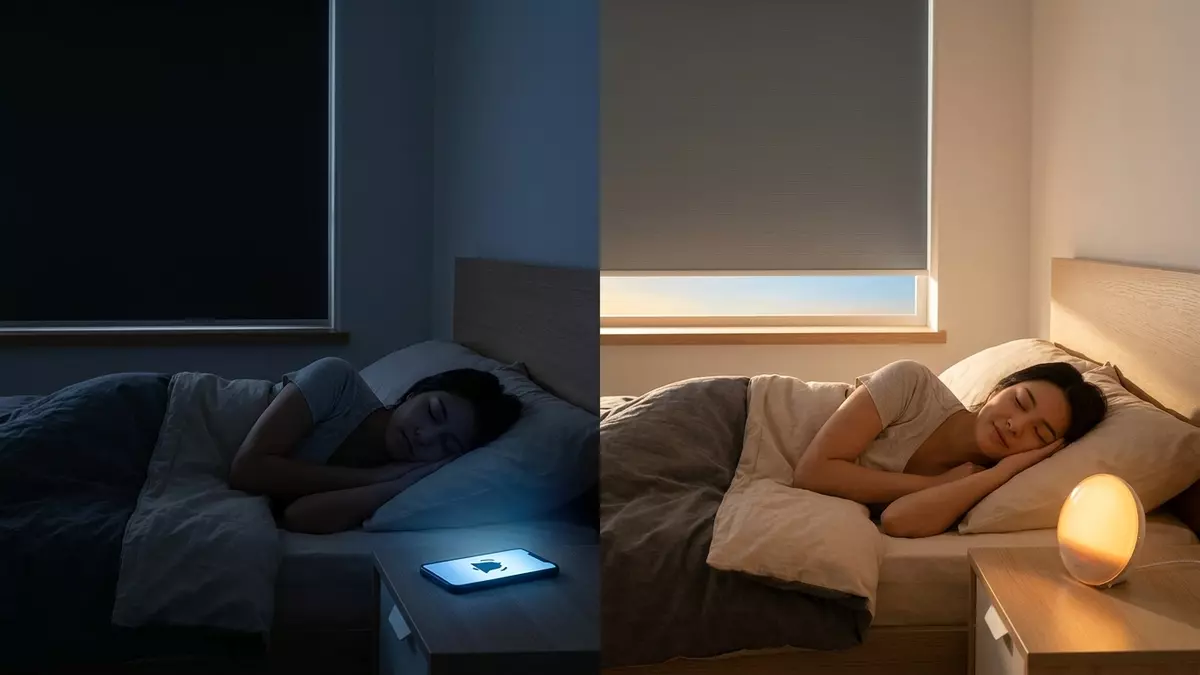
[Pitch-Black Bedroom] ---> Alarm Rings ---> Abrupt Cortisol Spike ---> Severe Sleep Inertia
                                                vs.
[1-2 Inch Blind Gap]  ---> Dawn Light  ---> Gradual Waking Cues  ---> Smooth Morning Reset
When you seal your bedroom in total darkness, your brain remains under the impression that it is still deep night, continuously pumping out melatonin (the sleep hormone). When your alarm suddenly rings, a severe biological mismatch occurs: your clock says “get up,” but your environment says “keep sleeping.” This sudden disruption forces your brain to snap awake before your biochemistry can catch up, making the first minutes of your day feel significantly heavier, groggier, and more exhausting than they need to be.
The Reality of Sleep Inertia
That heavy, disoriented, and irritable feeling you experience immediately after waking up is not just a personal quirk—it is a recognized medical condition known as sleep inertia. This temporary state of cognitive impairment includes reduced motor dexterity, slowed reaction times, and a distinct desire to return to bed.
A comprehensive study published in 2024 notes that while some individuals shake off sleep inertia within a few minutes, the grogginess can stubbornly persist for up to three hours. The duration depends heavily on:

The specific sleep stage you were pulled out of (waking up from deep slow-wave sleep causes the worst inertia)
Cumulative, prior sleep deprivation
The alignment of your internal circadian timing

The study highlights that your brain doesn’t need a blinding spotlight right at sunrise to combat this foggy state. Instead, it benefits immensely from a gradual, visual hint that the day is beginning, allowing your internal chemistry to smoothly transition from sleep to active wakefulness.
The One-Inch Blind Trick
The easiest, most cost-effective strategy to optimize your morning transition is entirely free. Instead of pulling your shades, curtains, or shutters completely flush against the window sill, intentionally leave a small gap of approximately one to two inches at the bottom.
A Gentle, Automated Wake-Up Cue
This minor adjustment keeps your bedroom completely dark and restful throughout the middle of the night when your pineal gland requires absolute darkness to manufacture melatonin. However, as dawn breaks, that one-inch gap allows the initial, soft ambient blue wavelengths of natural morning light to filter gently into the room.
Even through closed eyelids, your eyes contain specialized photosensitive retinal ganglion cells that detect this gradual shift in light intensity. These cells send an immediate signal to the master clock in your brain—the suprachiasmatic nucleus—prompting it to slowly suppress melatonin production and begin releasing cortisol, the hormone responsible for alertness.
By the time your audio alarm finally sounds, your body has already initiated its internal warm-up sequence, drastically reducing the severity of morning sleep inertia.
Balancing Privacy, Noise, and Temperature
Of course, a single open-window strategy does not fit every living situation. Leaving your blinds cracked can introduce distinct environmental disruptions depending on your immediate geographic surroundings:
| Bedroom Environmental Challenge | Impact of a Cracked Blind | Expert Recommended Solution |
| Intense Urban Light Pollution | Neighbor’s porch lights or bright commercial neon signs bleed into the room all night. | Keep blinds fully closed; switch to a programmable sunrise alarm clock. |
| High Noise Pollution | Heavy traffic, early morning trash trucks, or barking dogs disrupt sleep. | Utilize heavy, noise-dampening blackout curtains combined with an artificial dawn simulator. |
| Extreme Seasonal Heat | Open gaps allow hot summer sun to rapidly bake the room early in the morning. | Use reflective interior blinds closed fully, relying on smart artificial lighting for the morning reset. |
The Technological Middle Ground: Sunrise Alarm Clocks
For individuals who must maintain total nighttime darkness due to shift work, urban noise, or privacy concerns, sunrise alarm clocks offer an exceptional, scientifically backed alternative. These devices are engineered to mimic a natural dawn sequence right on your nightstand, gradually brightening from a warm, dim orange into a crisp, bright yellow over a set timeframe before your audible alarm triggers.
What the Clinical Science Demonstrates
The health benefits of this artificial dawn simulation are highly promising. According to the National Sleep Foundation, bright, natural light is the single most powerful tool for promoting immediate daytime alertness. Yet, in their 2022 Sleep in America Poll, a striking 49 percent of Americans reported that they are not exposed to adequate bright light in the morning, spending their early hours in dim, artificially lit indoor spaces.
Furthermore, a study published in the journal Clocks & Sleep (through MDPI) discovered that artificial morning dawn simulation significantly improved subjective well-being, elevated overall morning mood, and boosted sharp cognitive performance—even when individuals were subjected to mild sleep restriction.
A critical detail highlighted in a 2024 smart-alarm study shows that the duration of the light exposure matters immensely. A brief, abrupt flash of light provides little benefit. To successfully clear morning grogginess, the simulated sunrise needs to be a long, gradual progression, ideally spanning 20 to 30 minutes before your wake-up time.
Establishing a Complete Circadian Routine
It is vital to emphasize that modifying your window blinds or introducing a sunrise clock is not a magical cure-all for clinical sleep disorders like chronic insomnia, sleep apnea, or severe sleep deprivation. If you are consistently operating on four hours of sleep, a splash of morning light cannot replace the deep cellular rest your body requires.
True metabolic resilience is built by combining smart morning signals with strict nighttime habits:
Protect the Night: Bright, blue-spectrum light emitted from smartphones, tablets, laptops, and intense overhead LED bulbs close to bedtime tricks your brain into thinking it is noon. This halts melatonin production and pushes your body clock backward. Ensure you dim your lights and dim your screens at least one hour before bed.
Activate the Morning: Once your blinds or sunrise clock have nudged you awake, solidify the chemical transition by stepping outside or looking out a clear window for 5 to 10 minutes. Exposure to direct morning light locks your circadian rhythm in place, ensuring you feel completely awake during the day and naturally tired when night returns.
Conclusion: A Gentler Biological Transition
Ultimately, adjusting how you manage your bedroom window blinds is about respecting your body’s natural biological rhythms. Transitioning from deep, restorative sleep into active wakefulness should never be a jarring, stressful event driven entirely by a loud noise in pitch-black darkness. By intentionally leaving a small, one-inch gap for natural dawn light or utilizing a progressive sunrise alarm, you provide your brain with the exact environmental cues it needs to transition smoothly into the day, transforming your mornings from a daily struggle into a calm, focused, and energized reset.
Frequently Asked Questions
Will leaving my blinds cracked an inch ruin my melatonin production at night?
No. As long as your bedroom remains generally dark and free from direct, piercing light during your primary sleeping hours, a small gap at the bottom of your blinds will not disrupt your melatonin synthesis. The key benefit is that the gap allows the changing light of dawn to provide a gradual waking cue.
Can I achieve the same morning light effect using regular overhead bedroom lights?
Flipping on a standard, bright overhead light immediately upon waking does not replicate the biological benefits of a gradual dawn transition. An abrupt burst of intense light can shock the nervous system and increase morning stress. A gradual increase in light intensity is what allows your body to suppress melatonin smoothly before you open your eyes.
How long before my actual wake-up time should a sunrise clock begin to brighten?
Clinical studies suggest that the most effective dawn simulation sequences span between 20 and 30 minutes. This length provides your endocrine system with sufficient time to slowly decrease sleep hormones and elevate alertness markers before you are required to physically wake up.
Does this light trick work during the dark winter months?
During the winter when the sun rises much later, relying on a natural blind gap can be difficult if your alarm is set for before dawn. This seasonal shift is exactly where a sunrise alarm clock shines brightest, allowing you to maintain a consistent, automated biological wake-up cue regardless of the season outside.
What should I do if morning light consistently wakes me up too early?
If a small gap in your blinds causes you to wake up an hour before your scheduled alarm, your body may be highly sensitive to light cues. To fix this, shorten the blind gap slightly, or transition to a programmable sunrise alarm clock where you have absolute control over the exact minute your personal dawn begins.