
Table of Contents
- 1. The Nutritional Powerhouse Hidden in Your Coop
- 2. Raw vs. Composted: Why Untreated Waste Risks Your Health
- 3. Step-by-Step Guide to Safely Composting Chicken Manure
- 3.1. Balancing Greens and Browns (The Carbon-to-Nitrogen Ratio)
- 3.2. Moisture and Oxygen Management
- 3.3. The Critical Cooking Temperature
- 3.4. Curing Time and Final Texture
- 4. How to Apply Cured Chicken Manure to Your Garden Beds
- 4.1. Spring and Fall Integration
- 4.2. Top-Dressing Perennials and Fruit Trees
- 5. Brewing a Nutrient-Rich Liquid Fertilizer: Chicken Manure Tea
- 6. Critical Safety Protocols for the Backyard Homesteader
- 7. Which Plants Crave Chicken Manure the Most?
- 8. Frequently Asked Questions
- 8.1. Can I put raw chicken poop directly into my garden soil?
- 8.2. How long does it take for chicken manure to become safe for garden use?
- 8.3. What is the ideal ratio for mixing coop bedding and chicken manure?
- 8.4. What temperature must chicken compost reach to kill off harmful bacteria?
- 8.5. Can I use chicken manure on my home fruit trees and ornamental shrubs?
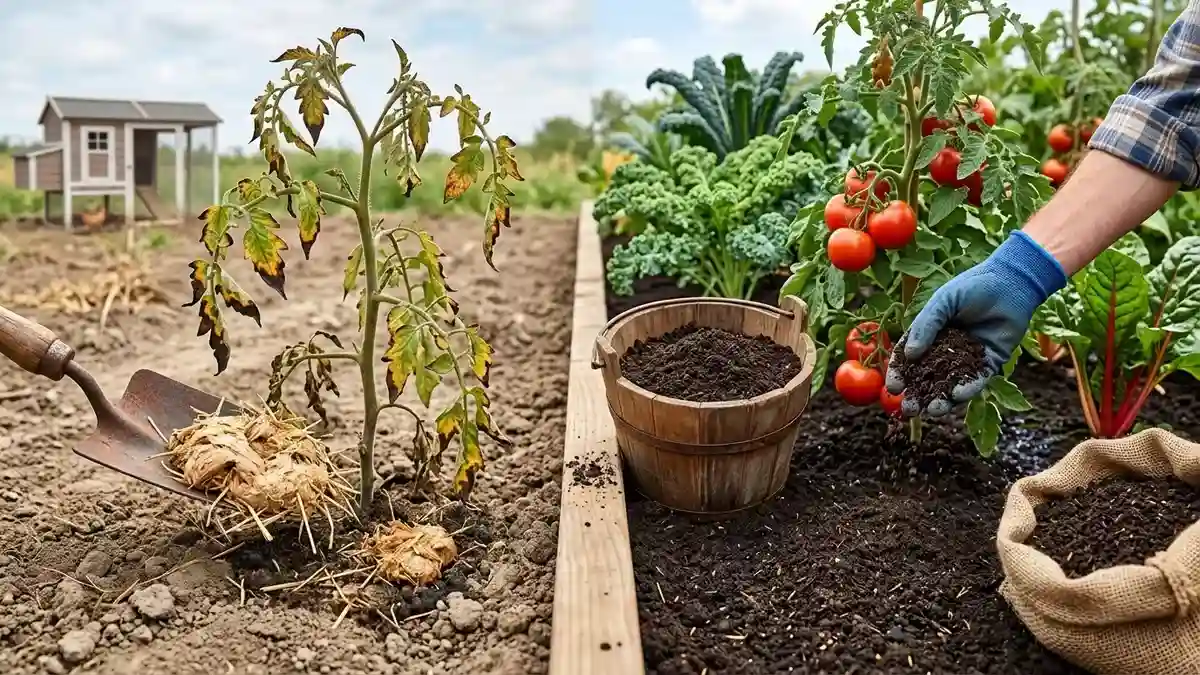
Warning: Raw Chicken Manure Will Burn Your Garden Plants
If you keep a small flock of backyard chickens, you already know the joy of gathering warm, fresh eggs every morning. But every single day, your hens are producing another incredibly valuable resource that most homeowners completely overlook: high-powered manure.
When managed correctly, poultry waste is an absolute goldmine for your soil. It is arguably one of the most potent, nutrient-dense organic fertilizers available to home horticulturists. However, throwing fresh chicken poop straight from the coop onto your flower beds is a recipe for disaster. Treat it raw, and you will scorch your plants, introduce dangerous pathogens to your dinner table, and ruin your soil structure.
To harvest the benefits of this backyard resource safely, you must understand the exact science behind processing, curing, and applying poultry waste. Here is everything you need to know to transform daily coop waste into premium organic black gold.


Warning Raw Chicken Manure Will Burn Your Garden Plants
The Nutritional Powerhouse Hidden in Your Coop
Chicken manure is not just basic animal waste; it is an incredibly concentrated fuel source for your soil. Plants require three primary macronutrients to grow, develop sturdy root systems, and produce fruit: nitrogen, phosphorus, and potassium. Collectively known as N-P-K, these three elements form the backbone of any commercial fertilizer.
Pound for pound, poultry waste contains significantly higher concentrations of N-P-K than cow, horse, sheep, or goat manure.

Nitrogen: Drives rapid, vibrant green leaf development and vegetative growth.
Phosphorus: Promotes robust root establishment, flower budding, and fruit sets.
Potassium: Improves overall plant disease resistance, water uptake, and cold hardiness.
In addition to providing an intense blast of macronutrients, chicken manure delivers a massive dose of organic matter. As this organic material breaks down, it improves soil aggregate structure, increases water retention in sandy soils, opens up drainage pathways in heavy clay, and fuels the native microscopic life that keeps soil alive.
However, because birds excrete both solid and liquid waste simultaneously through a single opening, their manure contains exceptionally high levels of raw ammonia and uric acid. This makes it an incredibly “hot” manure. If applied directly to active roots, this concentrated nitrogen pulls moisture away from the plant tissues, dehydrating and chemically scorching the roots in a process commonly referred to as fertilizer burn.
Raw vs. Composted: Why Untreated Waste Risks Your Health
The vast difference between raw poultry manure and properly finished compost comes down to chemical stability and biological safety.
Using raw chicken poop in a home garden carries serious biological risks. Poultry are natural hosts for harmful zoonotic pathogens—microorganisms that can jump from animals to humans—including Salmonella and E. coli. If you apply fresh, uncomposted waste to fruit and vegetable beds, these dangerous bacteria can splash onto low-hanging leaves, contaminate root zones, and inadvertently enter your kitchen during harvest.
[Raw Poultry Manure] ──> High Pathogens + Toxic Ammonia ──> Root Burn & Health Risks
[Cured Poultry Compost] ──> Thermal Destruction ──> Dark, Stable, Nutrient-Rich Soil Food
Proper composting completely rewires the chemical makeup of the waste. Over months, beneficial aerobic bacteria break down volatile ammonia into stable, slow-release nitrates that plants can safely absorb over extended periods. Concurrently, the intense heat generated during a healthy composting cycle destroys pathogens and neutralizes weed seeds, turning a foul-smelling liability into a sweet, earthy, crumbly soil conditioner.
Step-by-Step Guide to Safely Composting Chicken Manure
Successfully processing poultry waste requires a careful balance of ingredients, moisture, and airflow. You cannot simply leave a pile of chicken poop in a corner and expect premium results; you must manage the biological furnace.
Balancing Greens and Browns (The Carbon-to-Nitrogen Ratio)
In composting terms, chicken manure is a premier “green” ingredient, meaning it is highly nitrogenous. To prevent your compost pile from compacting into a dense, anaerobic, foul-smelling slurry, you must balance it with an abundance of “brown” carbon-rich materials.
Fortunately, regular coop maintenance makes this easy. When you shovel out the coop, the poop is already mixed with carbon-heavy bedding materials like pine wood shavings, sawdust, straw, or shredded leaves. For an optimal composting environment, aim for a rough structural mix of two parts carbon bedding to one part raw manure.
Moisture and Oxygen Management
Your compost pile requires moisture to keep the hard-working microbial populations alive. The overall moisture level should consistently mimic the texture of a thoroughly wrung-out sponge—distinctly damp to the touch but never dripping or muddy.
Every 7 to 10 days, use a pitchfork or a rotating compost tumbler to thoroughly turn the pile. This introduces vital oxygen into the core of the mass, feeding the aerobic bacteria and speeding up the decomposition process.
The Critical Cooking Temperature
To guarantee your compost is completely safe for edible vegetable gardens, the pile must get hot. Invest in a long-stemmed compost thermometer and monitor the core of the pile.
The Pasteurization Zone: A healthy, active compost pile should reach internal temperatures between 130°F and 150°F. Maintaining this thermal range for a minimum of two consecutive weeks is critical to kill off stubborn pathogens like Salmonella and neutralize any weed seeds mixed into the bedding.
Curing Time and Final Texture
Once the pile stops heating up after being turned, the active breakdown phase is complete, and the curing stage begins. Let the pile rest undisturbed for 6 to 12 months. Fully cured chicken manure compost will be dark, light, crumbly, and completely devoid of any ammonia or poultry odor. It should simply smell like rich, deep forest soil.
How to Apply Cured Chicken Manure to Your Garden Beds
Because fully cured poultry compost remains a highly potent nutrient source, a little bit goes an incredibly long way. Over-application can still over-stimulate leafy growth at the expense of fruit production.
Spring and Fall Integration
For general garden preparation, spread a thin layer—roughly 1/4 to 1/2 inch deep—over the surface of your garden beds. Gently incorporate this layer into the top few inches of topsoil using a garden fork or rake. Doing this in the autumn allows the nutrients to integrate seamlessly with your soil biology over the winter. If applying in the spring, complete this process at least 2 to 3 weeks before planting tender seedlings.
Top-Dressing Perennials and Fruit Trees
Established fruit trees, ornamental shrubs, and perennial flower beds love a seasonal top-dressing of chicken compost. Apply the compost in a wide ring mimicking the tree’s drip line. Always leave a distinct 3- to 4-inch buffer space between the compost and the physical base of the plant stem or tree trunk to prevent moisture buildup, which can invite fungal rot and boring insects.
Brewing a Nutrient-Rich Liquid Fertilizer: Chicken Manure Tea
If your plants require a rapid, easily absorbable nutrient pick-me-up during the peak of the summer growing season, you can easily brew a batch of liquid manure tea.
[2 Shovels of Cured Compost] + [5 Gallons of Water] ──> Steep 48-72 Hours ──> Pure Liquid Fertilizer
To brew a batch, place two large shovels of fully cured, finished chicken compost into a porous burlap sack or fine mesh bag. Submerge the sack into a 5-gallon bucket filled with clean water. Stir the liquid thoroughly and let it steep in a shaded outdoor area for 48 to 72 hours.
Once fully steeped, remove the bag and pour the amber-colored liquid directly onto the soil at the base of your heavy-feeding crops. Avoid spraying the liquid directly onto the leaves of edible crops, as the leaves can burn if exposed to concentrated liquid nutrients in direct sunlight.
Critical Safety Protocols for the Backyard Homesteader
Working with animal manures requires a basic level of common sense and hygiene to keep your household healthy.
Wear Protective Gear: Always don heavy-duty gardening gloves and close-toed shoes when handling raw manure or turning active compost piles. If you are cleaning out a dry, dusty coop, wear a dust mask to avoid inhaling airborne particulate matter.
The 90/120 Day Rule: If you are using compost that has been aged for less than a full year, strictly adhere to USDA food safety standards. Do not apply the material within 90 days of harvesting crops that grow off the ground (like tomatoes or peppers), and do not apply within 120 days of harvesting crops that touch the soil directly (like leafy greens, carrots, or radishes).
Manage Flock Medications: If you must treat your laying hens with heavy synthetic medications, such as broad-spectrum antibiotics or chemical dewormers, isolate their waste. Do not add their manure to your primary garden compost piles for at least a month following treatment, as residual chemical compounds can linger in the waste and disrupt your delicate soil ecosystem.
Which Plants Crave Chicken Manure the Most?
Because of its exceptionally high nitrogen profile, composted chicken manure is uniquely suited for “heavy feeders”—plants that exhaust soil nutrients rapidly throughout the season.
| Vegetable Category | Specific Plant Varieties | Chicken Manure Benefit |
| Heavy-Feeding Nightshades | Tomatoes, Bell Peppers, Eggplants | Fuels massive vine development and maximizes fruit sets. |
| High-Demand Cucurbits | Zucchini, Winter Squash, Pumpkins | Supports expansive leaf canopies and high blossom counts. |
| Nitrogen-Loving Greens | Kale, Spinach, Swiss Chard, Cabbage | Drives deep green pigment formation and rapid leaf cycling. |
| Stalk Crops | Sweet Corn | Supplies the continuous nitrogen stream required for tall stalk development. |
Root crops like carrots, parsnips, and beets can also benefit from poultry compost, but they require extreme caution. Excessively high nitrogen levels will cause these plants to produce magnificent, bushy green tops while forcing the underground roots to split, fork, or become stunted. For root crops, stick exclusively to compost that has been cured for a minimum of one full year, or apply the compost to the bed a full season in advance.
Frequently Asked Questions
Can I put raw chicken poop directly into my garden soil?
No. Raw chicken manure contains high amounts of unstable ammonia and uric acid, which will chemically scorch plant roots and leaves. Furthermore, raw poultry waste can harbor dangerous human pathogens like Salmonella, making it a significant health risk for food crops if not properly composted first.
How long does it take for chicken manure to become safe for garden use?
A standard backyard compost pile containing chicken manure takes anywhere from 6 to 12 months to completely decompose, cure, and become safe for general garden application. The raw ammonia must completely transform into stable nitrates, and the pile must undergo a high-heat phase to ensure sterilization.
What is the ideal ratio for mixing coop bedding and chicken manure?
The ideal biological mix is roughly two parts carbon-rich bedding (such as pine wood shavings, straw, or dried leaves) to one part nitrogen-rich raw chicken manure. This creates a balanced carbon-to-nitrogen ratio that keeps the compost pile aerated, aerobic, and smelling clean.
What temperature must chicken compost reach to kill off harmful bacteria?
To safely eliminate human pathogens and neutralize resilient weed seeds, the internal core of your compost pile must maintain a temperature between 130°F and 150°F for at least two consecutive weeks. Monitor this using a specialized long-stemmed compost thermometer.
Can I use chicken manure on my home fruit trees and ornamental shrubs?
Yes. Cured chicken manure compost is an exceptional seasonal top-dressing for perennial shrubs, rose bushes, and fruit trees. Simply apply a thin ring of compost around the tree’s drip line, making sure to leave a 3- to 4-inch clearing around the base of the trunk to prevent trunk rot.