
Table of Contents
- 1. The Underground Chemistry Behind the Color Shift
- 2. Step 1: Testing Your Baseline Soil pH
- 2.1. The Hydrangea Color pH Scale:
- 3. How to Shift Your Hydrangeas to Brilliant Blue
- 3.1. 1. Apply Aluminum Sulfate
- 3.2. 2. Incorporate Acidifying Organic Matter
- 3.3. 3. Mind Your Irrigation
- 4. How to Shift Your Hydrangeas to Radiant Pink
- 4.1. 1. Apply Garden Lime
- 4.2. 2. Choose High-Phosphorus Fertilizers
- 4.3. 3. Adjust Your Mulching Strategy
- 5. The Whimsical Choice: Striking a Purple Balance
- 6. Pro-Tips for Successful Color Tweaking
- 7. Conclusion: Crafting Your Ideal Garden Palette
- 8. Frequently Asked Questions
Hydrangea Colors & Soil pH: How To Make Your Blooms Blue, Pink, Or Even Purple
There is something undeniably magical about hydrangeas. It is not just their fluffy, cloud-like blooms or their lush green canopy that captivates gardeners—it is their incredible ability to act as living litmus paper. If you have ever planted a vibrant pink hydrangea only to watch it fade into a deep sky blue the following summer, you are not losing your mind.
This color-shifting phenomenon is completely real, entirely driven by chemistry, and completely under your control. By learning how to adjust what is happening beneath the surface of your soil, you can effectively choreograph the color palette of your garden. Here is an in-depth guide to understanding the relationship between hydrangea hues and soil pH, and exactly how to safely steer your blooms toward your favorite shade.
Hydrangea Colors & Soil pH How To Make Your Blooms Blue, Pink, Or Even Purple
The Underground Chemistry Behind the Color Shift
The secret to a hydrangea’s changing wardrobe lies entirely in the soil chemistry—specifically, the soil pH, which measures how acidic or alkaline your dirt is. However, the pH level itself is actually a gatekeeper for another element: aluminum.
When we look at the specific varieties capable of this transformation—most notably Bigleaf hydrangeas (Hydrangea macrophylla) and Mountain hydrangeas (Hydrangea serrata)—their flower pigments react directly to the presence of aluminum within the plant tissue.
Here is how the interaction works:
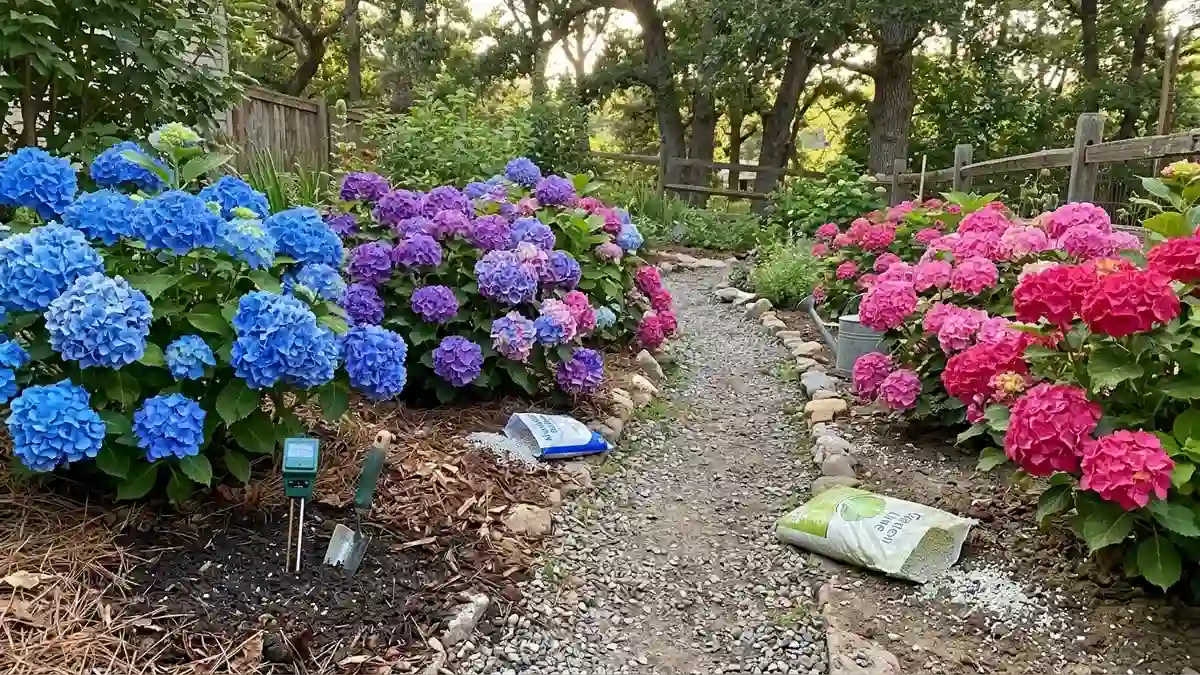
Acidic Soil (pH below 6.0): In acidic environments, aluminum becomes chemically soluble. This allows the hydrangea roots to easily absorb it. Once inside the plant, the aluminum binds with the floral pigments, turning the blooms a striking blue or lavender.
Alkaline Soil (pH 6.0 to 7.0+): In neutral to alkaline conditions, aluminum binds tightly to other soil minerals and becomes completely unavailable to the plant. Without aluminum absorption, the blossoms naturally default to their genetic baseline: brilliant pink, hot pink, or crimson red.

Note on White Varieties: It is important to note that white hydrangeas, such as the popular ‘Annabelle’ (Smooth hydrangeas) or ‘Limelight’ (Peegee hydrangeas), do not contain the pigments necessary to react to aluminum. Their classic white or cream color remains constant regardless of your soil’s pH.
Step 1: Testing Your Baseline Soil pH
Before you begin adding amendments to your garden, you must find out your starting point. Altering soil chemistry without a baseline test can stress your plants or ruin your soil structure.

Pick up a reliable soil test kit or a digital pH meter from a local garden center. Clear away any surface mulch, dig down about six inches into the root zone of your hydrangea, and collect a small dirt sample. Follow your kit’s instructions carefully to get an accurate reading.
The Hydrangea Color pH Scale:
Use this quick reference guide to see what your current numbers mean for your future blooms:
| Soil pH Range | Expected Blossom Color |
| Below 5.5 | Deep Blue to Sky Blue |
| 5.5 to 6.0 | Purple, Violet, or Multi-toned Bi-colors |
| 6.0 to 6.5 | Soft Pink to Mauve |
| Above 6.5 | Hot Pink to Vibrant Red |
How to Shift Your Hydrangeas to Brilliant Blue
If you are dreaming of a cool-toned oasis filled with sea-blue and lavender blooms, your mission is to lower your soil’s pH and unlock the aluminum already present in the ground.
To Achieve Blue Blooms: Lower Soil pH (5.2 - 5.5) + Increase Soluble Aluminum
1. Apply Aluminum Sulfate
To introduce both acidity and aluminum simultaneously, dissolve one tablespoon of therapeutic-grade aluminum sulfate into a gallon of water. Drench the soil around the base of your hydrangea with this solution once a month throughout the active spring and summer growing season. Avoid splashing the leaves, as the concentrated solution can scorch foliage.
2. Incorporate Acidifying Organic Matter
Gently amend the soil surrounding the root zone with organic materials that naturally lower pH over time. Mulch heavily with pine needles, shredded oak leaves, or peat moss. Regularly top-dressing the soil with used coffee grounds can also provide a mild, steady boost to local acidity.
3. Mind Your Irrigation
Pay attention to the water you use. Tap water is frequently treated to be slightly alkaline to protect municipal pipes from corrosion. Over time, heavy tap watering can slowly drive your soil pH back up. Whenever possible, irrigate your blue hydrangeas with natural rainwater collected in a barrel.
How to Shift Your Hydrangeas to Radiant Pink
If your goal is a romantic display of bold pinks and rich magentas, you need to reverse the process by raising the soil pH to lock down any available aluminum.
To Achieve Pink Blooms: Raise Soil pH (6.0 - 6.4) + Lock Away Aluminum
1. Apply Garden Lime
To sweeten the soil and raise its pH, spread dolomitic garden lime around the base of the plant in the early spring. Follow the package instructions carefully based on your square footage, and gently scratch the granules into the top two inches of the soil before watering thoroughly.
2. Choose High-Phosphorus Fertilizers
When feeding pink hydrangeas, look for a fertilizer with a high middle number (Phosphorus) in its N-P-K ratio. Phosphorus binds readily with aluminum in the soil, making it even harder for the hydrangea to absorb it. Simultaneously, completely avoid any specialized fertilizers that list aluminum sulfate as an ingredient.
3. Adjust Your Mulching Strategy
Steer clear of acid-rich mulches like pine needles or pine bark. Instead, protect the roots using neutral hardwood mulch, leaf mold, or plain organic compost that won’t inadvertently pull the pH back down into the acidic zone.
The Whimsical Choice: Striking a Purple Balance
Purple hydrangeas are the beautiful chameleons of the garden. They occur when your soil rests in the transitional sweet spot between 5.5 and 6.0. In this narrow window, the plant absorbs just enough aluminum to blend blue and pink pigments together, resulting in royal purple, deep violet, or even a mixed bush featuring both blue and pink clusters simultaneously.
Achieving a precise purple can be unpredictable and challenging to maintain perfectly. If you enjoy a touch of natural whimsy and aren’t wedded to a single uniform color, the easiest strategy here is to simply let nature take its course without adding heavy chemical adjustments.
Pro-Tips for Successful Color Tweaking
Changing the color of your hydrangeas requires a blend of patience and proper technique. Keep these fundamental principles in mind as you experiment:
Try Container Gardening for Easy Control: If your native soil is stubbornly alkaline or heavily acidic, fighting it can be an uphill battle. It is significantly easier to control the color of container-grown hydrangeas. In a pot, you manage every single handful of potting mix and every drop of water, making color transformations fast and highly predictable.
Expect a Slow Process: Color shifting does not happen overnight. It can take a full growing season, or even two, for the root system to absorb enough amendments to completely alter the chemical expression in the petals. Be patient and stick to your monthly routine.
Prioritize Plant Health: A stressed, under-watered, or poorly fed hydrangea will not produce vibrant colors, no matter how perfect your soil pH is. Ensure your plants receive adequate morning sun, afternoon shade, and consistent moisture before attempting to alter their colors.
Avoid Over-Amending: Forcing drastic chemical changes too quickly by dumping excessive amounts of lime or aluminum sulfate can easily chemically burn tender roots and destroy the natural microbiome of your soil. Slow and steady wins the race.
Conclusion: Crafting Your Ideal Garden Palette
Altering the color of your hydrangeas is one of the most interactive and satisfying projects a gardener can undertake. Whether you want to cultivate a cool, serene landscape of deep ocean blues or a warm, cheerful border of romantic pinks, the key always lies right beneath your feet. By monitoring your soil’s pH, choosing the right organic amendments, and respecting the natural pacing of your plants, you can easily transform your garden into a customized living masterpiece year after year.
Frequently Asked Questions
Can I change the color of a cut hydrangea flower sitting in a vase?
No. Once a hydrangea bloom has been cut from the main plant, its color is permanently locked in. The chemical process that alters the pigments requires an active root system to absorb and transport the aluminum and soil nutrients up through the stems.
Are coffee grounds enough on their own to turn my hydrangeas blue?
While used coffee grounds are slightly acidic and excellent for building healthy organic soil structure, they are generally not powerful enough to drastically shift highly alkaline soil to a deep blue on their own. They work beautifully as a supplemental top-dressing alongside a dedicated aluminum sulfate regimen.
Will epsom salt change the color of my hydrangeas?
No. Epsom salt is magnesium sulfate. While magnesium is an excellent nutrient for plant chlorophyll production and can make leaves look greener, it does not significantly alter soil pH or provide the aluminum necessary to change pink blooms to blue.
How often do I need to reapply soil amendments to keep the color?
Because rain, irrigation, and natural soil biological processes constantly work to return the earth to its native baseline pH, color management is an ongoing task. You should expect to apply your acidifying or sweetening amendments at least once or twice a year—typically in early spring and mid-summer—to maintain your desired hue.
Can a single hydrangea bush have both blue and pink flowers at the same time?
Yes, absolutely. This happens when the root system spans across variable soil pockets. If one side of the bush is growing in slightly more acidic soil or near an decaying underground organic mass, that side may bloom blue, while the other side growing in more neutral soil blooms pink. This creates a highly sought-after, multi-colored pastel effect.