
Table of Contents
- 1. What Is a Fitness Gap and Why Does It Happen?
- 2. When Parenthood Magnifies the Workout Divide
- 2.1. The Rise of Domestic Resentment
- 3. The Hidden Dangers of Forcing Matching Routines
- 3.1. The Physical Toll of Compulsive Comparison
- 3.2. Home Gym Friction: When Shared Spaces Create Tension
- 4. Shifting from Resentment to Mutual Respect
- 5. How Couples Can Successfully Navigate an Exercise Divide
- 6. Frequently Asked Questions
- 6.1. What exactly is a “fitness gap” in a romantic relationship?
- 6.2. Can a fitness gap cause long-term damage to a marriage?
- 6.3. How can I stop feeling guilty if my partner is much more active than I am?
- 6.4. What are the risks of trying to force yourself to match a partner’s intense workout routine?
- 6.5. How can couples support each other’s health goals without working out together?
Embracing a Fitness Gap Helps Couples Save Their Health and Marriage
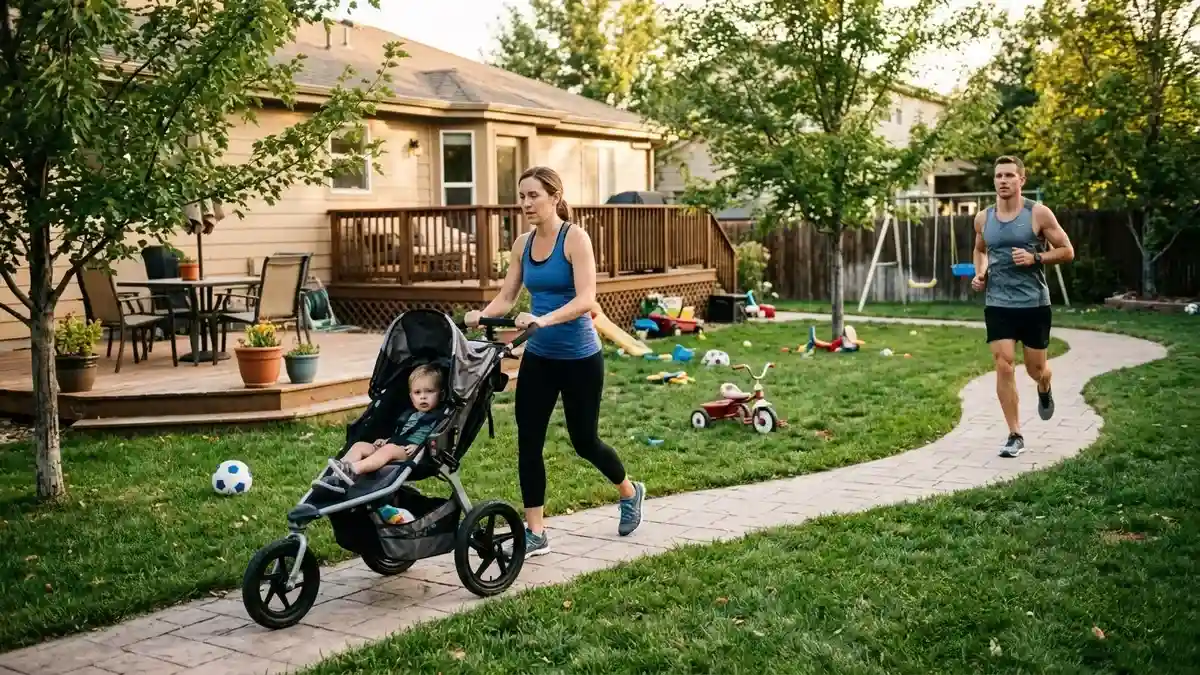
It is a quiet reality played out in households across the country: one partner wakes up at dawn for a grueling five-mile run, while the other struggles to find the energy for a brief walk after a sleepless night. For years, writer and mother Alexandra Frost found herself living directly in the center of this exact dynamic. Her husband, a former Division 1 college football player, maintained a rigorous training schedule that included lifting weights and running five days a week. Meanwhile, Frost’s own physical activity revolved around low-impact workout classes, neighborhood walks, and whatever movement she could squeeze into the chaotic schedule of raising a family.
For a long time, Frost believed that the key to a healthy marriage and a healthy body was closing this divide. However, her journey reveals a completely different truth. Trying to force matching fitness habits often leads to physical injury and emotional friction. By learning to accept what experts call a “fitness gap,” couples can actually protect their individual health, eliminate hidden marital resentment, and build lifestyle habits that genuinely endure.

Embracing a Fitness Gap Helps Couples Save Their Health and Marriage
What Is a Fitness Gap and Why Does It Happen?
A fitness gap refers to the distinct difference between romantic partners regarding their exercise preferences, physical capabilities, energy levels, or overall commitment to athletic training. This divide manifests in many common ways: one partner might maintain a meticulously structured home gym routine while the other prefers pushing a stroller through the park, attending a gentle yoga session, or prioritizing rest after an exhausting week.
At the beginning of her relationship, Frost did not view this disparity as a threat. She naturally categorized her husband as a lifelong competitive athlete and herself as an ordinary person who exercised simply to stay healthy. This division felt manageable when they were young, unburdened by major domestic responsibilities, and navigating separate collegiate schedules.
Crucially, an exercise divide is not inherently problematic. Public health guidelines leave immense room for personal customization. According to the Centers for Disease Control and Prevention (CDC), adults should ideally target at least 150 minutes of moderate-intensity aerobic activity or 75 minutes of vigorous-intensity exercise each week, combined with at least two days of muscle-strengthening workouts. Because these parameters are broad, two people living under the very same roof can meet their physical health goals through entirely different daily routines.
When Parenthood Magnifies the Workout Divide
The emotional weight of a fitness gap often intensifies when major life changes occur, particularly the arrival of children. Following the birth of their first child, Frost found that her relationship with exercise had drastically changed. While she enjoyed postpartum strength and cardio classes designed for new mothers, alongside long stroller walks, her physical capacity was constantly at war with profound exhaustion. In the intense landscape of early parenthood, choosing extra sleep over a workout is frequently the healthiest, most necessary decision a person can make.

The Rise of Domestic Resentment
As their family expanded over the years to include five children, the contrast between the partners’ routines grew impossible to ignore. While Frost’s availability for exercise felt fragile and easily derailed by domestic demands, her husband’s high-intensity routine remained steady and uninterrupted.
This imbalance triggered deep feelings of stress, jealousy, and underlying anger. It became difficult not to compare physical stamina when her husband possessed the endurance to chase the children for hours, carry them effortlessly on his shoulders, and race them up steep hills, while her own energy reserves felt entirely spent.
The Hidden Dangers of Forcing Matching Routines
In an effort to eradicate these painful feelings of inadequacy and resentment, Frost attempted to close the gap by mirroring her husband’s exact athletic habits. In her 20s, she took up running with the ambitious goal of crossing the finish line of a half marathon right alongside him.

The Physical Toll of Compulsive Comparison
The experiment was short-lived and physically damaging. After only a handful of joint running sessions, Frost developed a severe case of plantar fasciitis—a painful, debilitating inflammation of the thick tissue running across the bottom of the foot. The injury sidelined her completely, forcing her into a medical boot and requiring months of intensive physical therapy.
Home Gym Friction: When Shared Spaces Create Tension
When running failed, the couple tried lifting weights together in their home gym. Rather than bringing them closer, this shared endeavor created an entirely new source of marital friction.
Their workouts quickly descended into petty bickering over proper lifting form, routine structures, and minute training details. What was intended to be a bonding experience became an arena of judgment.
This friction served as a major turning point. Frost realized that the home gym was not merely a place for physical exertion for her husband; it was his vital sanctuary for solitude, stress management, and mental decompression amidst the heavy demands of his career and parenting five children.
Shifting from Resentment to Mutual Respect
To heal both her body and her relationship, Frost recognized that she had to stop using her husband’s elite athletic background as the gold standard for her own wellness journey. Exercise is fundamentally individual medicine. The CDC notes that regular physical activity provides immediate psychological benefits, including the reduction of short-term anxiety, while lowering the long-term risk of depression and substantially improving sleep quality.
Furthermore, healthy movement does not require a gym membership or an elite pace. The World Health Organization (WHO) explicitly states that all forms of movement count toward optimal health, including cycling, walking, recreational sports, and even active household chores. With the WHO reporting that 31% of adults worldwide currently fail to meet baseline physical activity recommendations, finding a sustainable path to movement is far more critical than mimicking a partner’s extreme regimen.
Once Frost stepped away from her husband’s weight room and returned to the independent low-impact classes and outdoor walks that she genuinely enjoyed, the toxic comparison dissolved. Open, vulnerable communication played a vital role in this transition. By speaking honestly about her feelings of resentment rather than letting them fester, she allowed her husband to understand her perspective. In return, he offered unwavering encouragement for her independent routines, completely removing any pressure for her to conform to his style of training.
How Couples Can Successfully Navigate an Exercise Divide
The ultimate lesson of the fitness gap is that a unified commitment to long-term health does not require identical daily habits. Couples can share core family values regarding nutrition, wellness, and raising active children while maintaining completely separate relationships with their own bodies.
Shifting the domestic conversation away from comparison requires a simple change in perspective. Instead of asking a partner, “Why don’t you train the way I do?” the question should be, “What form of movement brings you joy and fits seamlessly into your current life?” True partner support does not always mean sweating side-by-side; frequently, it means stepping back, respecting each other’s unique physical boundaries, and giving your partner the time and space to move at their own perfect pace.
Frequently Asked Questions
What exactly is a “fitness gap” in a romantic relationship?
A fitness gap is the visible difference between two partners regarding their physical stamina, exercise styles, workout frequencies, or athletic goals. It occurs naturally when one partner prefers high-intensity or competitive training while the other favors low-impact movement or encounters different physical limitations due to life stages like parenting or injury recovery.
Can a fitness gap cause long-term damage to a marriage?
An exercise divide itself is completely harmless, but the hidden comparison and unexpressed resentment surrounding it can strain a relationship. Tension typically arises when one partner feels judged for not working out enough, or when one partner feels burdened by domestic duties while the other enjoys protected, uninterrupted time to exercise.
How can I stop feeling guilty if my partner is much more active than I am?
Remind yourself that physical activity is personal medicine, not a competitive sport. According to major health organizations like the WHO, low-impact movements like walking, stretching, and active chores are highly effective ways to maintain cardiovascular health. Your routine should be judged by how well it serves your unique body and mental well-being, not by how closely it mirrors your partner’s habits.
What are the risks of trying to force yourself to match a partner’s intense workout routine?
Attempting to instantly match the pace, weight capacity, or mileage of a highly conditioned partner frequently results in severe overuse injuries, such as plantar fasciitis, muscle strains, or joint damage. Additionally, it turns exercise into a stressful chore, increasing the likelihood that you will abandon physical activity altogether due to burnout or frustration.
How can couples support each other’s health goals without working out together?
Couples can show powerful support by actively protecting each other’s personal time to exercise. This can mean taking over childcare duties, meal prepping together, or simply offering verbal encouragement. True collaboration means validating your partner’s chosen path to wellness, even if their routine looks completely different from your own.