
Table of Contents
- 1. Why You Should Avoid Chemical Fly Control
- 2. The Science of the Trap: How It Works
- 3. Materials Required
- 4. Step-by-Step Setup Guide
- 5. Pro-Tips for Maximum Efficiency
- 6. Why This Method Wins
- 7. Frequently Asked Questions (FAQ)
- 7.1. Is it safe to feed the trapped flies to my chickens?
- 7.2. Does the trap attract other insects?
- 7.3. How do I stop the trap from smelling like manure?
- 7.4. Can I use something other than chicken manure as bait?
- 7.5. How often do I need to empty the trap?
Sustainable DIY Fly Traps: A Natural Solution for Chicken Coops
Maintaining a chicken coop is rewarding, but it often comes with an inevitable challenge: flies. The combination of warm weather, organic waste, and constant activity makes the coop an attractive breeding ground for these pests. While commercial chemical sprays and sticky traps are the standard go-to solutions, they often introduce harmful toxins into your environment, threatening pollinators like bees and butterflies and potentially irritating your flock’s respiratory systems.
If you are committed to a chemical-free, sustainable homestead, there is a smarter way to manage the fly population. By utilizing a simple, gravity-based DIY trap, you can reclaim your coop from pests using only items you likely already have on hand.
Sustainable DIY Fly Traps A Natural Solution for Chicken Coops
Why You Should Avoid Chemical Fly Control
Pesticides and synthetic chemicals are problematic for several reasons. Beyond the risk of chemical runoff contaminating your soil, these substances can be toxic to the beneficial insects that help your garden thrive. Even standard sticky traps are indiscriminate, often catching and killing pollinators that have no interest in your chicken coop.

For the health of your birds and the biodiversity of your backyard, a mechanical, non-toxic approach is the superior choice. This DIY method creates a balanced ecosystem where you aren’t fighting nature—you are simply guiding it.
The Science of the Trap: How It Works
This DIY design operates on the natural behavior of flies. Most fly species are instinctively drawn to the scent of manure to feed and lay eggs. However, once a fly lands to feed, its exit strategy is flawed: when startled or ready to leave, flies instinctively fly upward toward the light.
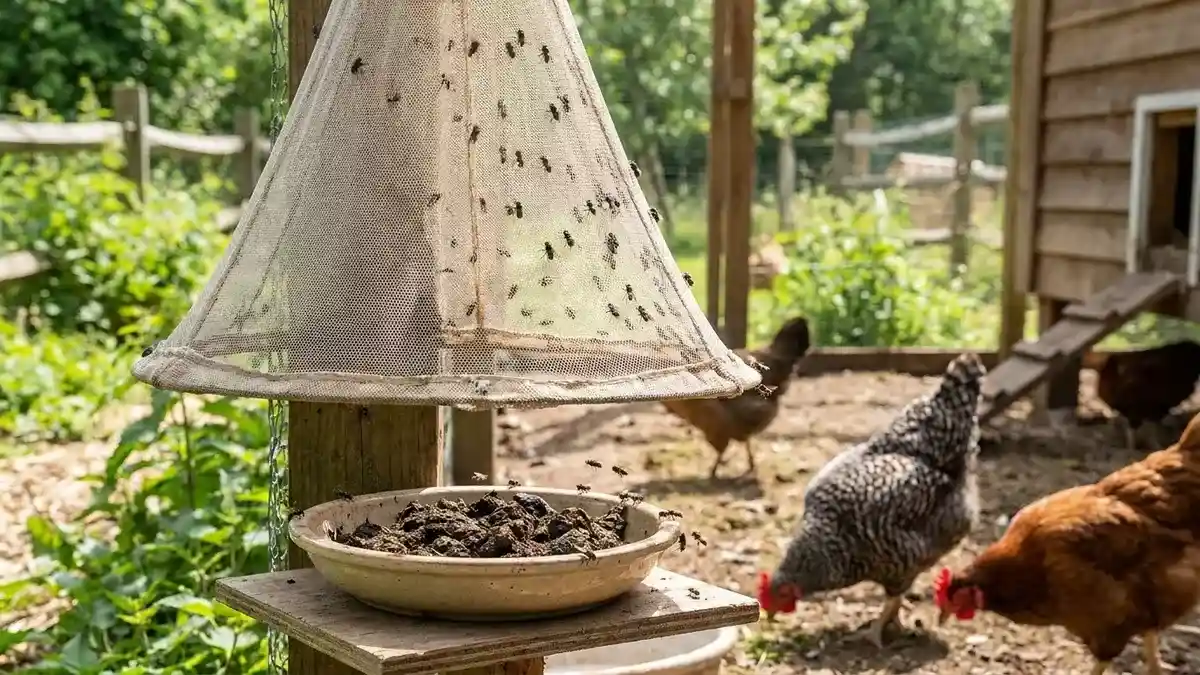
By placing a bait bowl beneath a mesh netting structure, you leverage this behavior. The flies are lured into the bait area by the irresistible scent of fresh manure, and when they attempt to fly away, they head straight into the trap’s mesh enclosure, where they remain contained. After they pass away, you are left with a collection of high-protein organic matter that serves as a perfect, nutrient-dense treat for your chickens.

Materials Required
You do not need to spend money on expensive, high-tech devices. You likely have everything you need already:
Mesh Fly Trap: You can purchase an inexpensive mesh cage online, or repurpose netting or mesh fabric from old gardening supplies.
Bait Bowl: Any small, shallow container or bowl that can hold a scoop of manure.
Support: A sturdy stick, pole, or hook to suspend the trap.
The Bait: Fresh chicken manure (the most effective and free attractant available).

Step-by-Step Setup Guide
Prepare the Bait: Scoop a small amount of fresh chicken manure into your bait bowl. The scent is the primary lure, so freshness is key to attracting flies quickly.
Position the Trap: Hang your mesh trap roughly three to five feet off the ground. Place it in a strategic location—close enough to the coop to draw flies away from the birds, but far enough from their primary food and water sources to maintain hygiene.
Monitor the Results: Within 24 hours, you should notice a significant number of flies trapped in the mesh. Check the trap daily to gauge effectiveness.
The Recycling Loop: Once the trap has done its job, empty the contents into a container. You can feed the dried flies directly back to your chickens—they will appreciate the concentrated protein boost—or incorporate them into your compost pile.
Refresh: Replace the manure bait every three to four days to ensure the scent remains potent enough to continue attracting new pests.
Pro-Tips for Maximum Efficiency
To get the most out of your fly trap, keep these maintenance tips in mind:
Keep it Cool: The bait works best when it stays slightly moist. Position the trap in a shaded area to prevent the sun from drying out the manure too quickly.
Rotate Locations: If you notice fly activity in different parts of the yard, move the trap every few days to target different zones and prevent buildup in one spot.
Keep it Clean: If the trap begins to develop a strong, lingering odor, simply rinse the mesh with water and reset the bait.
Why This Method Wins
This DIY fly trap is the definition of a sustainable homesteading practice. It eliminates the need for ongoing costs, requires no fancy gadgets, and creates a closed-loop system in your backyard. By turning a pest problem into a high-quality protein source for your flock, you are practicing true regenerative management. It is a simple, effective, and deeply satisfying way to keep your coop clean and your birds happy without ever reaching for a chemical spray.
Frequently Asked Questions (FAQ)
Is it safe to feed the trapped flies to my chickens?
Yes, absolutely. Dried flies are a fantastic, natural source of protein for poultry. As long as you are not using chemical pesticides in the trap, these flies are a safe and nutritious treat for your flock.
Does the trap attract other insects?
Because this trap relies on the scent of manure, it is specifically designed to attract flies. While some other insects may be curious, the mesh design is generally effective at targeting only those attracted to the bait.
How do I stop the trap from smelling like manure?
The smell is what attracts the flies, so it is necessary to some degree. However, by keeping the trap a few feet away from the coop and human gathering areas, the smell should be unnoticeable. If the odor becomes too strong, ensure the bait isn’t rotting excessively and rinse the equipment.
Can I use something other than chicken manure as bait?
While chicken manure is the most effective bait, you can use other high-protein or fermenting organic matter if manure isn’t available, though it may be less effective for this specific purpose.
How often do I need to empty the trap?
Check the trap every 24 to 48 hours. If it is full, empty it to make room for more flies. If you are catching very few, try moving the trap to a different location or refreshing the bait.