
Table of Contents
- 1. The Power of Upcycled Plant Nutrition
- 2. 12 Everyday Kitchen Items You Can Turn Into Fertilizer
- 2.1. 1. Banana Peels
- 2.2. 2. Used Coffee Grounds
- 2.3. 3. Eggshells
- 2.4. 4. Used Tea Leaves
- 2.5. 5. Vegetable Cooking Water
- 2.6. 6. Epsom Salt
- 2.7. 7. Wood Ash
- 2.8. 8. Compost Tea
- 2.9. 9. Freshwater Aquarium Water
- 2.10. 10. Molasses
- 2.11. 11. Fresh Grass Clippings
- 2.12. 12. Human Hair and Pet Fur
- 3. Cultivating Long-Term Soil Health
- 4. Frequently Asked Questions
- 4.1. Can I mix all of these kitchen fertilizers together at once?
- 4.2. Will using kitchen scraps in my garden attract raccoons or mice?
- 4.3. Is it safe to use coffee grounds on all types of houseplants?
- 4.4. Can I use water from a salted pot of boiled potatoes if I let it cool?
- 4.5. How often should I apply liquid fertilizers like banana tea or Epsom salt water?
12 Kitchen Scraps That Will Transform Your Garden This Summer
Every day, an incredible amount of potential garden gold is tossed directly into kitchen trash cans and garbage disposals. We peel bananas, crack eggs, and rinse out coffee pots without a second thought, treating these remnants as mere waste. However, your household scraps are actually packed with the exact macro- and micronutrients your landscape craves.
Transitioning to homemade, kitchen-sourced soil amendments is one of the easiest ways to save money, minimize your environmental footprint, and build ultra-rich, fertile soil. By bypassing synthetic fertilizers and utilizing these twelve household staples, you can feed everything from heavy-feeding patio tomatoes to delicate indoor houseplants completely naturally.
12 Kitchen Scraps That Will Transform Your Garden This Summer
The Power of Upcycled Plant Nutrition
Before diving into the specific ingredients hiding in your pantry, it helps to understand why organic, home-sourced feeding works so well. Commercial fertilizers rely on highly concentrated, synthetic chemical salts that can easily burn plant roots and degrade long-term soil structure.
In contrast, kitchen waste breaks down gently, working in tandem with native soil microbes to establish a slow-release feeding loop. This approach improves the physical structure of your soil, increases water retention, and introduces vital trace minerals that standard fertilizers often omit.
12 Everyday Kitchen Items You Can Turn Into Fertilizer
1. Banana Peels
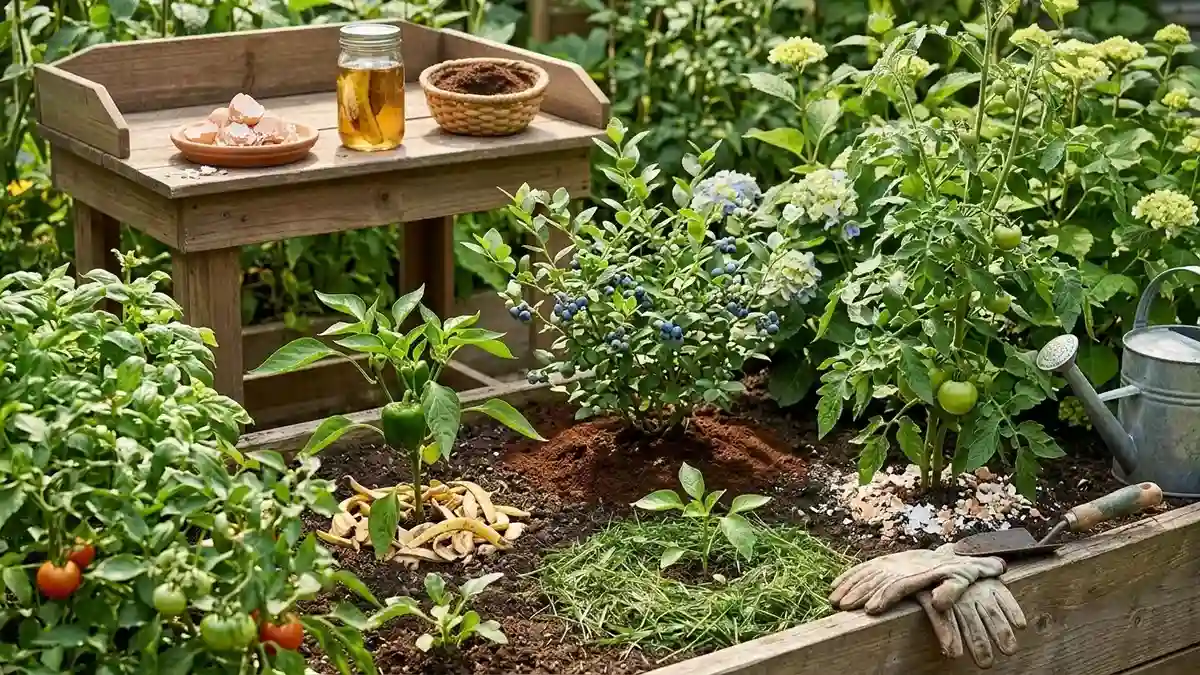
Banana peels are a premium source of organic potassium and phosphorus, two crucial elements responsible for regulating water uptake, building strong root networks, and triggering heavy flower and fruit production.
How to Apply: Cut the raw peels into small, half-inch fragments using kitchen shears and bury them a few inches deep directly around the root zones of hungry plants like garden peppers, roses, and young fruit trees. Alternatively, submerge the peels in a jar of clean water for three to five days to brew a nutrient-dense liquid “banana tea” to pour over your garden beds.
2. Used Coffee Grounds
If you are an avid coffee drinker, your daily brew leaves behind a fantastic source of plant-available nitrogen. This element is directly responsible for vibrant green chlorophyll production and rapid, leafy vegetative growth.
How to Apply: Because coffee grounds are slightly acidic, they are highly prized by acid-loving crops such as blueberries, hydrangeas, rhododendrons, and azaleas. Spread your used grounds out on a baking sheet to dry completely before lightly scratching them into the soil surface around your plants. Avoid piling fresh, wet grounds in thick layers, as this can create an impermeable mat that blocks oxygen and traps unwanted mold.
3. Eggshells
Eggshells are almost entirely composed of calcium carbonate, an essential structural element that reinforces plant cell walls. A distinct lack of calcium in the soil is the leading cause of blossom-end rot, a frustrating condition that causes the bottom of tomatoes, squash, and peppers to turn black and velvety.
Eggshell Processing for Rapid Absorption:
[ Rinse & Dry Shells ] ──> [ Pulverize to Fine Powder ] ──> [ Blend Into Root Zone Soil ]
How to Apply: Rinse your empty eggshells thoroughly to remove any liquid residue, allow them to air-dry, and pulverize them using a mortar and pestle or an electric blender. The finer the powder, the faster the soil biology can dissolve it, making the calcium instantly available to your plants.
4. Used Tea Leaves
Leftover tea leaves, whether loose or from unbleached paper bags, contain a gentle concentration of nitrogen and various vital trace minerals. They are highly effective at building optimal soil texture, improving moisture retention, and boosting drainage in heavy clay soils.
How to Apply: Tear open your used tea bags, verify the leaves are entirely free of artificial sweeteners or chemical flavorings, and mix the damp leaves directly into your potting soil or outdoor garden beds. Like coffee grounds, tea leaves are excellent for maintaining a healthy, slightly acidic soil profile.
5. Vegetable Cooking Water
The nutrient-rich liquid left behind after boiling potatoes, broccoli, carrots, or pasta is a hidden asset for home gardeners. As vegetables cook, beneficial minerals like potassium, calcium, and magnesium naturally bleed out into the water.
How to Apply: Allow the cooking liquid to cool completely to room temperature before using it to irrigate your houseplants or outdoor vegetable beds.
Critical Warning: Never use vegetable cooking water that has been seasoned with table salt. Sodium is highly toxic to plant root systems, disrupts osmosis, and can permanently damage your soil’s delicate salt balance.
6. Epsom Salt
Though technically a household bathroom or first-aid staple rather than a food item, Epsom salt is chemically known as magnesium sulfate. Magnesium plays an indispensable role in triggering photosynthesis and assisting with early seed germination, while sulfur drives essential plant enzyme production.
How to Apply: Dissolve 1 tablespoon of Epsom salt into 1 gallon of clean water. You can apply this solution as a standard soil drench or pour it into a spray bottle to use as a foliar spray, misting the leaves directly for rapid nutrient absorption. Tomatoes, bell peppers, and roses respond exceptionally well to this treatment.
7. Wood Ash
If you heat your home with a wood-burning stove or enjoy backyard bonfires, the leftover ash can serve as an excellent source of potassium and calcium. Wood ash also acts as a natural lime substitute, capable of raising the pH of overly acidic, sour soils.
How to Apply: Wait for the ash to cool completely, then lightly dust it across your garden beds or incorporate it into your active compost pile.
| Soil Type | Wood Ash Action | Application Caution |
| Highly Acidic Soil (pH < 6.0) | Safely raises pH and adds minerals | Apply lightly; monitor with regular pH tests. |
| Alkaline Soil (pH > 7.0) | Avoid entirely | Can raise pH too high, causing nutrient lockout. |
Only use ash derived from clean, untreated, unpainted hardwoods. Never use ash from charcoal briquettes or pressure-treated lumber, which contain dangerous chemical binders.
8. Compost Tea
Compost tea is an incredibly potent, liquid fertilizer often referred to by organic growers as “liquid gold.” It transfers the concentrated nutrients and beneficial micro-organisms of solid compost into an easily absorbable liquid form.
How to Apply: Fill a porous burlap sack or mesh bag with a few shovelfuls of fully cured, finished organic compost. Submerge the bag in a large bucket of water and let it steep for 24 to 48 hours. Strain the liquid and use it immediately to feed delicate seedlings, indoor container gardens, or plants showing signs of environmental stress.
9. Freshwater Aquarium Water
When it comes time to clean out your home fish tank, do not pour that dirty water down the bathroom drain. The accumulated fish waste, uneaten food particles, and trace elements present in aquarium water create a balanced, mild liquid plant food teeming with nitrogen and beneficial nitrifying bacteria.
How to Apply: Simply collect the old water during your regular tank maintenance and use it to water your indoor tropical plants or outdoor landscape beds. Ensure the water is exclusively from a freshwater tank; marine or saltwater aquarium water contains heavy sodium levels that will kill standard land plants.
10. Molasses
While molasses does not supply traditional plant nutrients directly, it functions as a high-energy superfood for the millions of beneficial bacteria and fungi living naturally within your soil matrix.
How to Apply: Mix 1 to 2 tablespoons of unsulfured blackstrap molasses into a gallon of warm water. Apply this sweet solution to your soil once every few weeks. The sugars trigger a massive population boom among beneficial soil microbes, which in turn accelerate the breakdown of organic matter, making nutrients significantly more accessible to your plants.
11. Fresh Grass Clippings
Your lawn mower is a rolling factory for high-nitrogen fertilizer. Freshly cut grass blades are packed with moisture and nitrogen, making them an exceptional, free resource for vegetable growers.
How to Apply: Spread a thin, two-inch layer of fresh clippings across the surface of your garden beds to serve as a living mulch that cools the soil, suppresses weed growth, and slowly releases nitrogen as it breaks down. Alternatively, mix dry, brown clippings into your compost bin to balance out carbon-heavy materials. Only use clippings from lawns that have been kept free of chemical weed-and-feed treatments.
12. Human Hair and Pet Fur
It might sound unusual, but human hair and pet groomings are made of keratin, a protein that is incredibly rich in nitrogen. While hair decomposes quite slowly over time, it provides an excellent long-term structural amendment.
How to Apply: Save the contents of your hairbrush or pet grooming tools and work the fibers directly into your potting soil, or bury them deep within the center of a hot compost pile. As the strands slowly break down over several months, they will gradually release nitrogen while physically helping to aerate dense, heavy soils.
Cultivating Long-Term Soil Health
Leveraging your kitchen scraps to feed your garden is an incredibly smart, intuitive way to close the waste loop in your home. However, moderation is key to achieving a thriving landscape. Just as with commercial products, applying excessive amounts of any one item—like dumping pounds of wet coffee grounds onto a single plant—can throw off your soil’s natural pH and invite unwanted fungal growth.
Start by introducing these home remedies in small, balanced amounts, monitor how your plants respond, and enjoy watching your kitchen waste transform into a lush, vibrant backyard sanctuary.
Frequently Asked Questions
Can I mix all of these kitchen fertilizers together at once?
It is best to apply these amendments based on your plants’ specific nutritional needs rather than mixing them all together blindly. For instance, use eggshells when your tomatoes are flowering to prevent blossom-end rot, and save coffee grounds for your acid-loving leafy greens. Applying everything simultaneously can create nutrient imbalances in the soil.
Will using kitchen scraps in my garden attract raccoons or mice?
Unprocessed food waste left sitting directly on top of the soil can absolutely attract curious neighborhood wildlife and insect pests. To prevent this, always bury solid scraps like banana peels or hair several inches beneath the surface of the earth, or blend them thoroughly into a secure, enclosed backyard compost bin.
Is it safe to use coffee grounds on all types of houseplants?
No. Because coffee grounds are naturally acidic, they are ideal for acid-loving houseplants like African violets, ferns, and peace lilies. However, you should avoid using them on plants that prefer neutral to slightly alkaline conditions, such as succulents, cacti, or indoor trailing pothos, as the acidity can stress their root systems.
Can I use water from a salted pot of boiled potatoes if I let it cool?
No. Once salt is dissolved into cooking water, it cannot be removed by cooling or settling. Pouring salted water into your garden will cause sodium toxicity, which prevents plant roots from absorbing water efficiently, leading to leaf burn and eventual plant death. Only use unsalted cooking water.
How often should I apply liquid fertilizers like banana tea or Epsom salt water?
Liquid, home-brewed fertilizers are generally mild and can be safely applied once every two to three weeks during the peak spring and summer growing seasons. Always dilute them properly and stop applications entirely during the late autumn and winter months when your plants enter their natural dormancy period.