
Table of Contents
- 0.1. Why Do Weeds Love Rock Beds?
- 1. Step-by-Step Guide to Removing Weeds from Rocks
- 1.1. 1. Manual Removal and Deep Root Pulling
- 1.2. 2. Mix an Eco-Friendly DIY Weed Killer
- 1.3. 3. Utilize a Propane Weed Torch
- 2. How to Prevent Weeds from Returning to Your Stones
- 2.1. Clean and Refresh Your Rock Layers
- 2.2. Install a Commercial-Grade Barrier
- 2.3. Commit to Routine Seasonal Maintenance
- 3. Conclusion
- 4. Frequently Asked Questions
5 Easy Ways to Clear Weeds from Landscaping Rocks Fast
No matter how carefully you design your gravel pathways or decorative stone beds, unwanted plants always seem to find a way in. You pull them out, tidy up the area, and within a few days, those stubborn green shoots are back. Dealing with invasive growth in stone features can feel like a losing battle, but you do not have to let them take over your yard. With the right strategy, you can eliminate these eyesores and keep your outdoor spaces looking pristine all season long.
5 Easy Ways to Clear Weeds from Landscaping Rocks Fast
Why Do Weeds Love Rock Beds?
It seems counterintuitive that plants can thrive in a bed of solid stones, but landscaping rocks actually create an ideal environment for seeds to germinate.
Over time, wind and rain deposit dirt, fallen leaves, and decaying organic matter into the spaces between the rocks. This debris settles at the base, breaking down into a nutrient-rich layer of hidden compost. When a seed blows into your yard, it slips between the stones, hits this moist soil layer, and quickly takes root.
Furthermore, even if you installed a landscape fabric barrier beneath your stones, that material degrades, tears, or punctures over the years. Once a root penetrates a tear or establishes itself in the debris on top of the fabric, the surrounding rocks shield the roots from sun exposure and retain moisture, making the weed incredibly resilient and difficult to pull.
Step-by-Step Guide to Removing Weeds from Rocks
To permanently clear your stone features, you need a systematic approach that addresses both the visible growth and the hidden root systems.
1. Manual Removal and Deep Root Pulling
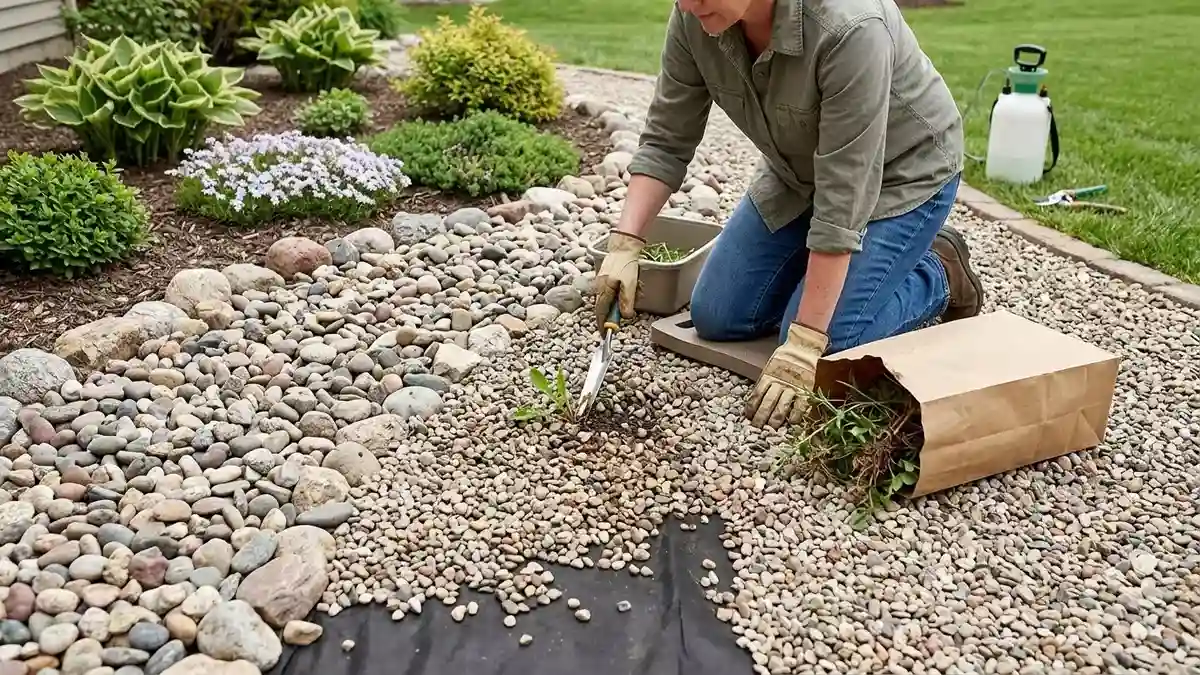
The most immediate way to clean up your stone border is by pulling the invaders out by hand. However, simply snapping off the tops of the plants will not solve your problem; many varieties will regenerate quickly if the root system remains intact.
Target the Base: Grip the plant firmly at its very base, right where it meets the soil beneath the rocks.
Use the Right Tools: A narrow trowel, hand weeded, or specialized crevice tool can help you loosen the surrounding rocks and soil without displacing your entire landscape feature.
Focus on Deep-Rooted Species: This step is absolutely crucial for aggressive perennials like thistles or crabgrass, which spread via extensive underground networks.

Pro Tip: Never attempt to pull weeds when the ground is bone dry. Wait until the day after a heavy rainstorm, or thoroughly soak the rock bed with a garden hose before you start. Wet soil softens the grip on the root structure, allowing you to slide the entire plant out cleanly without breaking it.
2. Mix an Eco-Friendly DIY Weed Killer
If you prefer to skip harsh synthetic chemical formulas, you can mix up a highly effective, non-toxic alternative using common household ingredients found right in your kitchen pantry.
To create this powerful natural spray, combine:
1 gallon of standard white vinegar
1 cup of table salt
1 tablespoon of liquid dish soap
Mix the ingredients thoroughly in a pump sprayer. For the best results, apply this solution on a hot, bright, sunny afternoon. The combination of vinegar and salt rapidly draws moisture out of the plant tissue, while the liquid dish soap acts as a surfactant, breaking down the waxy outer coating of the leaves so the mixture sticks instead of sliding off.
Note: This solution is non-selective, meaning it will dehydrate and damage any vegetation it comes into contact with. Be careful when spraying near prized garden borders, lawns, or ornamental shrubs.
3. Utilize a Propane Weed Torch
For homeowners managing expansive gravel driveways or large decorative rock features, a propane weed torch offers a fast, satisfying, and highly efficient solution.
These specialized gardening tools emit a controlled, high-heat flame that instantly boils the water inside the plant cells, causing them to wither and die within hours. You do not need to burn the plant to ashes; a brief pass with the heat is enough to disrupt the cell structure down to the root crown.
Safety First: Always exercise extreme caution when operating a torch. Avoid using this method during windy conditions, and never use a flame torch near dry mulch, dead grass, wooden fences, or any other flammable landscaping materials.
How to Prevent Weeds from Returning to Your Stones
Clearing out the current growth is only half the battle. To save your back and your free time in the future, you must implement preventative measures to stop new seeds from taking hold.
Clean and Refresh Your Rock Layers
As debris builds up between your stones, it creates an ongoing invitation for new seeds. Periodically clearing this organic matter out is essential.
Use a heavy-duty rake to stir up the rocks and loosen trapped dirt, or use an outdoor shop-vac to suction out dead leaves, dust, and pine needles from the crevices. If your rock bed has become completely choked with soil over the years, it may be worth scooping the rocks into a wire mesh screen, washing them down with a hose to remove the accumulated mud, and relaying them over a clean surface.
Install a Commercial-Grade Barrier
If your old landscaping fabric is deteriorating, it is time to upgrade. Remove your decorative stones and lay down a high-quality, commercial-grade geotextile fabric.
Look for heavy-duty woven or non-woven options specifically engineered for weed suppression under stone. These materials are thick enough to block out the sunlight that seeds need to grow, yet porous enough to allow water to drain freely into the ground, preventing puddling and runoff issues.
Commit to Routine Seasonal Maintenance
Weed control in hardscaping is not a one-time project; it requires ongoing vigilance. Wind, birds, and rainstorms constantly bring new seeds into your yard. Spend five minutes every week walking your stone paths to spot-treat or pull small sprouts before they have a chance to develop deep, stubborn root systems. Catching them early keeps the job simple and manageable.
Conclusion
Keeping your landscape rocks clean and immaculate doesn’t have to be an exhausting chore. By combining thorough manual removal with targeted natural sprays or thermal tools, you can easily clear away unsightly growth. Pair those eradication methods with routine debris cleaning and a high-quality fabric barrier, and you will dramatically reduce future maintenance, allowing you to enjoy a beautiful, weed-free yard all year long.
Frequently Asked Questions
Can I use boiling water to kill weeds in my rocks?
Yes. Pouring boiling water directly over plants is an excellent, cost-free, and chemical-free method to kill small weeds. The extreme heat scalds the plant and damages the root system. However, it works best on young weeds and may require multiple applications for mature plants with deep roots.
Will salt ruin the soil under my landscaping rocks permanently?
Salt can accumulate in the soil and prevent any future plant growth in that specific spot. While this is beneficial for a permanent rock path where you never want vegetation, avoid using heavy amounts of salt near the drip line of trees, shrubs, or prized flower beds, as rainwater can wash the salt into areas where it might harm desirable plants.
How often should I replace the fabric under my landscaping rocks?
Standard consumer-grade landscape fabric typically lasts between 3 to 5 years before it begins to degrade. High-quality, commercial-grade geotextile fabrics can last 10 to 20 years or longer depending on the climate, drainage, and the amount of organic debris that accumulates on top of it.
Is it better to use a weed torch or chemical sprays on gravel paths?
A weed torch is often better for gravel paths because it leaves no chemical residue in the soil and works instantly without relying on weather conditions to absorb a spray. It is also highly cost-effective for large areas. However, chemical or natural sprays are safer to use around flammable materials like wood decks or dry privacy fences.
Why do weeds still grow on top of my brand-new landscape fabric?
When you see weeds growing shortly after installing new fabric, they are usually growing on top of the barrier rather than pushing up from underneath. Dust, dirt, and organic matter quickly settle into the crevices of your rocks, creating a shallow layer of soil on top of the fabric where blown-in seeds can easily sprout. Regular cleaning of the rocks prevents this.