
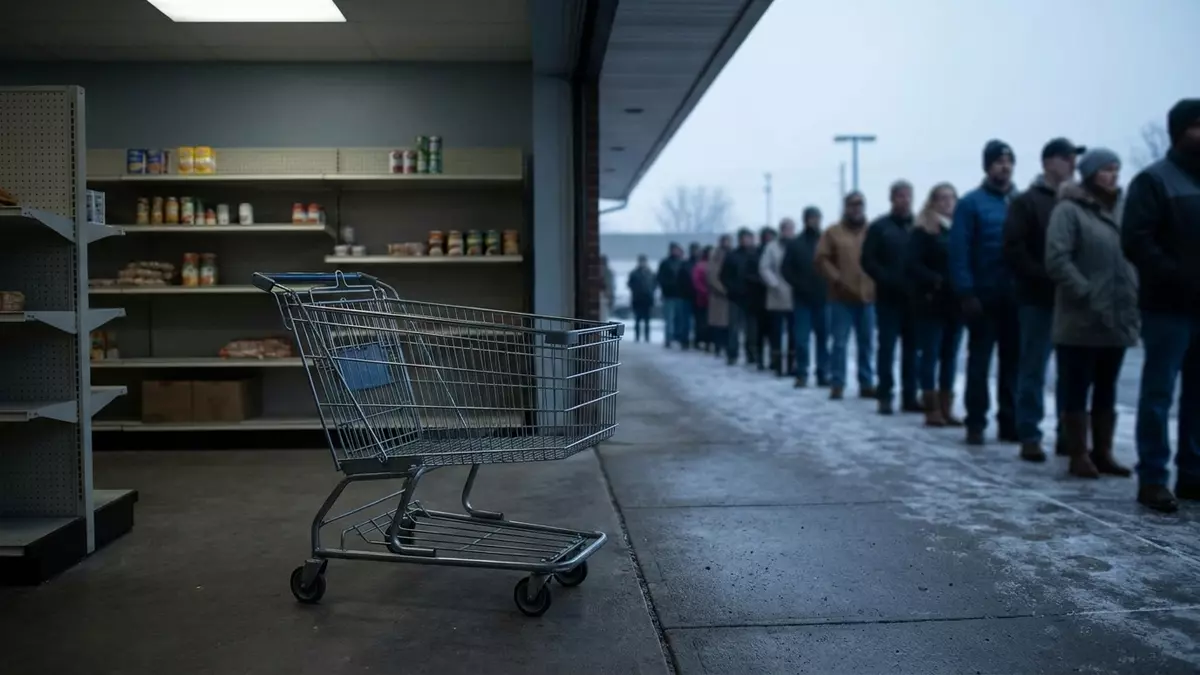
SNAP Benefits Halted: What Millions Must Know About November
For over 42 million Americans, the Supplemental Nutrition Assistance Program (SNAP)—often referred to as food stamps—is not just a government benefit; it is a vital lifeline. It puts food on the table for families, children, and seniors who rely on monthly electronic benefits to maintain their nutritional needs. However, a recent shift in federal policy has created widespread uncertainty, leaving millions wondering when, or if, their next payment will arrive.
President Donald Trump recently announced that SNAP payments will remain suspended until the ongoing federal government shutdown is resolved. This latest development has sent shockwaves through vulnerable households across the country, turning a logistical challenge into a pressing food security crisis.

SNAP Benefits Halted What Millions Must Know About November
The Current State of SNAP Benefits
The federal government’s decision to pause all new SNAP payments until the government reopens marks a significant departure from earlier efforts to sustain the program. While the administration previously indicated a willingness to use emergency contingency funds to cover a portion of November’s benefits, that position has shifted.

The President’s directive, shared via social media, explicitly stated that these critical funds would be released only once a legislative agreement is reached to end the government shutdown. This stance places the burden of food security squarely in the middle of a high-stakes political impasse, leaving millions of individuals—roughly one in eight Americans—facing a period of extreme uncertainty.
Why Are Payments Being Delayed?
The core of the issue lies in the complex relationship between federal funding streams and the Department of Agriculture’s (USDA) operational capabilities. During a government shutdown, the mechanism for distributing these funds is disrupted.
Administration officials have pointed to both legal and logistical hurdles as the primary reasons for the delay. The USDA maintains a contingency fund of approximately $6 billion, but this amount falls well short of the $8 billion typically required to fully support the SNAP program on a monthly basis. Consequently, officials argue that providing partial, 50-percent payments would be fraught with logistical instability, leading to the current decision to halt distributions entirely.

The Impact on Families and Communities
The ripple effects of this shutdown are immediate and severe. Because SNAP funding is federally managed, most states lack the independent budget capacity to bridge the gap. For the 40-plus million people who depend on this program to cover grocery costs, the lack of a payment means an immediate reduction in purchasing power.
Increased Strain on Local Food Banks
As the prospect of delayed payments looms, local food banks and nonprofit organizations are reporting a sudden surge in demand. Households that usually rely on their EBT cards to supplement their food budget are now turning to charitable organizations to make up the difference.
Community food pantries, already operating on thin margins, are bracing for a prolonged period of increased pressure. Experts warn that if the shutdown persists, the capacity of these local safety nets will be tested to their absolute limits, potentially leading to widespread food insecurity in regions that are already economically disadvantaged.

The Legal Battle Over Food Assistance
The path forward remains murky, with legal intervention serving as the final potential avenue for relief. Advocacy groups and various state attorneys general have initiated legal actions aimed at compelling the federal government to resume payments.
These legal motions often cite existing court orders from jurisdictions like Rhode Island and Boston, which previously mandated that the USDA maintain funding for SNAP during a shutdown. Whether these ongoing legal battles will succeed in forcing a release of funds before a broader political deal is struck remains an open question. For now, the administration’s position holds firm: no government reopening, no food stamp payments.
Navigating the Uncertainty: What Recipients Need to Know
For families caught in the middle of this political standoff, the situation is undeniably stressful. While the federal government has not yet provided a concrete timeline for when benefits might resume, several key points remain clear:
No Current Distributions: As of now, the federal government has ceased the processing of new SNAP payments.
State-Level Limitations: Most state agencies are unable to circumvent federal funding requirements. If you are a recipient, checking with your local state social services department is recommended for any potential, albeit limited, localized assistance programs.
Monitoring Official Guidance: The USDA is expected to issue updated instructions as soon as the political situation changes. Maintaining awareness of announcements from the USDA or your state’s health and human services agency is critical.
Community Resources: If you are currently facing a food shortage, reaching out to your local food bank or 2-1-1 service can provide information on emergency food assistance programs in your area.
The Path Forward: Politics and Food Security
The debate surrounding SNAP funding has become a focal point of the current government shutdown. While Republican leadership has cited “legal impediments” that prevent the distribution of full benefits during a shutdown, Democrats have characterized the delay as an unnecessary political tactic that hurts the most vulnerable citizens.
Senator Amy Klobuchar and other critics have urged the White House to prioritize finding a solution, emphasizing that essential nutrition programs should remain protected from political bargaining. As the shutdown continues, the pressure on lawmakers to find a resolution increases, not just for the sake of government operations, but for the millions of Americans who are currently uncertain about their next meal.
Frequently Asked Questions (FAQ)
1. Will I still get my SNAP benefits this month?
Currently, no. The administration has announced that SNAP payments are paused until the government shutdown ends. There is no official date for when distributions will resume.
2. Is there any way to get partial payments?
While there were initial discussions about using emergency contingency funds to cover 50 percent of payments, the administration has since pivoted, stating that no new payments will be issued until a deal is reached to reopen the government.
3. What should I do if I run out of food?
If you are unable to purchase food due to the delay, you should contact local food banks, non-profit organizations, or call 2-1-1 in the United States to find local emergency food resources.
4. Are my EBT cards inactive?
Your EBT card itself is not necessarily inactive; however, there is no new funding being loaded onto accounts. If you have a remaining balance on your card from previous months, you can still spend those funds at authorized retailers.
5. When will the government reopen?
The timeline for ending a government shutdown is determined by negotiations between Congress and the White House. There is currently no confirmed date for when these operations will resume.
Conclusion
The suspension of SNAP benefits serves as a stark reminder of how deeply federal policy impacts the daily lives of millions. As families navigate this period of uncertainty, the importance of maintaining robust, non-partisan safety nets becomes increasingly clear. While the political dialogue continues in Washington, the real-world impact is being felt in kitchens across the nation. Staying informed through official government channels and utilizing local community support networks is the best way to manage this challenging situation until federal funding is restored.