
Why a Second Opinion Might Save Your Teeth (and Money)
For many patients, a dental checkup is a routine event that occasionally results in a sudden, expensive surprise: the “cavity diagnosis.” One dentist might recommend immediate drilling and filling, while another might suggest a “watch and wait” approach or preventive care. This discrepancy can feel like guesswork, but it actually highlights a critical evolution in how modern dentistry treats tooth decay.
Because one in five American adults aged 20 to 64 lives with untreated cavities, understanding when a drill is truly necessary is a vital skill for every patient.
Why a Second Opinion Might Save Your Teeth (and Money)
The Science of Tooth Decay: Beyond the Drill
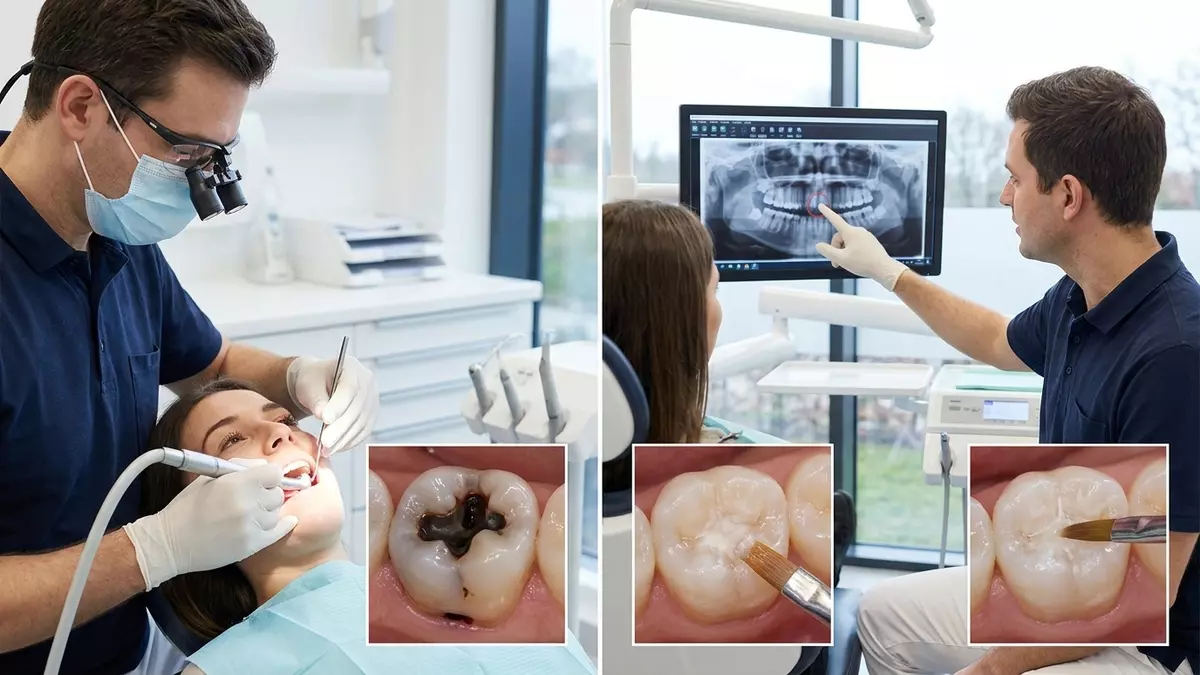
Tooth decay is a progressive process driven by oral bacteria that feed on sugars and starches. These bacteria produce acids that erode tooth minerals. However, decay does not immediately result in a cavity that requires a drill. It moves through distinct stages, and the depth of the damage is the primary factor in determining the treatment path.

Enamel Stage (Surface): The hard outer layer of the tooth. Decay at this stage is often reversible through remineralization.
Dentin Stage (Deeper): The softer, sensitive layer beneath the enamel. Once decay penetrates this layer, many dentists believe the structure is sufficiently compromised to warrant a filling.
The core of the disagreement between dental professionals often lies in where they draw the line. Factors such as the dentist’s training—a 2026 graduate may have been taught different clinical protocols than someone who graduated in 1999—and their personal philosophy on “minimally invasive” care can lead to widely different treatment plans for the exact same patient.

The Shift Toward Minimally Invasive Dentistry
Modern dentistry is experiencing a significant paradigm shift. The era of “drill and fill” as an automatic first response is waning. The American Dental Association (ADA) underscored this in a 2023 guideline, which advocates for conservative treatment plans that aim to preserve as much natural tooth structure as possible.
The logic is simple but profound: every time a tooth is drilled, it enters a cycle of potential future repairs. A filling may eventually need replacement, potentially leading to a crown or a root canal down the line. By choosing conservative care, dentists aim to extend the life of the natural tooth.
Preventive Options: Can You Reverse a Cavity?
Patients are often surprised to learn that early-stage cavities, particularly “white-spot” lesions, can sometimes be stopped or reversed. The National Institute of Dental and Craniofacial Research notes that proactive measures can halt the progress of decay:

Fluoride Treatments: High-concentration prescription toothpastes or in-office fluoride varnish can replace lost minerals and strengthen enamel.
Dental Sealants: These thin, protective coatings block food and bacteria from settling into the deep grooves of back teeth.
Modern Repair Agents: Newer products, such as Curodont Repair Fluoride Plus, are designed to assist in professional remineralization and white-spot treatment.
Behavioral Adjustments: Reducing the frequency of sugar intake and optimizing brushing and flossing habits provide saliva the necessary time to naturally repair the tooth surface.
The Business of Dentistry
While dental care is a healthcare field, it is also a business. Financial incentives can sometimes influence treatment recommendations, as procedures like fillings, crowns, and root canals generate more revenue than monitoring a tooth or prescribing a rinse.
This tension has prompted legislative action. For instance, California’s SB 351, which took effect on January 1, 2026, prohibits private equity firms and hedge funds from imposing patient quotas or interfering with a dentist’s clinical judgment. While most dentists are driven by ethical standards, it is always wise for patients to remain informed and advocate for their own interests.
When—and How—to Seek a Second Opinion
If a dentist recommends a treatment plan that feels aggressive, expensive, or sudden, a second opinion is a standard and reasonable request. However, you should not delay care if you are experiencing pain, swelling, fever, or a broken tooth, as these indicate more advanced issues.
Tips for navigating a second opinion:
Request Your Records: You have a legal right to your dental X-rays. Take them with you to the next appointment.
Keep Your Counsel: Try not to share the first dentist’s treatment plan immediately. Let the second dentist perform their own examination to ensure a fresh, unbiased assessment.
Ask Targeted Questions:
“How deep is the decay—is it in the enamel or the dentin?”
“Can I see the X-ray or image showing the decay?”
“What would happen if we monitored this for three months with a fluoride treatment?”
“What criteria would make this tooth require a filling in the future?”
Conclusion
The goal of your dental care should be long-term health, not just immediate intervention. By understanding that early decay is often a manageable condition rather than an emergency, you can engage more confidently with your dentist. Whether through preventive care or a necessary restoration, being an informed participant in your treatment plan ensures that your smile remains healthy for years to come.
Frequently Asked Questions (FAQ)
1. Is a second opinion common in dentistry?
Yes. Just as patients seek second opinions for medical surgeries or diagnoses, it is perfectly acceptable to ask for one if you are unsure about a significant dental procedure.
2. Can all cavities be reversed?
No. Decay that has moved deep into the dentin—the layer beneath the enamel—usually requires a physical restoration like a filling to prevent further infection or tooth loss. Early-stage surface decay is the most likely to be reversible.
3. How can I tell if a dentist is being “too aggressive”?
If a treatment plan feels rushed or if you are not shown X-rays or visual evidence of the decay, it may be time to ask more questions or seek a second opinion. A conservative dentist should be happy to explain their reasoning and discuss non-surgical options.
4. Are dental X-rays always necessary to diagnose a cavity?
X-rays are an essential diagnostic tool because they allow dentists to see between the teeth and into the deeper layers of the tooth structure—areas that are invisible to the naked eye.
5. Does insurance coverage change if I get a second opinion?
Coverage for second opinions varies by policy. However, the cost of a routine exam and X-rays is often much lower than the cost of an unnecessary or premature dental procedure, making a second opinion a sound long-term investment.