
Table of Contents
Breakthrough Stem Cell Study Suggests Stroke Recovery Beyond Current Limits
For millions of stroke survivors, the aftermath of a brain injury often includes permanent disability, such as difficulty speaking, walking, or using limbs. Historically, the medical community has viewed the brain’s ability to recover as strictly limited, particularly after the immediate “golden window” for emergency treatment passes.
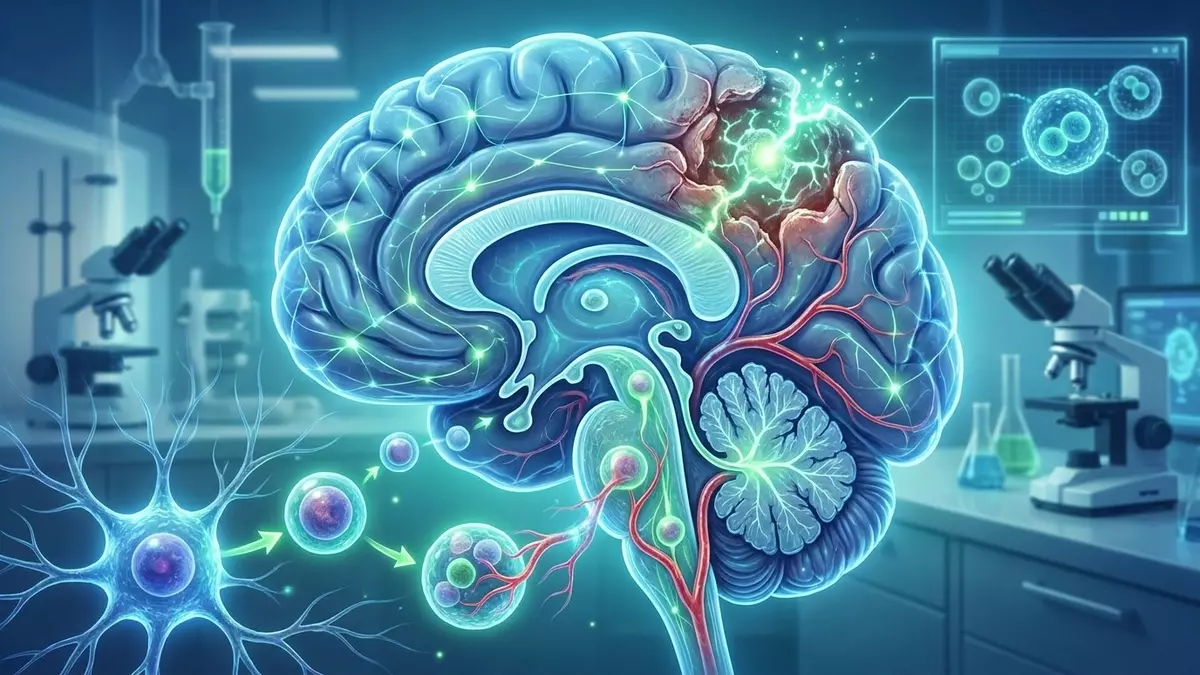
However, a groundbreaking study published in Nature Communications (September 2025) offers a new perspective. Researchers have successfully used human stem cells to not only survive inside the brains of stroke-injured mice but to actively drive a comprehensive regeneration process.
Breakthrough Stem Cell Study Suggests Stroke Recovery Beyond Current Limits
The Challenge of Brain Repair
Unlike the skin or bones, which naturally heal and replace damaged cells, the adult human brain has a very limited capacity to repair itself once tissue dies due to a stroke (lack of blood flow). This “dead zone” often results in the long-term disabilities that survivors struggle with for years. Current hospital treatments are designed to save as much tissue as possible during the initial emergency, but they cannot restore lost neurons or rebuild complex neural networks.
The Study: Neural Progenitor Cells
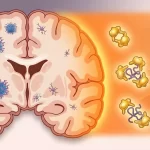
The research team, led by scientists from the University of Zurich and the University of Southern California, utilized induced pluripotent stem cells (iPSCs). By reprogramming adult human cells back into a flexible, stem-cell-like state, the researchers created neural progenitor cells—early-stage brain cells capable of evolving into various functional nervous system cells.
These cells were transplanted into the stroke-injured mice one week after the injury. The results, observed five weeks post-transplantation, were remarkable:
Maturation into Neurons: A significant number of transplanted cells matured into functional neurons, specifically inhibitory neurons. These neurons act as “traffic signals,” balancing brain activity and preventing the chaotic, noisy signals that often follow a brain injury.
Beyond the Graft: The benefits were not limited to the transplanted cells themselves. The presence of these cells triggered a repair response in the surrounding native tissue.
Vascular Support: The treated mice showed an increase in new blood vessel formation near the injury site, effectively restoring vital nutrient and oxygen flow.
Barrier Protection: The treatment helped reinforce the blood-brain barrier—the brain’s critical security gate—which often breaks down after a stroke, allowing harmful substances to leak into delicate tissues.
Functional Recovery: Moving Again
Perhaps the most encouraging result was the physical improvement observed in the mice. Using AI-assisted tracking, the researchers monitored the animals’ gait, balance, and fine motor skills. Treated mice displayed smoother, more coordinated movement compared to their untreated counterparts, proving that the cellular repair was translating into tangible physical recovery.
The Role of Timing
The researchers deliberately waited one week after the stroke to perform the transplantation. This “delayed” approach is a significant finding. Immediately after a stroke, the brain environment is highly inflamed and filled with toxic chemical signals, which can kill off newly transplanted cells. By waiting, the researchers allowed the initial “storm” of inflammation to subside, providing a more hospitable environment for the new cells to take root and thrive.
Moving from Mice to Humans: The Road Ahead
While these findings are a major milestone in regenerative medicine, they are still experimental. Several hurdles remain before this can become a human treatment:
Immune Rejection: In this study, the mice were genetically modified so their bodies would not reject human cells. In humans, the immune system would attempt to attack the foreign graft, a challenge that scientists must overcome using advanced immunosuppression or cell engineering.
Delivery Methods: The mice received cells directly injected into the brain—a high-risk, invasive procedure for humans. Researchers are currently investigating ways to deliver these cells through the bloodstream.
Safety Switches: A primary concern with any stem cell therapy is the risk of abnormal, uncontrolled cell growth. Scientists are working on “built-in” safety switches that could be activated to halt cell growth if necessary.
A New Frontier for Recovery
This study suggests that the brain’s capacity to rebuild may be much greater than previously thought, provided it receives the right “support” at the right time. While stroke patients cannot yet access this therapy, stem cell research for neurological conditions—such as Parkinson’s disease—is already advancing into human trials. Stroke may be the next major frontier in this field, moving us closer to a future where brain damage isn’t necessarily a permanent sentence.
Frequently Asked Questions (FAQ)
Is this treatment available for humans now?
No. This study was conducted in mice. Human clinical trials are necessary to prove safety, long-term effectiveness, and appropriate delivery methods.
Why did they wait a week to transplant the cells?
The brain environment immediately after a stroke is highly inflamed and hostile. Waiting a week allows this intense inflammation to die down, which significantly increases the survival rate of the transplanted cells.
What are iPSCs?
Induced pluripotent stem cells are adult cells (like skin or blood cells) that have been reprogrammed in a lab to act like embryonic stem cells. This allows scientists to create specialized brain cells without the ethical concerns associated with embryonic stem cell research.
Does this mean “dead” brain tissue can be brought back to life?
The treatment helps rebuild lost connections and encourages the surrounding tissue to heal. While it may not “revive” dead cells, it helps the brain create new pathways to restore functions like movement and balance.
What is the next step for this research?
The next phases of research will focus on developing less invasive ways to deliver the cells into the human brain and creating safety mechanisms to prevent uncontrolled cell growth, followed by early-stage human clinical trials.