
Table of Contents
- 1. The Ultimate Mayo Clinic-Approved Noodle Exercise for Leg Strength
- 1.1. How to Perform the Knotted-Noodle Leg Extension
- 1.2. The Real-World Benefits for Daily Mobility
- 2. Expanding Your Aquatic Routine: Other Highly Effective Pool Workouts
- 2.1. 1. Waist-Deep Water Walking
- 2.2. 2. Deep-Water Jogging and Walking
- 2.3. 3. Upper-Body Sculpting with Water Weights
- 2.4. 4. Kickboard Resistance Training
- 3. Why Water Workouts Are Perfect for Older Adults
- 4. Conclusion
- 5. Frequently Asked Questions
- 5.1. How many times a week should seniors perform water resistance exercises?
- 5.2. Do I need to know how to swim to do these pool exercises?
- 5.3. What should I wear or bring to an aquatic workout session?
- 5.4. Can water exercises really help prevent falls on dry land?
- 5.5. Is a warm pool or a cool pool better for senior exercise?
5 Low-Impact Water Exercises for Seniors to Build Strength
As we cross the threshold of 65, maintaining physical strength becomes about much more than just staying active. It is a critical line of defense for preserving long-term independence. Developing robust muscles plays a pivotal role in minimizing the risk of debilitating falls, preventing bone fractures, and ensuring you can navigate daily life with ease. Unfortunately, traditional weight training can sometimes place excessive stress on aging joints, leaving many older adults searching for a safer alternative.
Enter aquatic fitness. Working out in the pool offers an ideal environment for older adults to build muscle mass without the harsh impact of terrestrial exercise. According to insights from the Mayo Clinic, the natural buoyancy of water dramatically alleviates pressure on the skeletal system while simultaneously providing continuous resistance. This unique environment allows you to safely challenge your muscles, enhance your balance, and protect your joints all at the same time.
5 Low-Impact Water Exercises for Seniors to Build Strength

The Ultimate Mayo Clinic-Approved Noodle Exercise for Leg Strength
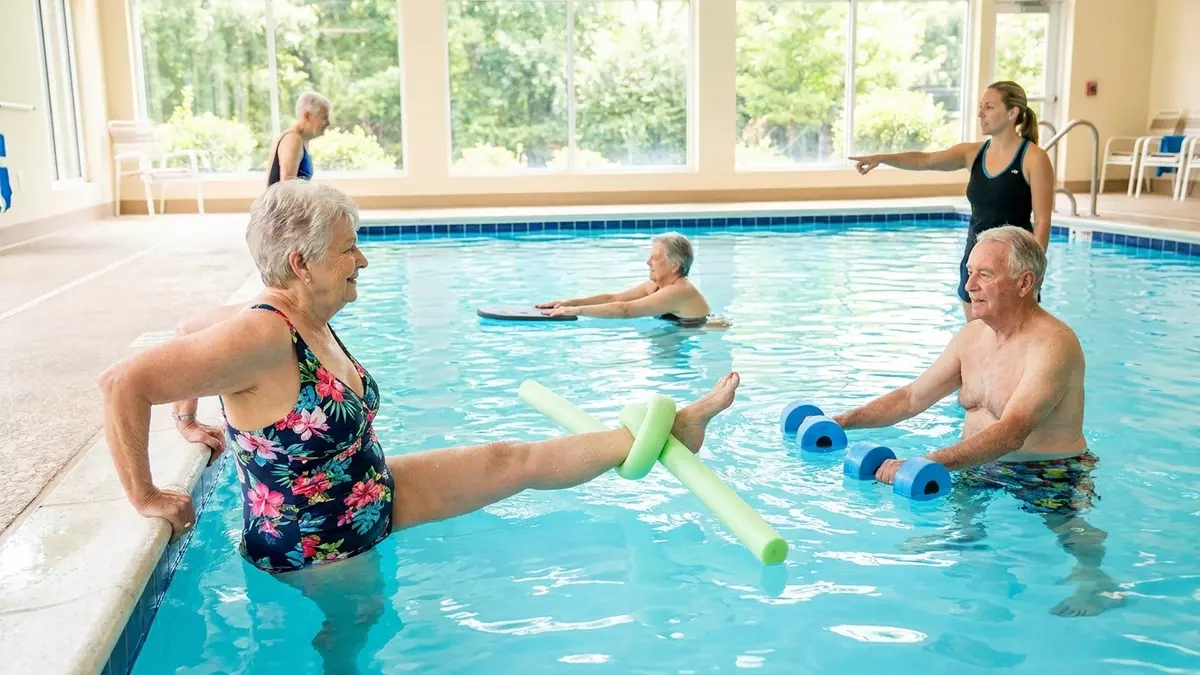
When it comes to targeting the lower body, one specific water-based movement stands out for its exceptional ability to isolate the leg muscles while safeguarding vulnerable joints. By utilizing a common piece of pool equipment—a standard foam noodle—this Mayo Clinic-highlighted exercise focuses heavily on the thighs and hips, which are the foundational muscle groups required for stable mobility.
How to Perform the Knotted-Noodle Leg Extension
To perform this highly effective lower-body exercise safely, find a spot in the shallow end of the pool and follow these steps:
Find Your Starting Position: Stand in waist-high water with your back resting firmly against the pool wall. Place both arms along the pool edge to secure your balance and stabilize your torso.
Secure the Noodle: Take a flexible foam pool noodle and tie it into a secure, simple knot around one of your feet (or around your water shoe for a tighter fit).
Execute the Movement: Slowly extend your leg out straight in front of you. From that extended position, bend your knee backward to roughly a 90-degree angle, fighting against the water’s natural resistance.
Straighten and Repeat: Drive your foot forward to straighten the leg once more. Aim to complete 12 to 15 controlled repetitions, or continue until the working muscles feel comfortably fatigued.
Switch Sides: Carefully untie or transfer the noodle to your opposite foot and replicate the entire sequence to ensure balanced muscular development.


The Real-World Benefits for Daily Mobility
By consistently practicing this controlled leg extension, you directly condition the quadriceps, hamstrings, and hip flexors. Because the water dampens sudden impacts, you can push your muscles to the point of growth without aggravating pre-existing knee or hip discomfort. Over time, the strength gained from this single pool movement translates directly to dry-land activities—making it noticeably easier to climb flights of stairs, walk longer distances, and stand up from deep chairs without assistance.
Expanding Your Aquatic Routine: Other Highly Effective Pool Workouts
While the knotted-noodle leg extension is a premier choice for lower-body power, a well-rounded fitness regimen should address the entire body. Incorporating a variety of low-impact water movements ensures that you build cardiovascular endurance and upper-body strength alongside your leg routine.
1. Waist-Deep Water Walking
Water walking is an excellent foundational exercise that is accessible to individuals of virtually all fitness levels. To perform this correctly, submerge yourself up to the waist and begin walking across the pool floor. Maintain an upright posture, keep your abdominal muscles gently engaged, and swing your arms naturally at your sides just as you would on land. The constant resistance of the water forces your core, glutes, and legs to work significantly harder than they would during a sidewalk stroll, all while providing a gentle, full-body cardiovascular workout.
2. Deep-Water Jogging and Walking
For those looking to increase their cardiovascular intensity without adding a single ounce of joint pressure, deep-water tracking is the perfect solution.
Safety Tip: Put on a specialized flotation belt or wrap a pool noodle securely around your torso to keep your head safely above the surface in the deep end.
Once suspended in water where your feet cannot touch the bottom, begin a vigorous walking or jogging motion. Because your feet never strike a hard surface, this variation completely eliminates gravitational impact on your ankles, knees, and lower back, allowing you to elevate your heart rate and build endurance entirely stress-free.
3. Upper-Body Sculpting with Water Weights
To ensure your upper body stays just as strong as your legs, integrate foam water dumbbells into your aquatic routine. These specialized weights are incredibly light outside of the pool, but once submerged, they create powerful resistance whenever you push or pull them through the water. Performing classic movements like bicep curls, tricep extensions, and lateral arm raises challenges your arms, shoulders, and chest. Because the resistance is omnidirectional, your muscles are working during both the upward and downward phases of every single movement.
4. Kickboard Resistance Training
A standard swimming kickboard can be repurposed into a highly effective tool for core stability and upper-body conditioning. Stand firmly in the shallow end, hold the kickboard at arm’s length directly in front of your chest, and push it smoothly from one side of your body to the other through the water. Alternating sides forces your oblique muscles, shoulders, and pectoral groups to stabilize against the flat surface of the board, which dramatically enhances your rotational core strength and overall functional balance.
Why Water Workouts Are Perfect for Older Adults
One of the most remarkable aspects of aquatic exercise is its universal accessibility. It serves as an incredibly welcoming environment for seniors who might struggle with traditional gym workouts due to chronic health conditions.
Joint-Friendly Pain Relief: For individuals living with osteoarthritis, rheumatoid arthritis, or chronic back pain, the buoyancy of water offsets up to 90% of their body weight. This weightlessness relieves painful compression on the joints, allowing for a much greater range of motion.
Built-In Fall Protection: On land, a loss of balance can lead to a dangerous fall. In the pool, the density of the water catches you, rendering falls virtually impossible and allowing you to confidently push your physical boundaries.
Social and Mental Well-Being: Whether you choose to practice these movements during open swim hours or join a structured water aerobics class, the pool is a highly social environment. Engaging with peers while exercising combats isolation and boosts mental clarity.
Conclusion
Investing in your physical strength after the age of 65 is one of the best choices you can make for your long-term health and independence. By utilizing the unique properties of water and incorporating Mayo Clinic-approved techniques like the knotted-noodle leg extension, you can build meaningful muscle, protect your joints, and dramatically improve your daily mobility. Grab a noodle, head to your local pool, and take a refreshing step toward a stronger, safer, and more vibrant lifestyle.
Frequently Asked Questions
How many times a week should seniors perform water resistance exercises?
For optimal muscle building and cardiovascular health, aiming for 2 to 3 days per week is ideal. Ensure you allow for at least 48 hours of rest between intense resistance sessions to give your muscles adequate time to recover and rebuild.
Do I need to know how to swim to do these pool exercises?
No, swimming skills are not required for the majority of these movements. Exercises like water walking, the noodle leg extension, and water weight training are performed entirely in the shallow end where you can easily keep your feet flat on the pool floor and your head completely above water.
What should I wear or bring to an aquatic workout session?
It is recommended to wear a supportive swimsuit and a pair of dedicated water shoes. Water shoes are particularly helpful because they protect the soles of your feet, provide traction against the slippery pool floor, and add a small amount of extra resistance to your leg movements.
Can water exercises really help prevent falls on dry land?
Yes, absolutely. By strengthening core stabilizer muscles, building up the hips and thighs, and challenging your equilibrium in a safe environment, aquatic workouts directly improve your overall balance, posture, and spatial awareness on dry land.
Is a warm pool or a cool pool better for senior exercise?
A moderately warm pool—typically between 83°F and 88°F—is generally best for older adults. Warm water helps to soothe stiff joints, increase blood circulation, and relax tight muscles, making it much easier and more comfortable to move through your exercises.