
Table of Contents
- 1. The Biological Architecture of Mature Skin
- 2. 1. Cleanse with Extreme Gentleness
- 2.1. The Expert Switch
- 3. 2. Lock In Moisture Strategically
- 3.1. The Powerhouse Ingredient Checklist
- 4. 3. Commit to Non-Negotiable, Daily Sun Protection
- 5. 4. Treat the “Power Zone”: Jawline, Neck, and Chest
- 5.1. The Targeted Daily Protocol
- 6. The Bottom Line
- 7. Frequently Asked Questions
Radiance After 50: 4 Dermatologist-Backed Steps to Revitalize Mature Skin
Crossing the milestone of 50 brings a wealth of wisdom, confidence, and life experience. However, it also initiates a period of profound biological transition. As women enter menopause, shifting hormone levels—specifically the natural decline in estrogen—directly impact the structural integrity of the skin.
Estrogen plays a foundational role in maintaining skin health; it stimulates the production of collagen (the protein responsible for firmness), elastin (the fiber that provides snap-back elasticity), and natural hyaluronic acid (the molecule that locks in internal moisture). Within the first few years of menopause, skin can lose up to 30% of its collagen reserves. This sudden drop often manifests as localized dryness, a loss of facial volume, thinning tissue, and a deepening of fine lines around the eyes, jawline, and neck.
While you cannot halt the hands of time, you can absolutely pivot your daily habits to meet your skin’s changing biological demands. By moving away from aggressive anti-aging products and adopting a deeply restorative, moisture-centric protocol, you can rebuild your skin barrier, protect vital collagen, and reclaim a glowing complexion naturally.
Radiance After 50 4 Dermatologist-Backed Steps to Revitalize Mature Skin

The Biological Architecture of Mature Skin
To understand why traditional skincare routines must change after 50, it helps to visualize how the layers of the skin shift during hormonal transitions:
   [ YOUTHFUL SKIN BARRIER ] ──► Dense Collagen Matrix + Active Sebaceous Glans ──► Plump, Hydrated, Self-Protecting
   [ MATURE SKIN BARRIER ]   ──► Thinning Epidermis + Reduced Oil Production   ──► Fragile, Prone to Transepidermal Water Loss
With less natural oil production, the skin’s outermost defensive layer—the moisture barrier—becomes structurally compromised. When this barrier develops microscopic gaps, vital moisture escapes into the air (a process known as transepidermal water loss), while environmental irritants slip in, causing redness and sensitivity.
To counteract this shift, dermatologists swear by four simplified, high-impact strategies designed to feed, protect, and fortify mature skin.

1. Cleanse with Extreme Gentleness
Cleansing is a non-negotiable step to remove environmental pollutants, metabolic oil, and sunscreen. However, the foaming gel and clarifying cleansers popular in your 30s and 40s often contain harsh surfactants (cleaning agents) that strip away the skin’s remaining lipid lipids.
For skin over 50, standard foaming washes can leave the face feeling tight, squeaky clean, and visually parched—a clear sign that the delicate skin barrier has been disrupted.
The Expert Switch
Transition directly to a creamy, lotion-based, or oil-infused cleanser. Look for soap-free formulas that do not lather aggressively. These nourishing textures melt away impurities while actively depositing a fine film of hydration onto the epidermis. Wash your face using lukewarm water; hot water dissolves the skin’s natural lipid barrier instantly, exacerbating underlying dryness and making fine lines appear instantly deeper.

2. Lock In Moisture Strategically
When oil glands slow down, lightweight lotions are no longer enough to keep skin comfortable throughout the day. Mature skin requires rich, dense emollient creams that mimic the skin’s natural sebum production.
To maximize your results, timing is everything. Never apply moisturizer to bone-dry skin. Instead, apply your targeted creams within 60 seconds of washing your face or stepping out of the shower while your skin is still damp. This simple trick traps the surface water molecules directly inside the tissue, dramatically enhancing product absorption and instantly plumping up fine lines.
The Powerhouse Ingredient Checklist
When evaluating your daytime and nighttime moisturizing creams, search the ingredient label for these structural savior molecules:
Ceramides: These act like the “mortar between the bricks” of your skin cells, physically sealing the lipid barrier shut to trap moisture inside.
Hyaluronic Acid / Glycerin: Powerful humectants that draw moisture from the surrounding air and bind it directly into the upper layers of the skin.
Niacinamide (Vitamin B3): A calming antioxidant that stimulates natural ceramide production and helps fade hormonal dark spots.
3. Commit to Non-Negotiable, Daily Sun Protection
It is a common misconception that sun protection is only necessary for younger skin to prevent future wrinkles. In reality, mature skin possesses significantly less natural defense against ultraviolet (UV) radiation than it did decades prior. UV rays are the primary catalyst for an enzyme reaction that actively chews up and degrades remaining collagen fibers.
Skipping sunscreen for even a single day allows UV light to accelerate cellular aging, deepen hyperpigmentation (age spots), and cause structural sagging along the delicate neck and jawline.
The Dermatologist Standard: Apply a broad-spectrum sunscreen with an SPF of 30 or higher every single day, regardless of cloud cover, rain, or whether you are staying indoors. To streamline your morning routine, opt for a rich moisturizer that features built-in mineral sunscreens (like Zinc Oxide or Titanium Dioxide), which are inherently soothing to sensitive, post-menopausal skin types. Don’t stop at your jawline—extend your application generously across your neck, chest, and the backs of your hands, as these thin-skinned areas are often the first to betray age.
4. Treat the “Power Zone”: Jawline, Neck, and Chest
When focusing on anti-aging care, many women limit their product application strictly to the face. However, the skin covering the neck, jawline, and upper chest (the décolletage) features significantly fewer oil glands and a thinner dermal layer than facial skin. As collagen drops after 50, these zones are highly prone to structural sagging, a crepey texture, and visible wrinkling.
The Targeted Daily Protocol
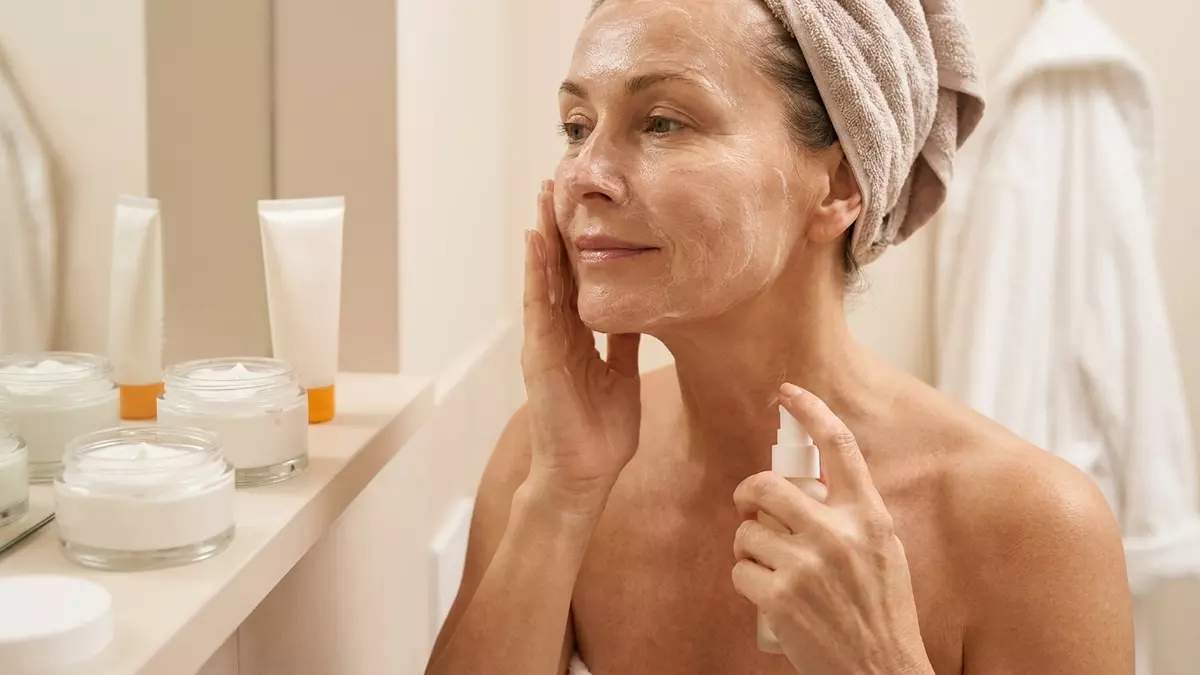
When applying your active serums and moisturizing creams, use a gentle, upward sweeping motion starting from the collarbones up toward the jawline. This prevents downward pulling on fragile tissue.
To optimize skin density and boost elasticity, look for targeted over-the-counter anti-aging formulas specifically tailored for mature skin. Ingredients like topical peptides act as cellular messengers, encouraging your skin cells to synthesize new collagen fibers. Combined with consistent hydration, this focused daily attention helps firm the jawline perimeter, providing a smoother, more unified, and radiant appearance over time.
| Skincare Step | Product Target Type | Primary Structural Benefit | Application Technique |
| Cleanse | Cream or Milk Lotion | Preserves remaining natural surface lipids | Massage gently with lukewarm water; do not scrub |
| Hydrate | Ceramide-Rich Cream | Seals the cellular barrier; prevents water loss | Apply directly to damp skin within 60 seconds |
| Protect | Broad-Spectrum SPF 30+ | Halts UV-driven collagen breakdown | Extend down to the neck, chest, and hands daily |
| Treat | Peptide-Infused Serums | Stimulates natural structural proteins | Use gentle upward strokes from collarbone to jaw |
The Bottom Line
Experiencing hormonal shifts doesn’t mean you have to settle for a dull, dehydrated, or fragile complexion. By letting go of aggressive, stripping skincare practices and embracing a nurturing routine focused on gentle cleansing, deep ceramide hydration, continuous UV protection, and targeted neck care, you can fully support your skin’s changing biology. Consistency is your greatest asset; a few mindful, daily habits will keep your skin looking resilient, vibrant, and beautifully illuminated well past 50.
Frequently Asked Questions
Why does my skin suddenly feel incredibly itchy and dry after turning 50?
This is a direct result of the drop in estrogen during menopause, which causes your body’s natural sebum (oil) production to plummet. Without this protective oil coating, your skin barrier becomes leaky, allowing internal moisture to evaporate rapidly, which triggers chronic dryness, irritation, and a localized itching sensation.
Can I still use retinol or chemical exfoliants on mature, post-menopausal skin?
Yes, but you must proceed with caution. Because mature skin is thinner and more fragile, using strong prescription retinoids or harsh facial scrubs can trigger intense irritation. Opt for gentle, low-concentration over-the-counter retinols or plant-based alternatives like bakuchiol, and limit application to two or three nights a week, always followed by a rich barrier cream.
What is the difference between a hydrating lotion and an emollient cream?
Lotions have a higher water content and are lightweight, making them easy to spread but quick to evaporate. Emollient creams are formulated with a higher ratio of oils and lipids. They create a thick, physical seal over the epidermis, which is exactly what mature skin requires to lock in hydration over long periods.
Will drinking more water fix my dry skin after 50?
While staying properly hydrated is essential for your overall internal organ health, drinking water cannot fix menopausal skin dryness on its own. The core issue after 50 isn’t a lack of internal water consumption; it is a damaged surface lipid barrier that fails to hold onto that water. You must fix the problem topically using ceramides and creams.
How long does it take to see a visible improvement in skin texture with a new routine?
While skin cell turnover slows down as we age, you will notice an immediate improvement in comfort, softness, and superficial plumping within just a few days of switching to a rich, damp-skin moisturizing method. For structural improvements in firmness, elasticity, and hyperpigmentation, allow 8 to 12 weeks of consistent daily care.