
Table of Contents
- 1. The Biomechanics of Retro-Walking vs. Forward Movement
- 1.1. 1. Reduced Patellofemoral Pressure
- 1.2. 2. Targeted Muscle Recruitment
- 2. The Neurological Boost: Sharp Brains, Steady Feet
- 2.1. Enhancing Proprioception
- 2.2. Stimulating Executive Function
- 2.3. Caloric and Cardiovascular Efficiency
- 3. A Step-by-Step Guide to Practicing Safely
- 4. Summary of Exercise Mechanics
- 5. Frequently Asked Questions
- 5.1. Is it safe to walk backward outdoors if I struggle with vertigo or dizziness?
- 5.2. Should I turn my head around to look where I am going while walking backward?
- 5.3. Can retro-walking help rehabilitate an existing back or hip injury?
- 5.4. What type of footwear is best for backward walking?
- 5.5. Can I practice backward walking every day?
Reversing the Routine: Why National Geographic Highlights Backward Walking for Senior Stability
When looking for ways to maintain mobility and physical independence later in life, traditional fitness advice consistently points toward low-impact mainstays like swimming laps, water aerobics, social dancing, or gentle yoga. While these activities offer undeniable cardiovascular and flexibility benefits, a report from National Geographic highlights a surprisingly straightforward, highly specialized physical exercise that can be performed virtually anywhere: walking backward.
Known in sports medicine as retro-walking, this simple reversal of your everyday walking pattern fundamentally alters the biomechanics of movement. For adults over the age of 60, dedicating just a few minutes a day to retro-walking offers profound benefits for joint longevity, muscular balance, and neurological health, making it an exceptional tool for fall prevention.
Reversing the Routine Why National Geographic Highlights Backward Walking for Senior Stability

The Biomechanics of Retro-Walking vs. Forward Movement
To understand why walking backward is so uniquely effective, it helps to examine how it shifts physical strain away from vulnerable joints and onto stabilizing muscle groups.
[ Forward Walking ] ──> Heel-Strike Mechanics ───────> Higher Knee Joint Shear & Impact
                                     │
                      ( Reverse Direction of Movement )
                                     │
                                     ▼
[ Backward Walking ] ─> Toe-to-Heel Mechanics ───────> Activates Glutes/Hips & Protects Knees
1. Reduced Patellofemoral Pressure
When walking forward, the body relies heavily on a heel-strike motion that creates a shockwave of impact traveling straight up through the shin bone into the knee joint. Backward walking completely flips this dynamic to a toe-to-heel progression. This mechanical shift dramatically reduces the shear stress placed on the patella (kneecap), allowing individuals managing chronic knee osteoarthritis to build lower-body strength completely pain-free.
2. Targeted Muscle Recruitment
Reversing your stride forces the body to aggressively engage muscles that frequently weaken and atrophy as we age:
The Gluteal Complex & Hips: Crucial for maintaining structural pelvic stability and preventing sideways falls.
The Quadriceps & Hamstrings: Working in tandem to stabilize the knee joint.
The Posterior Chain: Strengthening these muscles directly relieves chronic lower back pain by correcting pelvic tilt and encouraging upright posture.
The Neurological Boost: Sharp Brains, Steady Feet
The physical benefits of retro-walking are intimately tied to a powerful neurological workout. Because forward walking is an automated, subconscious habit managed by basic spinal cord circuits, it requires very little active brainpower. Reversing that pattern immediately forces the central nervous system out of autopilot.
Enhancing Proprioception
Walking backward demands intense, conscious focus, heavily stimulating the brain’s proprioception networks—your internal GPS system that tells your mind exactly where your limbs are positioned in space without looking at them. Sharpening this spatial awareness helps older adults react instantly and effectively to unexpected physical hazards, such as catching their balance after slipping on a slick surface or stepping onto uneven pavement.
Stimulating Executive Function
Revising your movement pattern forces the prefrontal cortex and hippocampus to actively process unfamiliar sensory information. This intense mental engagement builds new neural pathways, boosting overall coordination while simultaneously sharpening short-term working memory and spatial tracking skills.
Caloric and Cardiovascular Efficiency
Because moving in reverse is biomechanically less efficient for our bodies, it requires significantly more energy expenditure. Metabolic studies demonstrate that walking backward burns roughly 40% more calories per minute than walking forward at the exact same speed. This allows seniors to achieve a robust cardiovascular workout and support healthy weight management in less time and at lower speeds.
A Step-by-Step Guide to Practicing Safely
While retro-walking is highly accessible, safety and environment control are paramount to prevent accidental tripping. Incorporate these sequential steps to safely build your retro-walking routine:
Option A: The Stationary Treadmill (Highly Recommended for Beginners)
Stand on a completely powered-down treadmill facing away from the console. Grip the sturdy side handrails firmly. Set the machine to a very slow, gentle speed (around 0.5 to 1.0 mph) and practice the smooth toe-to-heel rolling motion while keeping your posture completely upright.
Option B: The Supported Wall Glide
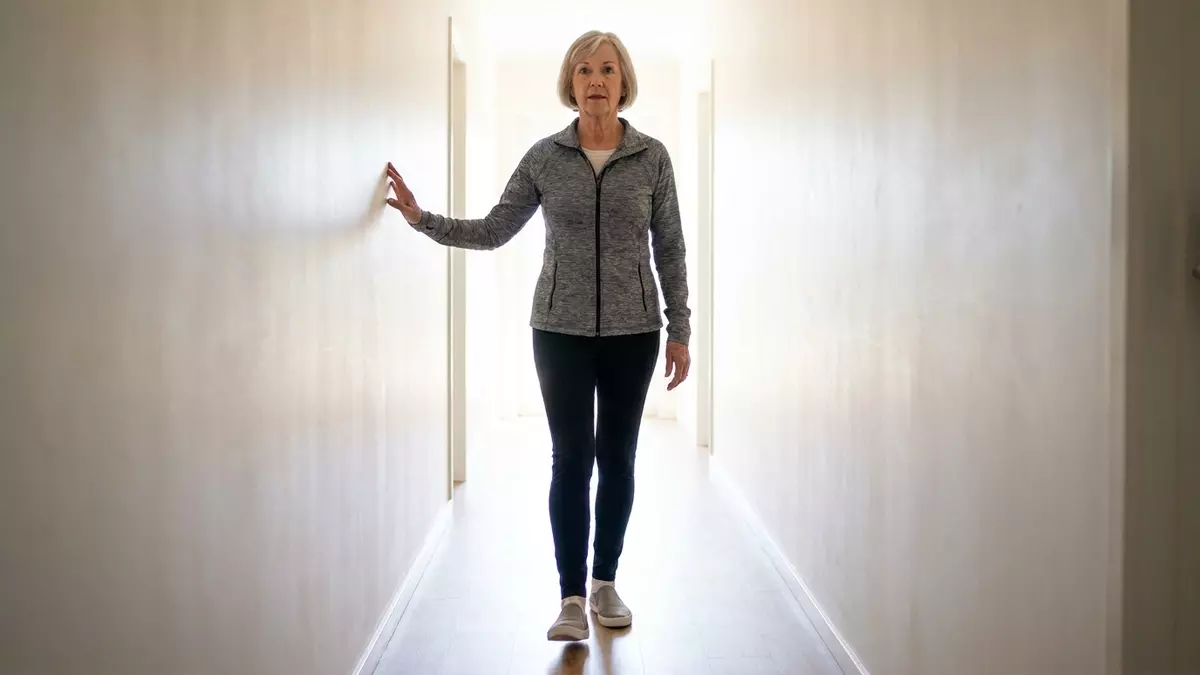
If practicing at home on flat flooring, stand parallel to a long, unobstructed hallway wall. Keep one hand lightly trailing along the wall surface for continuous physical feedback and balance support as you slowly step backward.
Option C: The Open Track or Level Park
When taking the practice outdoors, select a completely flat, predictable surface free of tree roots, curbs, or loose gravel—such as a smooth high school running track or an empty tennis court. Bring a walking partner along to act as your “spotter” to look out for oncoming obstacles.
Training Duration: Begin with small, focused intervals of just 3 to 5 minutes of backward walking two or three times a week. As your confidence, muscular endurance, and neurological balance adapt to the new pattern, gradually extend your sessions toward a goal of 10 to 15 continuous minutes.
Summary of Exercise Mechanics
| Metric | Forward Walking | Backward Walking (Retro-Walking) |
| Foot Strike | Heel-to-Toe | Toe-to-Heel |
| Primary Muscle Focus | Calves, Hip Flexors | Glutes, Hamstrings, Quadriceps |
| Knee Joint Stress | Moderate to High | Exceptionally Low |
| Caloric Burn Rate | Baseline | ~40% Higher per Minute |
| Cognitive Demand | Low (Automatic) | High (Active Neural Engagement) |
Frequently Asked Questions
Is it safe to walk backward outdoors if I struggle with vertigo or dizziness?
If you manage active vertigo, inner ear imbalances, or frequent lightheadedness, avoid practicing backward walking outdoors. Stick exclusively to a stationary treadmill where you can maintain a secure, dual-handed grip on the safety rails, or consult a physical therapist to customize a balance protocol.
Should I turn my head around to look where I am going while walking backward?
Try to avoid constantly twisting your neck and torso to look behind you, as this rotation shifts your center of gravity and can pull you off balance. Keep your chest open, eyes looking straight ahead, and shoulders square, relying on a clean, controlled environment or a walking partner to ensure your path remains entirely clear.
Can retro-walking help rehabilitate an existing back or hip injury?
Yes. Because walking backward reduces the standard range of motion required by the hip joint while actively strengthening the hamstrings and glutes, it is frequently utilized in physical therapy clinics to safely rehabilitate lumbar strains, hip impingements, and hip replacement recoveries. Always check with your primary physician or physical therapist before starting.
What type of footwear is best for backward walking?
Opt for a supportive, flat-soled athletic sneaker with an excellent rubber grip. Avoid walking in open-backed slippers, sandals, or shoes with excessively thick, curved foam heels, as these styles can alter your sensory feedback from the floor and increase the likelihood of catching a toe.
Can I practice backward walking every day?
Yes. Because retro-walking is a low-impact, therapeutic movement, it can safely be integrated into your daily routine once your muscles have adjusted to the initial change. Many seniors find it highly effective as a 5-minute warm-up right before their standard forward walk.