
Table of Contents
- 1. 1. Boost Soil Life with Monthly Compost Tea
- 1.1. How to Brew Your Own Compost Tea
- 1.2. Application Tips
- 2. 2. Pinch Current-Season Tips to Force Branching
- 3. 3. Layer Alfalfa Pellets and Straw Mulch
- 4. 4. Master Seasonal Pruning Based on Variety
- 4.1. Summer-Bearing Raspberries
- 4.2. Fall-Bearing and Ever-Bearing Raspberries
- 5. 5. Spray Liquid Seaweed During the Bloom Phase
- 6. 6. Thin Out Overcrowded Spring Canes
- 7. 7. Implement Deep, Infrequent Irrigation
- 8. 8. Harvest Fruit Daily to Drive Production
- 9. 9. Apply Well-Aged Manure Every Autumn
- 10. 10. Rejuvenate and Divide Aging Patches
- 11. Frequently Asked Questions
- 11.1. Why are my raspberries small, crumbly, and falling apart?
- 11.2. Can I grow high-yield raspberries in large containers?
- 11.3. What is the best companion plant for raspberries to boost yield?
- 11.4. How do I know if my raspberry plant is a summer-bearing or fall-bearing variety?
- 11.5. Why are the leaves on my raspberry bushes turning yellow between the veins?
10 Raspberry Growing Tips for a Massive Backyard Harvest
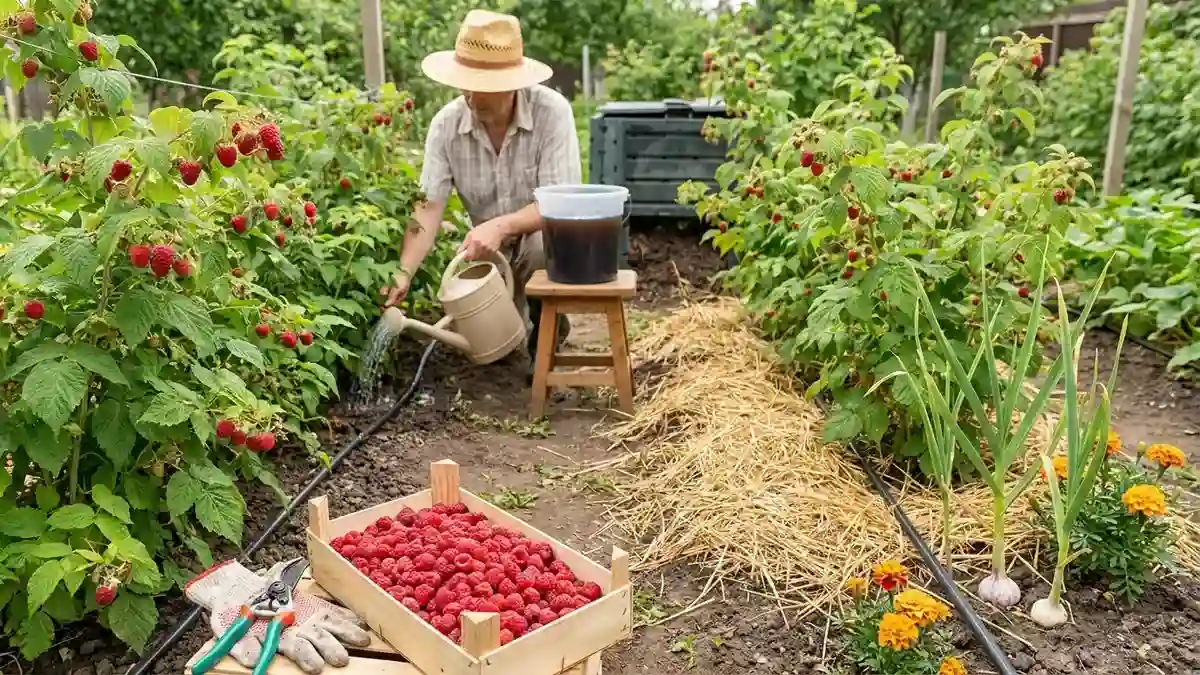
There is nothing quite like the simple pleasure of wandering into the backyard and picking sun-warmed raspberries straight from the vine. When a patch is thriving, these vibrant berries practically fall into your hand, bursting with a sweet, tart flavor that store-bought options can never match.
However, many home gardeners find themselves disappointed when their raspberry bushes only produce a meager handful of fruit each season. If your harvest has been less than stellar, the good news is that raspberries are inherently prolific plants. They just require specific care to unlock their full potential.
By implementing a few targeted cultivation strategies, you can dramatically increase your berry yield, boost fruit size, and ensure your perennial patch remains healthy for years to come. Here are 10 proven methods to help you harvest buckets of raspberries from your own garden.

10 Raspberry Growing Tips for a Massive Backyard Harvest
1. Boost Soil Life with Monthly Compost Tea
High-yielding raspberry plants require a steady supply of nutrients, but synthetic fertilizers can damage the delicate soil microbiome. Instead, top-tier growers rely on compost tea. This nutrient-rich liquid fertilizer introduces billions of beneficial microbes directly to the root zone, helping the plants absorb minerals much more efficiently.
How to Brew Your Own Compost Tea
Making this liquid gold at home is incredibly straightforward:
Place two cups of fully cured, organic compost into a five-gallon bucket.
Fill the bucket with rainwater or dechlorinated tap water (let tap water sit uncovered for 24 hours to allow chlorine to evaporate).
Stir the mixture thoroughly once or twice a day for 48 to 72 hours.
Strain the dark liquid through an old cotton T-shirt or cheesecloth.
Application Tips
Pour the strained tea generously around the base of your raspberry canes once a month throughout the active growing season. If your bushes are currently blooming, you can dilute the tea with clean water at a 1:5 ratio and use a spray bottle to apply it directly to the leaves as a foliar feed.
2. Pinch Current-Season Tips to Force Branching
Left to their own devices, raspberry canes will grow straight upward, forming long, single stems. However, more branches mean more flowers, which ultimately translates to more fruit. You can easily manipulate this growth habit through a technique known as tipping or pinching.
When your new green canes reach a height of two to three feet in the spring, use your fingers or sharp pruning shears to remove the top inch of the main stem. This temporary pause in upward growth forces the plant to redirect its energy horizontally, stimulating the development of multiple side branches (laterals). Because raspberries set their fruit clusters on these lateral branches, this quick task can double your potential harvest area on every single cane.
3. Layer Alfalfa Pellets and Straw Mulch
Raspberries possess incredibly shallow root systems that suffer when the soil gets too hot or dry. A robust, multi-layered mulching strategy is essential to protect these roots and fuel heavy fruit production.
+---------------------------------------------------------------+
|                      CLEAN STRAW MULTCH                       |   <-- 2-3 Inches (Retains moisture, cools soil)
| - - - - - - - - - - - - - - - - - - - - - - - - - - - - - - - |
|                    ALFALFA PELLETS / FLAKES                   |   <-- Thin Layer (Slow-release nitrogen & triacontanol)
|===============================================================|
|                          GARDEN SOIL                          |   <-- Raspberry Root Zone
+---------------------------------------------------------------+
First, scatter a thin layer of all-natural alfalfa pellets or alfalfa flakes directly onto the soil around your plants. Alfalfa contains triacontanol, a naturally occurring plant growth stimulant, and it slowly releases nitrogen as it decomposes.
Immediately top the alfalfa with a two- to three-inch layer of clean, seed-free agricultural straw. The straw acts as an insulating blanket, locking in soil moisture and keeping the root zone cool during scorching summer days. Always keep the mulch a couple of inches away from the actual wooden stems to prevent moisture buildup and crown rot.
4. Master Seasonal Pruning Based on Variety
Pruning can feel intimidating, but it is the absolute key to maximizing fruit production and preventing a tangled, unproductive jungle. The golden rule of pruning depends entirely on whether you are growing summer-bearing or fall-bearing (ever-bearing) varieties.
Summer-Bearing Raspberries
These varieties produce fruit on two-year-old wood (floricanes). As soon as the summer harvest wraps up, identify the brown, woody canes that just finished bearing fruit and cut them down to the ground. Leave the bright green, one-year-old canes (primocanes) completely alone; these will overwinter and provide your fruit next summer.
Fall-Bearing and Ever-Bearing Raspberries
These plants produce fruit on the tips of current-season growth. You have two options here:
For one massive autumn crop: Cut the entire patch completely flat to the ground in late winter. New canes will emerge in spring and fruit heavily in the fall.
For two smaller harvests: Leave the strongest green canes standing through the winter. Simply snip off the dead tips in early spring to get a light summer crop followed by a standard fall crop.
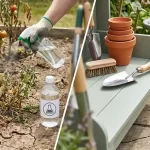
Pro-Tip: Always sanitize your pruning shears with rubbing alcohol between plants to avoid transferring microscopic fungal spores or viral diseases across your patch.
5. Spray Liquid Seaweed During the Bloom Phase
When your raspberry bushes display their first white blossoms, it is time to apply liquid kelp or seaweed extract. Seaweed is packed with trace minerals, amino acids, and natural growth hormones that specifically support reproductive health in fruiting plants.
Mix one to two tablespoons of liquid seaweed extract into a gallon of water and apply it to the plant foliage using a garden sprayer. Repeat this application every two weeks throughout the flowering window and early fruit development. To prevent the sun from scorching the damp leaves, always spray either early in the morning before the heat sets in or late in the evening after sunset. This simple treatment strengthens blossom clusters, ensures better pollination, and prevents young berries from dropping prematurely.
6. Thin Out Overcrowded Spring Canes
It is natural to assume that more canes mean more berries, but an overcrowded patch is highly inefficient. When too many stems compete for limited sunlight, air, and soil nutrients, they become weak, spindly, and highly susceptible to fungal diseases like powdery mildew and cane blight.
Every spring, step back and evaluate your patch. Take your pruners and remove any damaged, exceptionally thin, or awkwardly tangled canes. Your goal should be to leave only the six to eight healthiest, thickest canes per individual plant, or per linear foot if you grow them in rows. Proper thinning ensures that sunlight can penetrate deep into the center of the bush, fueling photosynthesis and allowing wind to quickly dry the leaves after a rainstorm.
7. Implement Deep, Infrequent Irrigation
Because of their shallow roots, raspberries will stop developing fruit and drop their leaves if the soil dries out completely. However, frequent light waterings only encourage roots to stay at the very surface of the dirt, making them even more vulnerable to heatwaves.
Instead, shift to a deep watering schedule once or twice a week. Raspberries require roughly 1.5 inches of water per week, and significantly more during extended droughts.
| Irrigation Do’s | Irrigation Don’ts |
| Use soaker hoses or drip lines | Use overhead sprinklers |
| Water early in the morning | Water late at night (leaves stay wet) |
| Saturate the soil deeply | Water lightly and frequently |
Delivering water directly to the soil prevents moisture from sitting on the leaves, which drastically lowers the risk of fungal infections.
8. Harvest Fruit Daily to Drive Production
During the height of summer, raspberries ripen at an astonishing speed. To keep your plants operating at peak efficiency, you should walk through your patch to harvest every single day, or at least every other day.
Ripe raspberries should pull away from the central white core with absolutely no resistance. If you have to tug or pull hard, the sugar levels haven’t peaked yet; leave them for another day.
Never leave overripe, mushy berries hanging on the vines. Decaying fruit acts as a beacon for invasive pests like Spotted Wing Drosophila, invites gray mold (botrytis), and signals to the plant that its reproductive cycle is finished, which slows down the production of new blossoms. When collecting your bounty, use wide, shallow containers rather than deep buckets so the weight of the top berries doesn’t crush the delicate fruit at the bottom.
9. Apply Well-Aged Manure Every Autumn
Once the winter chill sets in and your raspberry plants go dormant, they are already quietly preparing their root systems for the upcoming spring rush. You can give them a massive head start by nourishing the soil with well-aged animal manure in late autumn.
Incorporate a one- to two-inch layer of fully composted cow, horse, or chicken manure across the surface of your entire berry bed. Top this immediately with a fresh layer of straw to prevent winter rains or snowmelt from washing the precious nutrients away.
Crucial Warning: Never use fresh manure in your garden. Uncomposted manure is incredibly high in ammonia and will severely burn the shallow roots of your raspberry plants, potentially killing the patch before spring arrives.
10. Rejuvenate and Divide Aging Patches
Even with meticulous care, an established raspberry bed will eventually begin to show its age after four to five years. You might notice that the new canes are significantly thinner, berry sizes are shrinking, or pests seem harder to manage. This is a clear indicator that the soil is exhausted and the root crowns are becoming overly woody and crowded.
You can easily hit the reset button by rejuvenating the patch in early spring. Dig into the perimeter of your bed and carefully lift the healthy young runners (suckers) that have spread away from the main cluster. Cut these away from the old root system, keeping as much of the new root structure intact as possible. Replant these vigorous young starts into a completely new garden plot featuring fresh, fertile soil. Discard the ancient, woody central roots to keep your overall garden free from generational pest cycles.
Frequently Asked Questions
Why are my raspberries small, crumbly, and falling apart?
Crumbly raspberries are usually caused by inconsistent watering during the fruit-set stage, poor pollination due to a lack of local bees, or underlying viral infections like the tomato ringspot virus. Ensuring deep weekly watering and spraying liquid seaweed during flowering can greatly improve berry structure.
Can I grow high-yield raspberries in large containers?
Yes, you can cultivate raspberries in pots, provided the containers are large—at least 15 to 20 gallons per plant—and have excellent drainage holes. Choose compact, dwarf varieties specifically bred for patio containers, and remember that potted raspberries will require more frequent watering and fertilizing than in-ground plants.
What is the best companion plant for raspberries to boost yield?
Garlic, chives, and marigolds make fantastic companions for raspberries. Their pungent, natural aromas help repel common pests like aphids and beetles. Additionally, planting flowering herbs like dill or borage nearby will draw in vital pollinators to ensure every raspberry blossom gets properly fertilized.
How do I know if my raspberry plant is a summer-bearing or fall-bearing variety?
If your plants produce a large crop of berries in June or July on woody canes that survived the winter, you have a summer-bearing variety. If your plants produce berries on the very tops of fresh green stems in late August through October, you are growing a fall-bearing (or ever-bearing) variety.
Why are the leaves on my raspberry bushes turning yellow between the veins?
This condition is known as interveinal chlorosis and is typically a sign of an iron or manganese deficiency, often triggered by soil that is too alkaline. Raspberries thrive in slightly acidic soil with a pH between 6.0 and 6.8. Applying compost tea or an organic soil acidifier can help correct this issue and restore lush green growth.