
Table of Contents
- 1. What Exactly Are Roly Polies?
- 2. The Benefits of Pill Bugs: Nature’s Compost Crew
- 2.1. Soil Aeration and Nutrient Cycling
- 2.2. Heavy Metal Detoxification
- 3. The Dark Side: When Beneficial Bugs Turn Into Pests
- 3.1. Identifying the Damage
- 4. How to Assess Your Garden for an Isopod Imbalance
- 5. Gentle and Eco-Friendly Ways to Manage Roly Polies
- 5.1. 1. The Natural Potato Trap Method
- 5.2. 2. Strategic Mulch Management
- 5.3. 3. Smart Irrigation Practices
- 5.4. 4. Relocation Over Eradication
- 6. Conclusion: Achieving Harmony on the Garden Floor
- 7. Frequently Asked Questions
- 7.1. Do roly polies bite or sting humans?
- 7.2. What is the difference between a pill bug and a sow bug?
- 7.3. Will companion planting deter roly polies?
- 7.4. Can roly polies damage established mature trees or woody shrubs?
- 7.5. How long do roly polies live?
Warning for Gardeners: Why Roly Polies Might Be Ruining Your Plants
If you have ever lifted a damp terracotta pot or dug around a pile of fresh mulch, you have undoubtedly encountered a roly poly. These small, armored creatures instantly trigger childhood nostalgia as they tightly coil into perfect little spheres at the slightest touch.
Because of this charming defense mechanism, most backyard growers view them as completely benign. However, the relationship between these tiny tank-like critters and a thriving garden is surprisingly complex. While they are celebrated as nature’s ultimate cleanup crew, an overpopulation can quickly turn them from helpful composters into destructive backyard pests.
Understanding the delicate balance of your soil ecosystem is the secret to keeping these creatures working for you rather than against you. Here is everything you need to know about managing pill bugs and protecting your hard work.
Warning for Gardeners Why Roly Polies Might Be Ruining Your Plants
What Exactly Are Roly Polies?
Despite their common names—including pill bugs, woodlice, potato bugs, and doodlebugs—roly polies (Armadillidium vulgare) are not actually insects. They are terrestrial isopods, which means they are land-dwelling crustaceans closely related to crabs, lobsters, and shrimp.
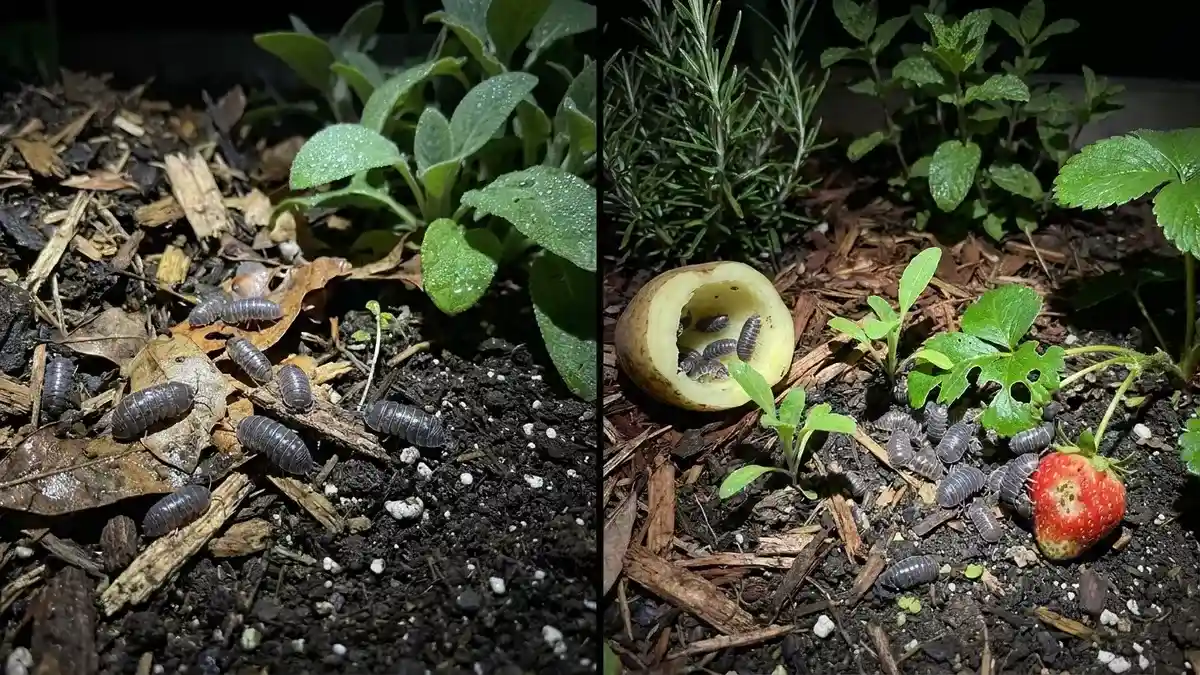
Because they evolved from marine ancestors, roly polies possess primitive gill-like structures that require constant moisture to function. This biological quirk dictates their entire lifestyle. They are primarily nocturnal, venturing out under the cover of darkness when the air is cool and damp. During the day, they retreat into dark, humid microclimates like the undersides of stepping stones, thick layers of wood chips, and decaying logs to avoid drying out.
The Benefits of Pill Bugs: Nature’s Compost Crew
In a balanced environment, a healthy population of land isopods is a massive asset to your soil health. They function as detritivores, meaning their primary dietary role is consuming dead, decaying organic matter.
Soil Aeration and Nutrient Cycling
As they forage through your flower beds, roly polies chew up tough organic materials like fallen leaves, decomposing twigs, and spent flower petals. They digest this waste and excrete nutrient-rich castings that naturally fertilize the ground.
Heavy Metal Detoxification
Fascinatingly, these resilient crustaceans also play a role in environmental remediation. They can safely ingest heavy metals from the soil—such as copper, zinc, and lead—crystallizing these toxins within their midgut. This process temporarily locks away harmful contaminants, preventing them from leaching into local groundwater supplies.
The Dark Side: When Beneficial Bugs Turn Into Pests
If these creatures are so helpful, why do many experienced gardeners view them with suspicion? The problem arises when the environment becomes too accommodating.
 Baking Soda Overuse Damages Houseplants
When a garden offers excessive moisture, heavy layers of mulch, and protection from natural predators, the pill bug population can skyrocket overnight. As their numbers explode, the available supply of dead leaf litter quickly disappears. Facing starvation, these opportunistic feeders shift their dietary habits from dead organic waste to fresh, living plant tissue.
Identifying the Damage
When roly polies turn on a garden, they target tender, vulnerable growth. The most common signs of a pill bug infestation include:
Seedling Destruction: Entire rows of newly sprouted greens or flowers clipped off at the soil line overnight.
Fruit Blemishes: Small, irregular holes chewed into low-hanging fruits that sit directly on the soil surface.
Ragged Foliage: Low-lying leaves displaying ragged, frayed edges, often mimicking the damage caused by slugs or caterpillars.
How to Assess Your Garden for an Isopod Imbalance
Before deploying control measures, it is vital to determine if the roly polies in your yard are genuinely causing harm or simply minding their own business. Ask yourself the following diagnostic questions:
Are your low-hanging fruits showing sudden chewing damage? Strawberries, melons, and tomatoes resting directly on damp soil are prime targets.
Are young seedlings mysteriously disappearing or suffering severe overnight damage? Tender cotyledons are a preferred delicacy for hungry isopods.
Do you notice massive, writhing clusters of isopods when you pull back mulch near damaged plants? High concentrations of these creatures directly at the base of vulnerable flora indicate a localized overpopulation.
If you answered yes to these questions, your backyard ecosystem has tipped out of balance, and it is time to intervene.
Gentle and Eco-Friendly Ways to Manage Roly Polies
You do not need to resort to harsh chemical pesticides to bring your pill bug population under control. Because they are highly sensitive to environmental conditions, minor cultural adjustments can effectively protect your plants.
1. The Natural Potato Trap Method
You can exploit the roly poly’s love for moisture and starch by creating a simple, non-toxic trap. Slice a raw potato in half and scoop out a small cavity in the flat side. Place the potato halves cut-side down into the soil near your most vulnerable plants right before sunset.
Overnight, hundreds of pill bugs will gather inside the hollowed-out potato to feast and hide. In the morning, simply lift the potatoes and shake the pests out into your compost pile or a far corner of your yard where they can do no harm.
2. Strategic Mulch Management
Thick blankets of wood chips right against a plant stem create an ideal, predator-free highway for isopods. Pull all mulch back at least two to three inches from the base of your seedlings and perennials. This creates a dry, exposed barrier that roly polies are hesitant to cross. For highly susceptible crops like strawberries, swap out heavy wood mulch for loose straw, which dries out much quicker on the surface.
3. Smart Irrigation Practices
Since these crustaceans rely entirely on ambient moisture to breathe, altering your watering schedule can drastically curb their nocturnal activity. Avoid running irrigation systems or hand-watering in the late afternoon or evening. Instead, water deeply in the early morning hours. This ensures the bright afternoon sun dries out the top layer of soil and mulch by nighttime, forcing the pests to remain deep underground.
4. Relocation Over Eradication
Always remember that roly polies are valuable assets when placed in the right context. Instead of aiming for total eradication, focus on relocation. If you catch them in high numbers around your vegetable beds, transfer them directly into your active compost bin. Inside the bin, their voracious appetite for decaying matter will accelerate the decomposition process, turning your kitchen scraps into black gold much faster.
Conclusion: Achieving Harmony on the Garden Floor
Ultimately, roly polies are neither purely good nor entirely bad; they are simply reactive components of a living ecosystem. In moderate numbers, they are indispensable helpers that clean up garden debris, recycle vital nutrients, and aerate the soil. But when provided with endless moisture and hiding spots, they can quickly overstay their welcome and damage your favorite crops.
By managing moisture levels, keeping mulch away from vulnerable stems, and utilizing gentle trapping techniques, you can easily maintain a harmonious balance. With a little guidance, you can keep these armored crustaceans focused on their intended job: keeping your garden clean, healthy, and thriving.
Frequently Asked Questions
Do roly polies bite or sting humans?
No. Roly polies are completely harmless to humans and pets. They do not possess stingers, biting mouthparts, or venom. Their only defense mechanism is curling up into a tight ball or releasing a mild, harmless odor to deter predators.
What is the difference between a pill bug and a sow bug?
While they look remarkably similar, the primary difference lies in their defense mechanisms. Pill bugs can roll themselves into a perfect sphere when threatened. Sow bugs cannot roll into a ball; instead, they rely on a flatter body shape and two small tail-like structures (uropods) at the rear to squeeze into tight crevices. Both share identical dietary habits and environmental needs.
Will companion planting deter roly polies?
Yes. Strong-smelling herbs can act as natural deterrents. Planting pungent flora such as garlic, onions, chives, mint, and rosemary around the perimeter of vulnerable beds can discourage isopods from entering the area.
Can roly polies damage established mature trees or woody shrubs?
No. Their mouthparts are relatively weak and adapted for soft, decaying matter or tender green tissues. They lack the strength to chew through the tough, fibrous bark or established root systems of mature trees and woody shrubs.
How long do roly polies live?
Under ideal conditions with plenty of moisture and food, a roly poly can live for up to two to three years. They molt their hard, segmented exoskeletons multiple times throughout their lifespan as they grow.