
Table of Contents
- 1. The Core Biology: Why Laying Tomatoes Flat Works
- 1.1. Correcting “Leggy” Seedlings
- 1.2. Maximizing Resource Access
- 2. Step-by-Step: How to Plant Tomatoes Sideways
- 3. Setting Your Horizontal Tomatoes Up for Success
- 3.1. Ramping Up Long-Term Care
- 4. Conclusion: The Ultimate Gardening Shortcut
- 5. Frequently Asked Questions
- 5.1. Can I use the sideways planting method for all types of tomatoes?
- 5.2. Won’t the stem rot if I bury it completely flat in the dirt?
- 5.3. What should I do if my tomato stem accidentally snaps while bending it?
- 5.4. How deep should the horizontal trench be?
- 5.5. Does this method mean I don’t need to stake or cage my tomatoes?
The Sideways Planting Trick for Your Biggest Tomato Harvest Ever
If you have been cultivating tomatoes for a few seasons, you already know that getting young seedlings established can be a frustrating exercise. All too often, home gardeners struggle with tall, floppy seedlings, weak central stems, and fragile root systems that ultimately lead to disappointing summer harvests.
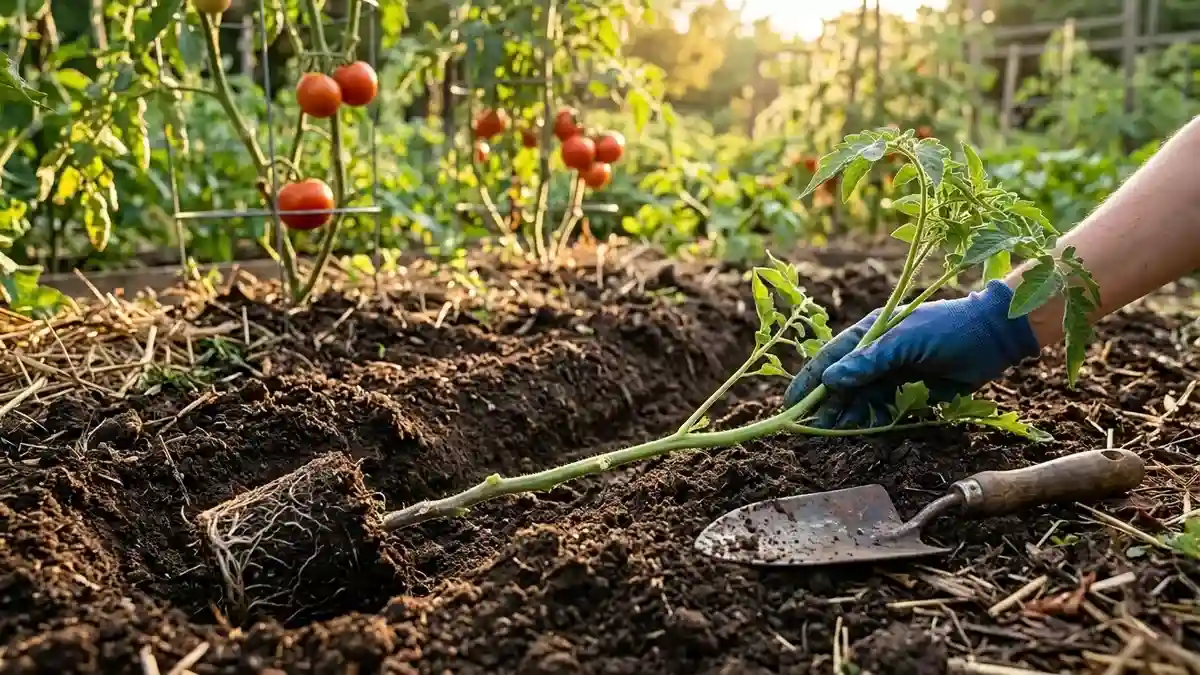
Fortunately, there is a simple, highly effective technique that turns a tomato’s unique biology into your ultimate gardening superpower: planting your tomatoes sideways. While laying a perfectly good plant flat in the dirt might seem completely counterintuitive at first, this unconventional trenching method encourages the plant to supercharge its root development, setting the stage for an explosive yield of juicy, homegrown fruit.

The Sideways Planting Trick for Your Biggest Tomato Harvest Ever
The Core Biology: Why Laying Tomatoes Flat Works
To understand why this technique is so successful, you have to look at how a tomato plant behaves in the wild. Unlike most garden crops, tomatoes are unique because they have the natural ability to sprout adventitious roots—brand-new root structures—anywhere along their stems that make direct contact with moist soil.

[Standard Upright Hole]                 [Horizontal Trench Method]
        |      (Weak Stem)                  _______/\_______  (Top Leaves Upright)
        |                                  [=========Buried Stem=========]
    (Small Root Ball)                        (Massive New Root System Forms Here)
Correcting “Leggy” Seedlings
When tomato seedlings are started indoors under low-light conditions, they frequently stretch out toward the nearest window, becoming tall, skinny, and “leggy.” If you plant these fragile seedlings upright in a standard, deep hole, they will constantly struggle to support their own weight, leaving them highly vulnerable to snapping under heavy rain or strong winds.
By laying that long, thin stem horizontally in a shallow trench instead, every millimeter of the buried stem will quickly transform into a dense, aggressive network of anchor roots.
Maximizing Resource Access
A massive root system means your tomato plant has far greater access to subterranean water reservoirs and essential soil nutrients. This dramatically increased intake capacity directly translates into:

Significantly faster initial growth spurts
Thicker, woodier, and more resilient main stalks
Exceptional stability against unexpected weather events and droughts
A substantially higher volume of flowers and ripe fruit filling your baskets

Step-by-Step: How to Plant Tomatoes Sideways
Executing this method is incredibly straightforward, but it requires a gentle touch and a slight departure from standard planting practices.
Setting Your Horizontal Tomatoes Up for Success
Within just 24 to 48 hours of completing this process, you will witness a fascinating display of plant phototropism: the exposed leafy tip will naturally straighten itself up entirely on its own, reaching directly toward the sun. Once the plant has oriented itself vertically, you can install a sturdy tomato cage or stake to support its future upward growth.
Heavy Feeders Need Rich Fuel: Because tomatoes are exceptionally heavy feeders, always dress your trenches with a generous helping of well-aged manure or rich organic compost before laying the stems down. This gives the explosive new root system instant access to vital organic nutrients.
Ramping Up Long-Term Care
To ensure your newly reinforced tomato plants achieve their full potential throughout the hot summer months, keep these essential cultivation practices in mind:
Consistent Base Watering: Always apply water deeply and directly at the base of the plant rather than spraying overhead. Keeping the top foliage dry is your best line of defense against destructive fungal diseases like early blight.
Incorporate Generous Mulching: Spread a thick layer of organic mulch—such as shredded leaves, straw, or clean wood chips—around the entire length of the buried trench. This layer seals in valuable soil moisture, stabilizes root temperatures, and completely chokes out competing weeds.
Respect Spatial Boundaries: While it can be tempting to crowd multiple varieties close together, always provide each tomato plant with a generous 2 to 3 feet of breathing room. Proper spacing maximizes ambient airflow through the mature branches, significantly dropping the risk of pest infestations and viral diseases.
Conclusion: The Ultimate Gardening Shortcut
Switching from a traditional vertical hole to a horizontal trench might feel a little strange the first time you try it, but the structural results speak entirely for themselves. By taking advantage of a tomato’s natural urge to grow roots from its stalk, you cleanly correct early legginess and anchor your garden with an incredibly robust, drought-resistant foundation.
This simple weekend adjustment rewards you with sturdier vines, lush green canopies, and a massive, continuous harvest of ripe, sweet tomatoes that will easily keep your kitchen stocked all season long.
Frequently Asked Questions
Can I use the sideways planting method for all types of tomatoes?
Yes! The horizontal trenching method works perfectly for both determinate (bush) and indeterminate (vining) tomato varieties. Any true tomato plant possesses the biological ability to grow adventitious roots from its stem when buried under moist soil.
Won’t the stem rot if I bury it completely flat in the dirt?
No, as long as you take the time to cleanly snip off the lower sets of leaves before burying the stem. Leaving active leaves underground can introduce rot and fungal issues, but a clean, bare stem will naturally transition into growing roots within a matter of days.
What should I do if my tomato stem accidentally snaps while bending it?
If you make a sharp bend and the stem cracks but is still partially attached, you can often save it by quickly burying the broken section under moist soil; tomatoes are incredibly resilient and may heal by growing roots at the injury site. However, if it snaps completely off, you can treat the top portion as a large cutting, pop it into a jar of water until it grows fresh roots, and plant it later.
How deep should the horizontal trench be?
Your trench should only be roughly 4 to 6 inches deep. You want to keep the buried stem in the top layer of soil where the ground is warmest and where oxygen and organic nutrients are most plentiful, which encourages rapid, healthy root expansion.
Does this method mean I don’t need to stake or cage my tomatoes?
No, the sideways planting trick does not replace the need for physical upward support. While it creates a vastly superior root anchor and a much stronger base stalk, vining indeterminate tomatoes will still grow exceptionally tall and heavy, requiring a sturdy stake, trellis, or cage to keep the fruit off the ground as they mature.