
Table of Contents
- 0.1. The Science Behind the Golden Spice
- 1. 4 Brilliant Ways to Use Turmeric in Your Garden
- 1.1. 1. Fighting Fungal Infections Naturally
- 1.2. 2. Healing Pruned and Damaged Plant Tissue
- 1.3. 3. A Safe, Gentle Pest Deterrent
- 1.4. 4. Preventing Damping-Off in Delicate Seedlings
- 2. Best Practices and Tips for Success
- 3. Which Plants Benefit the Most?
- 4. Conclusion
- 5. Frequently Asked Questions
The Secret Weapon in Your Spice Rack: Why Gardeners Are Using Turmeric Outdoors
If you have ever stood in your kitchen holding a jar of ground turmeric and wondered if that vibrant spice could do more than just add flavor to your favorite dinner dishes, you are entirely correct. That brilliant golden powder sitting on your spice rack is quietly making its way out of the kitchen and into the garden shed. Across suburban backyards, urban balconies, and organic farm rows, an increasing number of growers are turning to this ancient spice as an all-natural supplement to protect and support plant health. Once you discover the science behind this golden powder, it is easy to see why a quick sprinkle in the soil can transform your gardening routine.
The Secret Weapon in Your Spice Rack Why Gardeners Are Using Turmeric Outdoors
The Science Behind the Golden Spice
Turmeric (Curcuma longa) has been a cornerstone of traditional medicine for thousands of years. Celebrated for its potent anti-inflammatory, antibacterial, and antifungal characteristics, it turns out that these exact same protective qualities work wonders in the plant kingdom.

The heavy hitter responsible for these benefits is curcumin, the active chemical compound that gives turmeric its iconic golden-yellow hue. In a garden setting, curcumin acts as a natural shield, helping to suppress aggressive soil-borne pathogens, accelerate the healing of plant tissue wounds, and make foliage highly unappealing to common garden pests. While turmeric is not a magic cure-all and will never replace the foundational needs of sunlight, proper watering, and nutrient-rich soil, it serves as an incredibly powerful, chemical-free tool for anyone striving to maintain a completely organic garden.
4 Brilliant Ways to Use Turmeric in Your Garden
Integrating this kitchen staple into your routine care can resolve several frustrating cultivation challenges without relying on harsh synthetic store-bought chemicals.
1. Fighting Fungal Infections Naturally
Fungal pathogens are often a grower’s most frustrating enemy, silently taking hold beneath the surface before presenting visible symptoms. Issues like root rot, powdery mildew, and damping-off can devastate a crop before you even realize there is a problem.
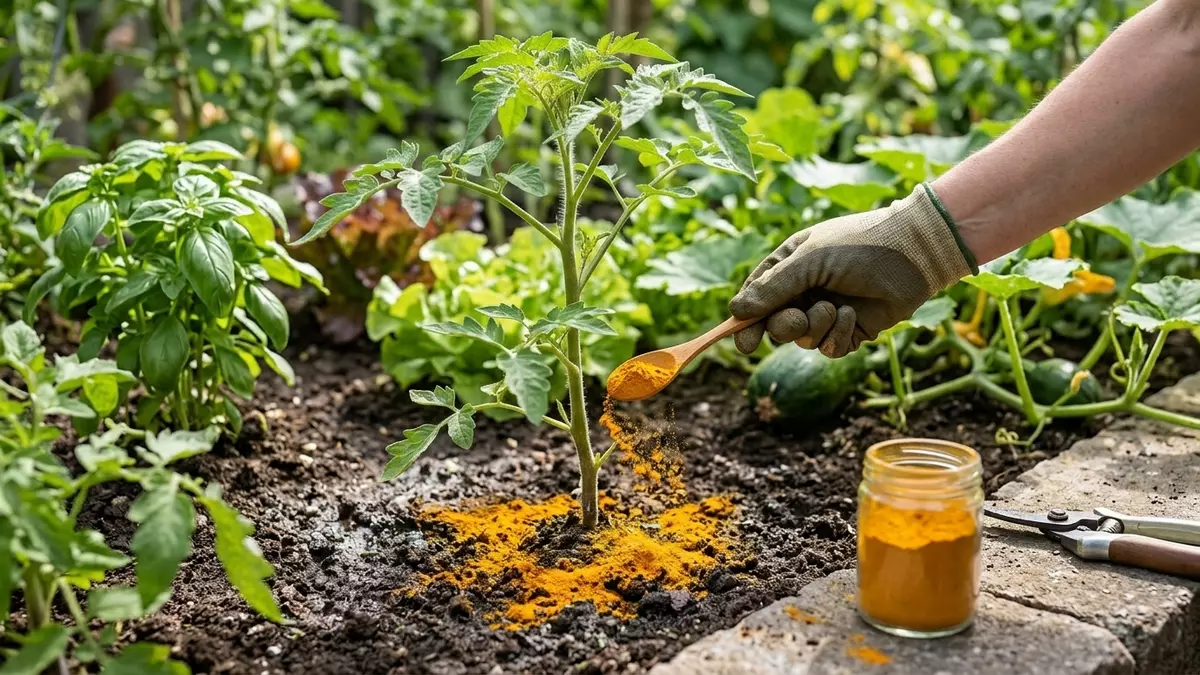
Turmeric offers an effective, non-toxic preventative defense. Dusting a light layer of the powder directly onto the soil around the base of vulnerable crops—such as tomatoes, green beans, or cucumbers—creates a hostile environment for drifting fungal spores, preventing them from germinating.
For Young Seedlings: Mix a spoonful of turmeric into warm water to create a root drench. This is highly beneficial for young plants or as a preventative treatment after heavy, prolonged rainstorms when the soil stays saturated.
For Foliage Issues: To treat existing leaf spots or early signs of mildew, create a simple topical spray. Steep turmeric powder in warm water, allow it to cool completely, and strain the liquid through a fine mesh or cheesecloth into a spray bottle. Mist the affected leaves thoroughly to halt the spread of the fungus.
2. Healing Pruned and Damaged Plant Tissue
Whenever you prune branches, harvest herbs, or accidentally nick a stem with your garden shears, you leave behind an open wound. Just like human skin, these raw, exposed areas are primary targets for opportunistic bacteria and fungal spores.
Many experienced gardeners keep a small container of turmeric on hand during pruning sessions to dust directly onto fresh cuts. The powder acts as a natural bandage, sealing the open tissue and keeping environmental infections out. This technique is exceptionally valuable for fruit trees, roses, and vining squash plants, which are notoriously susceptible to rotting if moisture gets trapped in an open cut. Unlike commercial synthetic pruning sealants, this organic alternative protects the plant without introducing artificial chemicals into the surrounding ecosystem.
3. A Safe, Gentle Pest Deterrent
While humans love the warm, earthy profile of turmeric, destructive garden insects find it completely repulsive. The intense aroma and bitter taste make it an excellent natural repellent for ants, aphids, and various leaf-chewing beetles.
If you notice a line of ants climbing up your pepper plants or a cluster of aphids gathering on delicate new growth, try lightly dusting the powder at the base of the main stem or directly onto the affected leaves. For targeted pest issues, like disrupting established ant trails across your garden beds, you can blend the spice with a bit of flour or cornmeal to create a barrier they refuse to cross. Best of all, turmeric will not harm vital pollinators like honeybees or butterflies, making it a much safer choice than broad-spectrum commercial insecticides.
4. Preventing Damping-Off in Delicate Seedlings
There is nothing quite as discouraging as checking on your indoor seed trays only to find that your bright green, newly sprouted seedlings have collapsed at the soil line overnight. This frustrating issue is known as damping-off, and it is caused by microscopic fungal pathogens that thrive in cool, overly damp seed-starting mixes.
To protect your investment and hard work, lightly dust a very thin veil of turmeric powder over the top of the soil immediately after planting your seeds. The curcumin helps suppress the pathogens right at the surface level, ensuring your vulnerable sprouts can establish strong, healthy root systems without being choked out by mold.
Best Practices and Tips for Success
To get the absolute best results from your turmeric applications, keep these practical tips in mind:
Moderation is Key: Because turmeric is highly potent, a light dusting is all you need. Overusing it can inadvertently alter the delicate balance of your soil or disrupt beneficial microbial activity in the root zone.
Watch Out for Stains: The deep yellow pigment in curcumin stains surfaces easily. Wear gardening gloves when handling it, and be careful when applying it near concrete walkways, light-colored patio stones, or white ceramic planters.
Source Quality Ingredients: While the standard culinary turmeric powder from your grocery store works perfectly fine, opting for organic, non-irradiated varieties ensures the highest concentration of active curcumin for your plants.
Which Plants Benefit the Most?
While you can safely experiment with turmeric throughout your landscape, certain varieties show the most dramatic improvements when treated with this golden spice:
| Plant Type | Primary Benefit | Application Method |
| Tomatoes & Cucumbers | Prevents early blight and powdery mildew | Soil dusting or foliar spray |
| Squash & Zucchini | Shields large stems from rot and boring insects | Dusting on open pruning cuts |
| Roses & Citrus Trees | Seals open wounds after seasonal trimming | Direct application to cut branches |
| Garlic & Onion Beds | Wards off underground bulb rot | Light dusting in the planting trench |
| Indoor Houseplants | Eliminates fungus gnats and root rot | Mild root drench using turmeric water |
Conclusion
Embracing natural, kitchen-derived remedies is a fantastic way to cultivate a thriving garden without introducing synthetic chemicals to your home and soil. By utilizing the natural antifungal, antibacterial, and pest-repellent powers of turmeric, you can protect delicate seedlings, heal pruned branches, and keep common pests at bay. Next time you head out to tend to your garden beds, consider bringing that jar of golden spice along with you—your plants will thank you for it.
Frequently Asked Questions
Will turmeric change the pH balance of my garden soil?
When used in normal, moderate amounts as a light dust or diluted liquid drench, turmeric will not noticeably alter your soil’s pH level. However, to avoid any potential shifts in soil chemistry or disruptions to beneficial microbes, avoid dumping large, concentrated piles of the spice into one single spot.
Can I use fresh turmeric root instead of the ground powder?
Yes, you can absolutely use fresh turmeric root. To utilize it in the garden, grate the fresh root into a pulp and steep it in warm water for several hours to create a potent liquid extract. Strain out the solid pieces, and use the golden liquid as a topical spray or a root drench.
How often should I reapply turmeric powder to my plants?
Because it is a natural powder, turmeric will wash away with rain or overhead watering. For ongoing pest deterrence or fungal prevention, plan to reapply a light dust once every week or two, or immediately following a heavy downpour.
Is turmeric safe to use on edible vegetables right up until harvest day?
Yes. Since turmeric is a completely organic, edible spice, it leaves behind no toxic residues on your crops. Just be sure to give your vegetables, herbs, and fruits a thorough rinse with clean water before eating them to remove any yellow powder residue and avoid staining your kitchen counters.
Can turmeric kill beneficial earthworms in my soil?
No, turmeric will not harm earthworms or other beneficial subterranean organisms when applied correctly. Earthworms naturally move away from localized areas of intense spice, but a general light dusting across the surface soil will cause them no injury, making it entirely safe for your soil’s natural ecosystem.