
Table of Contents
- 1. The Stability-First Trade-Off: Efficiency vs. Safety
- 2. The Ankle Mechanics: Pressing the Gas and Brake Simultaneously
- 3. Advanced Motion Capture: Measuring the Invisible Shift
- 4. The True Danger of a Fall: The Psychological and Physical Loop
- 5. Reclaiming a Confident Gait: Active Solutions That Work
- 6. Redefining the Meaning of a Cautious Walk
- 7. Frequently Asked Questions (FAQs)
- 7.1. Why do older adults naturally take shorter steps as they age?
- 7.2. Can wearing specific types of footwear improve my walking balance?
- 7.3. Is a slower walking speed a guaranteed indicator of cognitive decline?
- 7.4. How often should an older adult perform balance exercises to see real results?
- 7.5. What should I do if a family member refuses to use a walker or cane despite an unsteady gait?
How Aging Changes How Seniors Walk and Impacts Their Independence
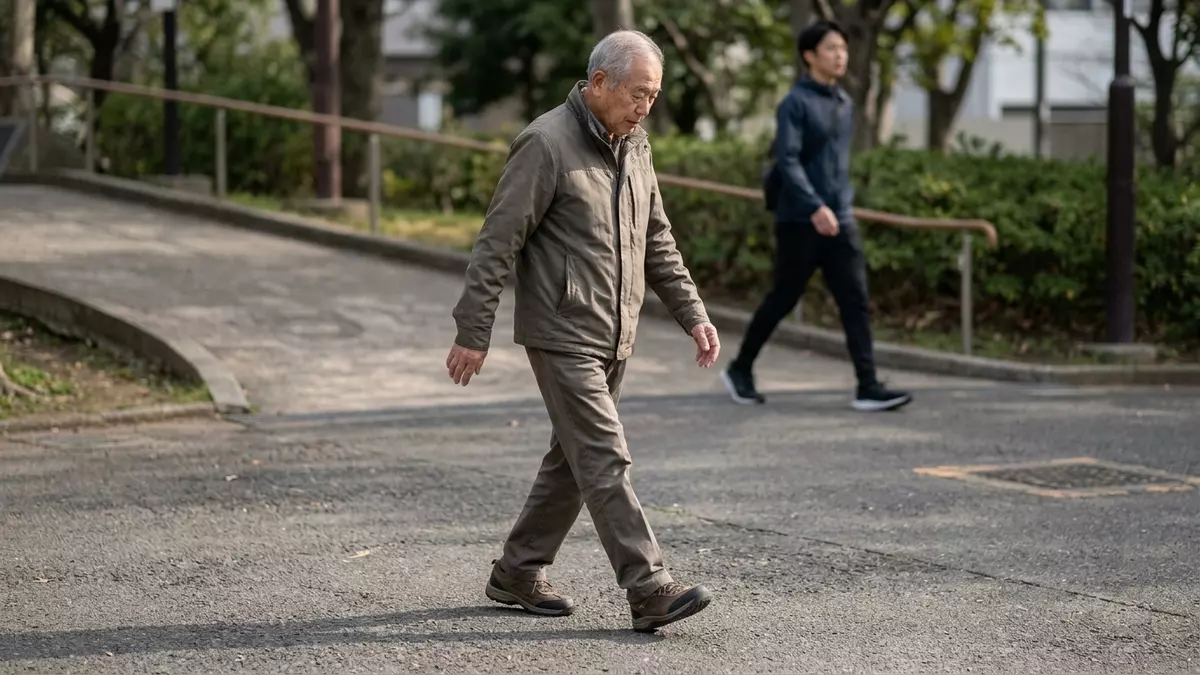
You might first notice it when navigating a steep flight of stairs, or perhaps you observe it in an aging parent who suddenly reaches for the handrail with a newfound sense of urgency. To an outside observer, walking appears to be one of the most basic, automatic tasks a human being can perform. In reality, the simple act of moving from point A to point B is a highly complex neurological and mechanical feat. As we age, our bodies quietly and systematically alter how they handle every single step.
How Aging Changes How Seniors Walk and Impacts Their Independence
A comprehensive Australian study has revealed that older adults do not simply slow down because of wear and tear. Instead, the brain and nervous system intentionally trade smooth, fluid, and energy-efficient movement for a guarded, cautious walking style designed primarily to keep them upright.
The research was spearheaded by experts at Flinders University in collaboration with the University of Canberra. The scientific team analyzed the intricate walking dynamics of 107 completely healthy adults spanning a wide age range from 26 to 86 years old.
 Reversing the Routine: Why National Geographic Highlights Backward Walking for Senior Stability
Dr. Cody Lindsay, a researcher at the Flinders Caring Futures Institute who conducted the study alongside co-authors Ceridwen R. Radcliffe and Maarten A. Immink, summarized this physiological shift clearly. He noted that as we get older, the human body actively begins to favor absolute stability over fluid efficiency.
The Stability-First Trade-Off: Efficiency vs. Safety
The foundational discovery of this research is that older adults do not suddenly forget how to walk efficiently. Rather, the brain rewrites its internal movement blueprint. As the body registers age-related changes in muscle mass and sensory sharpness, it recalculates its priorities. It begins to favor total joint stability over moving quickly, with a heavy emphasis on the exact millisecond the foot first makes contact with the ground.
Why does the central nervous system make a conscious choice to adopt a less efficient, more exhausting way to walk? Because the consequences of a fall change dramatically as a person moves into their senior years.
 Sculpt Your Core and Unlock Your Hips: A 30-Minute Equipment-Free Pilates Guide for Beginners
When a younger adult trips on an uneven sidewalk, their reflexes allow them to stumble, catch themselves, curse under their breath, and immediately keep moving. For an older adult, that identical trip can easily result in a severe bone fracture, an extended hospital stay, a permanent loss of physical independence, or a profound, long-term destruction of their self-confidence.
This creates a hidden trade-off at the heart of aging. The senior walking gait becomes significantly more careful, but that caution carries a steep biological price tag. This protective walking style requires vastly more muscular energy. Shorter steps and a slower pace are not merely random signs of physical weakness; they are often the visible results of an overworked nervous system trying its best to avoid a catastrophic fall.
The Ankle Mechanics: Pressing the Gas and Brake Simultaneously
To understand exactly how the body enforces this cautious walking style, we must look closely at the ankle joint. The human ankle is an absolute biomechanical workhorse. During a normal gait cycle, it performs three critical tasks in rapid succession: it absorbs the heavy impact shock of landing, micro-adjusts to keep the foot entirely stable, and then flexes powerfully to drive the body forward into the next step.

The Flinders University study discovered that as adults age, they increasingly activate completely opposing muscle groups around the ankle at the exact same time. Biomechanists refer to this phenomenon as co-contraction. In a younger, highly efficient gait, opposing muscles take turns: when the front muscle contracts to lift the toes, the back calf muscle relaxes, and vice versa.
In older adults, however, the brain instructs both the gastrocnemius (the primary calf muscle) and the tibialis anterior (the shin muscle) to clamp down simultaneously during the initial phase of a step.
Think of this mechanical strategy like pressing your car’s gas pedal and brake pedal down at the exact same time. Clamping both muscle groups forces the ankle joint to become incredibly stiff and rigid. While this structural stiffness creates a much safer, highly stable platform that protects against unexpected wobbles, it requires immense muscular effort.
Because the ankle is locked in a stiff embrace, it loses its ability to flex elastically and provide a powerful forward push. This lack of a dynamic push-off directly explains why seniors display shorter steps, a slower overall walking speed, and an overarching feeling of physical fatigue that arrives much sooner in a walk than it did in decades past.
Advanced Motion Capture: Measuring the Invisible Shift
The Australian research team did not simply sit in a hallway with a clipboard and watch seniors stroll past. To uncover these microscopic muscle patterns, they utilized a high-tech biomechanics laboratory equipped with state-of-the-art diagnostic tools:
Three-Dimensional Motion Capture: Specialized infrared cameras tracked reflective markers placed across the participants’ bodies, mapping joint angles down to the millimeter.
Subsurface Force Plates: Embedded directly into the laboratory floor, these high-sensitivity plates measured the exact direction and magnitude of the physical force the foot pushed against the ground.
Surface Electromyography (sEMG): Advanced electronic sensors were attached to the skin overlying key leg muscles to record the exact millisecond nerve signals fired and muscles tensed.
The collected data painted a highly consistent picture. Older participants demonstrated intense ankle stiffening during both the early and middle portions of a step. Concurrently, the force plates recorded a significantly weaker push-off force later in the gait cycle, precisely when a healthy ankle should be driving the body forward cleanly.
Another invisible factor driving this mechanical change is the gradual decline of proprioception—the nervous system’s subconscious awareness of where a limb is positioned in space without physically looking at it. As specialized sensory receptors in our joints and muscles naturally become less sharp with age, the brain feels increasingly blind to what the feet are doing. To compensate for this lack of clear sensory data, the nervous system over-braces the ankle joint, prioritizing maximum stiffness to ensure the foot lands flatly and safely.
The True Danger of a Fall: The Psychological and Physical Loop
This scientific investigation into senior biomechanics matters because mobility is the ultimate gatekeeper of long-term health. According to formal data compiled by the Centers for Disease Control and Prevention (CDC), falls stand as the single leading cause of injury-related mortality and morbidity for American adults aged 65 and older.
The scope of this public health issue is massive. CDC statistical models reveal that more than 14 million older adults report falling every single year.
[Insecure or Stiff Gait] ──► Increased Daily Fatigue ──► Reduced Overall Movement
           ▲                                                        │
           │                                                        ▼
[Heightened Fear of Falling] ◄── [Increased Muscle Weakness & Balance Loss]
The downstream consequences of these accidents are sobering. CDC figures show that roughly 37% of older adults who suffer a fall report an injury that requires immediate medical intervention or strictly limits their daily physical activity for at least 24 hours.
Worse still, the psychological fear of falling frequently creates a destructive feedback loop. After experiencing a minor tumble or noticing an unsettling wobble on a flight of stairs, an older adult will often subconsciously cut back on their daily physical activity. They stay indoors more, stop taking walks around the neighborhood, and avoid challenging environments.
Unfortunately, this self-imposed reduction in movement causes leg muscles to atrophy further and degrades what remains of their baseline balance. What began as a well-meaning, cautious walk can inadvertently trigger a downward spiral that drastically shrinks a senior’s daily life and autonomy.
Reclaiming a Confident Gait: Active Solutions That Work
The vital takeaway from this body of research is that the solution to an aging gait is not to simply tell yourself to “walk faster” or force your legs to move abnormally. Because the walking shift is driven by a deep biological quest for stability, seniors must actively train their bodies to feel secure by improving lower-leg strength, joint coordination, and neurological timing.
A comprehensive, large-scale Cochrane systematic review provided immense scientific backing for this proactive approach. The review analyzed data across numerous clinical trials and discovered that structured exercise programs successfully reduce the overall rate of falls in community-dwelling older adults by a substantial 23%. The researchers emphasized that programs focusing heavily on balance and functional, real-world movements yielded the absolute highest rates of success.
In practical terms, safeguarding your independence does not require complex athletic training. Instead, it relies on the consistent cultivation of small, deliberate physical habits:
Tai Chi and Gentle Yoga: These ancient disciplines are exceptional for senior mobility because they force the brain to practice slow, deliberate shifts in weight, re-sharpening the body’s sense of proprioception.
Sit-to-Stand Drills: Simply practicing standing up from a standard kitchen chair without utilizing your hands builds vital power in the quads and glutes, providing a stronger baseline for a steady gait.
Calf and Heel Raises: Holding onto a sturdy counter and lifting up onto your tiptoes strengthens the exact ankle muscle groups required to deliver a powerful forward push-off during a step.
Supervised Balance Challenges: Practicing standing on one foot or walking heel-to-toe along a flat surface under the direct supervision of a physical therapist can rapidly retrain an over-braced nervous system.
Redefining the Meaning of a Cautious Walk
When we are young, walking is defined entirely by speed, efficiency, and automated ease. As the decades accumulate, the human body wisely re-evaluates its priorities, deciding that completing a walk safely and remaining upright matters infinitely more than moving quickly.
Adopting a slower, shorter, and more deliberate stride is not a sign of personal failure or immediate medical crisis. It is a highly sophisticated, deeply intelligent adaptation executed by your nervous system to keep you safe in a changing body.
However, this adaptation should always be viewed as a valuable health signal worth noticing. If you observe that everyday walks are leaving you unusually fatigued, if your steps are becoming increasingly short, or if a growing fear of falling is causing you to cancel plans and stay isolated at home, it is time to take action. By intentionally training your balance, strengthening your ankles, and working alongside healthcare professionals, you can confidently protect your stride, step off the sidelines, and maintain your physical freedom for years to come.
Frequently Asked Questions (FAQs)
Why do older adults naturally take shorter steps as they age?
Shorter steps are a direct result of ankle stiffening and decreased push-off force. Because the brain activates opposing ankle muscles simultaneously to prevent wobbling (co-contraction), the joint loses the flexibility required to push forward with power. Shorter steps keep the body’s center of mass closer to the ground, which feels safer for an aging nervous system.
Can wearing specific types of footwear improve my walking balance?
Yes, footwear choices profoundly impact senior gait stability. Seniors should avoid thick, heavily cushioned running shoes or slip-on slippers, which dull the already declining sensory feedback from the soles of the feet. Opt instead for sturdy, flat shoes with thin, firm soles, good arch support, and secure closures (like laces or strong Velcro) to maximize sensory contact with the ground.
Is a slower walking speed a guaranteed indicator of cognitive decline?
Not necessarily. While a dramatic, sudden drop in walking speed can sometimes correlate with neurological changes or cognitive issues, a gradual slowing of your stride over many years is a normal, physical adaptation designed to maximize stability. A slower walk is primarily the body’s way of ensuring safety over speed.
How often should an older adult perform balance exercises to see real results?
To effectively retrain the nervous system and build durable leg strength, consistency is critical. Clinical guidelines suggest engaging in targeted balance and functional strength exercises (such as Tai Chi, heel raises, or physical therapy drills) at least two to three times per week for a duration of six months or more to achieve a significant reduction in fall risk.
What should I do if a family member refuses to use a walker or cane despite an unsteady gait?
Resistance to mobility aids often stems from a fear of losing independence or facing societal stigma. Frame the conversation away from “weakness” and focus entirely on “freedom.” Emphasize that a cane or a stylish rolling walker isn’t a symbol of decline; it is a powerful tool that provides the exact mechanical stability their ankles are struggling to produce, allowing them to continue traveling, shopping, and moving safely without fear.