
Table of Contents
- 1. The Underground Secret: How Sansevieria Multiplies
- 2. 1. Trigger Growth Through Strategic Root Stress
- 2.1. Choosing the Right Potting Vessel:
- 3. 2. Elevate Light Levels to Fuel Reproduction
- 4. 3. Implement a Dry-and-Drench Watering Strategy
- 5. 4. Optimize Temperature and Capitalize on Seasons
- 6. 5. Feed Sparingly with Low-Nitrogen Fertilizers
- 7. 6. Divide Mature Pups to Stimulate the Mother Plant
- 7.1. Step-by-Step Propagation Guide:
- 8. Troubleshooting a Stubborn Snake Plant
- 9. Conclusion: A Rewarding Cycle of Endless Greenery
- 10. Frequently Asked Questions (FAQ)
6 Proproven Tricks to Make Your Snake Plant Produce Endless Pups
Few houseplants are as iconic, resilient, and structurally striking as the snake plant (Sansevieria). For indoor plant enthusiasts, the ultimate sign of a happy, thriving snake plant is the arrival of “pups”—those adorable, miniature offshoots that push through the soil next to the parent plant. Witnessing these tiny green spikes emerge means your plant is expanding and ready to transform a single stalk into a dense, magnificent display of upright foliage.
However, many indoor gardeners find themselves waiting months, or even years, staring at a stubbornly solitary snake plant cluster that refuses to multiply. While these hardy plants are famous for surviving neglect, survival is not the same as expansion. If your Sansevieria has hit a growth plateau, you can actively trigger its reproductive instincts. By manipulating its micro-environment, you can encourage rapid pup production and enjoy a virtually unlimited supply of free baby plants.
6 Proproven Tricks to Make Your Snake Plant Produce Endless Pups
The Underground Secret: How Sansevieria Multiplies
To successfully encourage a snake plant to multiply, you first need to understand its unique growth anatomy. Unlike many tropical houseplants that rely on traditional seed production or trailing stem nodes to expand, snake plants spread via rhizomes.

Rhizomes are thick, fleshy underground stems that creep horizontally beneath the soil surface. They function as both energy storage vaults and reproductive hubs. When a snake plant accumulates surplus energy and experiences the correct environmental cues, these underground rhizomes sprout roots and push a new growth node upward through the soil. This node eventually unfurls into a self-sufficient baby plant, or pup.
Your goal as a grower is to establish the exact atmospheric and soil conditions that prompt these underground stems to actively expand.
1. Trigger Growth Through Strategic Root Stress
One of the most counterintuitive mistakes indoor plant owners make is repotting a snake plant into a massive, spacious container. While giving a plant “room to grow” makes sense for fast-feeding vegetables or sprawling vines, it has the opposite effect on a snake plant.

In the wild, Sansevieria species thrive in rocky, constrained soil pockets. They prefer a snug, slightly cramped root environment. When a snake plant’s roots fill out a pot and begin to press against the rigid interior walls, the plant experiences mild, completely healthy root stress. This physical boundary signals the underground rhizomes that it is time to seek out new territory, causing them to aggressively push up new pups to maximize space.
Choosing the Right Potting Vessel:
Keep It Tight: Always pick a container that is only slightly larger than the plant’s existing root mass. If your plant has been sitting unchanged in a massive pot of loose dirt, downsize it into a smaller vessel.
Prioritize Terra Cotta: Terracotta and unglazed ceramic pots are highly recommended for snake plants. The porous clay walls absorb excess moisture, allowing for optimal root zone aeration and preventing stagnant water conditions that halt growth.
2. Elevate Light Levels to Fuel Reproduction
It is a common myth that snake plants prefer dark, windowless hallways. While it is true that they can survive in low-light environments for extended periods without dying, they will effectively freeze their growth cycles to conserve energy. Producing an entirely new plant takes an immense amount of cellular fuel. If your plant lives in a dim corner, it simply won’t have the metabolic energy required to form pups.
In their native African habitats, snake plants bask in open, sun-drenched savannas. To maximize reproduction at home, place your plant in an area that receives 6 to 8 hours of bright, indirect sunlight daily.
Low Light ──> Energy Conservation Mode ──> Zero Pups
Bright, Indirect Light ──> Surplus Photosynthesis ──> Aggressive Rhizome Offshoots
A sunny, south- or west-facing window sill protected by a sheer curtain is the ultimate real estate for encouraging baby plants. If your home lacks natural light, positioning a standard LED grow light a few inches above the foliage for 12 hours a day will mimic summer sun and achieve identical, pup-boosting results.
3. Implement a Dry-and-Drench Watering Strategy
Overwatering is the absolute fastest way to stall growth or kill a snake plant entirely. When soil remains continuously damp or soggy, the underground rhizomes suffocate from a lack of oxygen. The plant enters survival mode, pouring all its residual energy into fighting off root rot rather than creating new life.
To spark pup production, wait until the potting medium has completely dried out from top to bottom before offering another drop of water. You can verify this by pushing a wooden chopstick deep into the container; if any dark dirt clings to the wood, step away with the watering can.
When you do water, execute a complete drenching. Pour water thoroughly over the soil until it runs freely out of the bottom drainage holes, ensuring every root fiber receives moisture. Afterward, empty the protective saucer immediately so the pot never sits in stagnant water, and leave the plant alone for the next two to three weeks.
4. Optimize Temperature and Capitalize on Seasons
Snake plants are warm-weather organisms that experience dramatic growth spurts during the peak spring and summer months. When ambient temperatures drop, their internal biological clocks signal them to enter a semi-dormant rest state.
If you are trying to force your plant to push out new offshoots, maintain an ambient indoor temperature between 70°F and 85°F (21°C to 29°C). While they can easily survive cooler household drafts down to 50°F (10°C), their metabolic rate will grind to a halt. You can take advantage of seasonal shifts in early spring by moving your snake plants to the absolute warmest, brightest spot in your home and slightly increasing your watering frequency to mimic the arrival of the natural growing season.
5. Feed Sparingly with Low-Nitrogen Fertilizers
Because snake plants are slow-growing succulents, they do not require heavy, frequent doses of industrial fertilizers. However, providing a targeted nutrient boost during the active spring and summer months can significantly accelerate rhizome development.
The trick lies in the selection and dilution of your plant food:
The Danger of Excess Nitrogen: Avoid high-nitrogen fertilizers. Excess nitrogen forces the plant to rapidly grow tall, elongated mother leaves, leaving zero energy for underground rhizome division.
The Balanced Approach: Apply a gentle, balanced, all-purpose liquid houseplant fertilizer diluted to half or quarter-strength. Feed your plant once every six weeks strictly during the spring and summer, completely halting all fertilization as autumn approaches.
6. Divide Mature Pups to Stimulate the Mother Plant
If you already have a mature snake plant that has successfully produced a pup or two, separating them can actually act as a powerful catalyst for a second wave of reproduction. Removing a mature pup frees up valuable pot space, removes a resource drain from the mother plant, and sparks a hormonal response that triggers the main rhizome to generate replacement offshoots.
Step-by-Step Propagation Guide:
Assess Maturity: Wait until the baby pup has developed at least three to four independent leaves and stands roughly one-third the height of the parent plant.
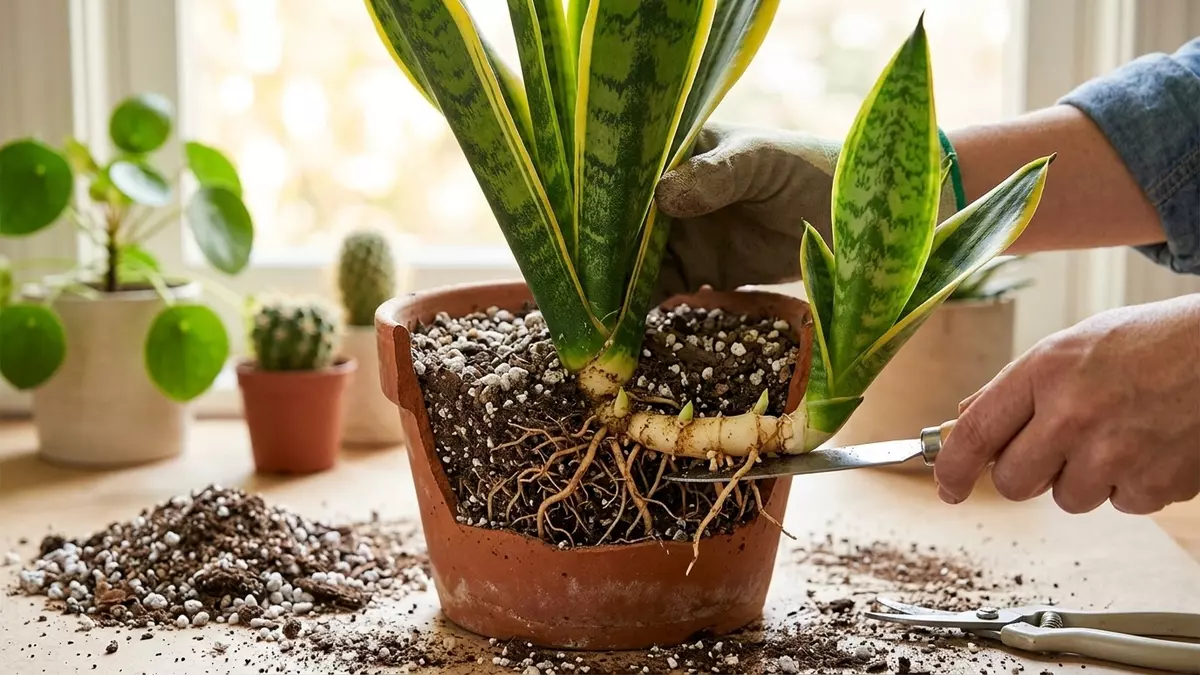
Unpot Gently: Tip the container sideways and slide the entire root structure out. Brush away loose soil to reveal the thick, horizontal rhizome linking the baby to the mother.
Make a Clean Cut: Use a razor-sharp, sterilized knife or pruning shears to cleanly slice through the connecting rhizome stem.
Callus and Plant: Allow the severed pup to sit in a dry, shaded room for a few hours so the raw cut wound can form a protective callus. This step is critical to prevent soil-borne fungi from rotting the new plant. Once calloused, plant the baby into a fresh, well-draining succulent soil mix, water lightly, and place it in bright indirect light.
Troubleshooting a Stubborn Snake Plant
If your plant looks perfectly healthy but still refuses to produce offspring after making these adjustments, consult this quick diagnostics checklist:
Symptom: Healthy foliage but zero underground activity. Your plant is likely too comfortable in its current container. Try moving it to a spot with significantly higher light levels or downsize the pot to apply healthy root pressure.
Symptom: Visible rhizomes poking through the soil but no leaves forming. The plant needs an extra push of energy. Offer a highly diluted dose of balanced fertilizer and ensure the room temperature stays consistently above 75°F (24°C).
Symptom: Total growth stagnation and slightly mushy lower leaf bases. Check immediately for root rot. Overwatering has likely compromised the health of the rhizomes, meaning you must trim away damaged tissue and repot into completely dry, sandy soil to save the plant.
Conclusion: A Rewarding Cycle of Endless Greenery
Forcing a snake plant to produce pups is a highly satisfying exercise in understanding indoor botany. By shifting your care routine away from passive neglect and toward optimized brightness, structured watering, and deliberate container restriction, you provide the perfect evolutionary cues for Sansevieria expansion. With a little patience, your single windowsill plant will soon become a prolific mother plant, filling your home with an endless supply of architectural, air-purifying greenery for years to come.
Frequently Asked Questions (FAQ)
Can I grow a snake plant pup from a single leaf cutting?
Yes, you can propagate snake plants by cutting a single leaf into three-inch segments and placing them in water or soil. However, this method takes significantly longer (often six months or more) to produce a new rhizome compared to letting the mother plant produce natural pups. Additionally, note that variegated varieties (like Sansevieria laurentii with yellow edges) will lose their yellow stripes and default to solid green when propagated via leaf cuttings.
How many pups can a single snake plant produce in a year?
Under absolute optimal conditions—including abundant bright indirect light, warm summer temperatures, and snug potting conditions—a healthy, mature snake plant can easily produce two to four robust pups during a single spring and summer growing season.
Do I have to separate the pups from the mother plant?
Not at all. If you prefer a dense, bushy, and dramatic look, you can leave all the emerging pups inside the original pot. Over time, they will completely fill the container into a lush, multi-layered cluster. You only need to separate them if you want to explicitly create new standalone plants to gift or place in other rooms.
What type of potting soil best encourages pup growth?
Snake plant rhizomes require an abundance of oxygen to grow horizontally without rotting. Use a specialized, loose cactus and succulent potting mix, or create your own blend by mixing two parts standard potting soil with one part perlite and one part coarse sand to ensure rapid drainage.
Why are the pups on my snake plant growing in completely crooked or twisted?
As underground rhizomes search for an exit point to break through the surface, they occasionally get pressed against the interior walls of plastic or clay pots. This can cause the initial leaves of the pup to emerge at odd, horizontal, or crooked angles. Once the pup breaks free into the open air and captures overhead light, its leaves will naturally straighten out over time.