
Table of Contents
- 1. The Foundation of Peony Success: Planting and Location
- 1.1. 1. Master the Exact Planting Depth
- 1.2. 2. Maximize Direct Sunlight Exposure
- 1.3. 3. Engineer the Perfect Soil Blueprint
- 2. Proactive Care for Maximum Bloom Quality
- 2.1. 4. Hydrate Strategically at the Ground Level
- 2.2. 5. Fertilize Wisely: Prioritize Phosphorus Over Nitrogen
- 2.3. 6. Install Mechanical Supports Early
- 3. Advanced Techniques to Enhance and Extend Your Harvest
- 3.1. 7. Practice Strategic Bud Thinning
- 3.2. 8. Let the Ants Work Their Magic
- 3.3. 9. Extend the Season by Mixing Cultivars
- 4. Post-Bloom and Winter Maintenance
- 4.1. 10. Master Post-Bloom Deadheading
- 4.2. 11. Practice Flawless Garden Hygiene
- 4.3. 12. Execute Clean Winterization
- 5. Conclusion: Patience Rewarded in Silk and Fragrance
- 6. Frequently Asked Questions (FAQ)
12 Expert Tips for Growing Giant, Long-Lasting Peonies This Spring
Few garden experiences match the pure joy of watching a peony bud slowly unfurl into a massive, fragrant, silk-like masterpiece. With their pillowy layers of delicate petals and intoxicating scent, peonies easily earn their reputation as the crowning jewels of the spring landscape.
However, achieving those impossibly large, show-stopping blooms that linger for weeks requires more than just luck. Many gardeners struggle with plants that refuse to flower, floppy stems that collapse in the rain, or blossoms that fade far too quickly. By mastering a few fundamental techniques—ranging from precise planting depths to specialized pruning practices—you can unlock the full potential of these spectacular perennials. Here is an expert blueprint to cultivating the biggest, healthiest, and longest-lasting peony blooms possible.
12 Expert Tips for Growing Giant, Long-Lasting Peonies This Spring
The Foundation of Peony Success: Planting and Location
Peonies are famously long-lived perennials, sometimes thriving in the same location for decades. Because they dislike being moved, getting their initial setup right is absolutely critical for future flower production.
1. Master the Exact Planting Depth
If your peony bush looks perfectly healthy and produces lush, green foliage but completely fails to produce flowers, the culprit is almost always improper planting depth. Peony tubers are highly sensitive to how deep they sit beneath the soil surface.
When planting bare-root peony tubers, locate the small, pinkish buds known as “eyes.” These eyes must sit exactly 1½ to 2 inches below the final soil line.
Planting too deeply tricks the plant into entering a permanent vegetative state where it grows beautiful leaves but zero flower buds.
Planting too shallowly exposes the tender eyes to extreme winter freeze cycles and scorching summer heat, causing the root structure to dry out and decline.
2. Maximize Direct Sunlight Exposure
Peonies are absolute sun-worshipers. To fuel the massive amount of energy required to generate giant, heavy blossoms, these plants need at least 6 to 8 hours of unfiltered, direct sunlight every single day. If you plant them in full or partial shade, you will end up with weak, leggy stems and sparse, undersized flowers.
However, if you live in an exceptionally hot southern climate, a strategic location that provides bright, direct morning sun paired with dappled afternoon shade can help protect the delicate petals from bleaching or burning, ultimately extending the lifespan of individual blooms.

3. Engineer the Perfect Soil Blueprint
Peonies demand a growing medium that strikes a perfect balance between rich organic nutrition and sharp, rapid drainage. Wet, compacted clay soil will drown the tuberous roots and cause fatal root rot. To give your plants the ultimate head start, cultivate a loose, well-aerated planting bed using this highly effective soil composition ratio:
[60%] Well-Draining Garden Loam + [30%] Rich Organic Compost or Manure + [10%] Perlite or Coarse Sand
Thoroughly blend these components into your planting site down to a depth of 12 inches to ensure developing roots have effortless access to oxygen and vital trace minerals.
Proactive Care for Maximum Bloom Quality
Once your peonies are established in the ground, everyday maintenance choices directly dictate the size and structural integrity of the spring flowers.
4. Hydrate Strategically at the Ground Level
Peonies require roughly 1 inch of water per week, especially during the critical spring window when flower buds are actively swelling. Inadequate moisture during this period results in stunted, papery buds that fail to open fully or blossoms that drop their petals prematurely.
When irrigating, always apply water gently at the base of the plant using a soaker hose or watering can rather than spraying from overhead. Wetting the dense canopy of foliage invites fungal pathogens like botrytis blight to take hold. Applying a light, two-inch layer of organic mulch around the root zone helps stabilize soil moisture, keeping the root system cool and the flowers vibrant.
5. Fertilize Wisely: Prioritize Phosphorus Over Nitrogen
When it comes to feeding peonies, pouring on standard high-nitrogen lawn or garden fertilizers is a massive mistake. Nitrogen fuels rapid green leaf advancement, but an excess of it actively robs energy away from flower production, leaving you with a massive green bush devoid of color.
Instead, apply a balanced, low-nitrogen granular formula—such as a 10-10-10 or 5-10-10 blend—in the early spring just as the reddish shoots first push through the soil. Give the plant a second light feeding immediately after the blooming cycle concludes to help the roots rebuild their energy reserves for the following year. Incorporating a handful of organic bone meal into the soil provides a safe, slow-release boost of phosphorus that directly drives the size and structural strength of the blossoms.
6. Install Mechanical Supports Early
Because peony blossoms are so densely layered and exceptionally large, the heavy heads frequently become top-heavy. A sudden spring rainstorm or a brisk gust of wind can easily snap the stems or bow the heavy flowers straight into the mud.
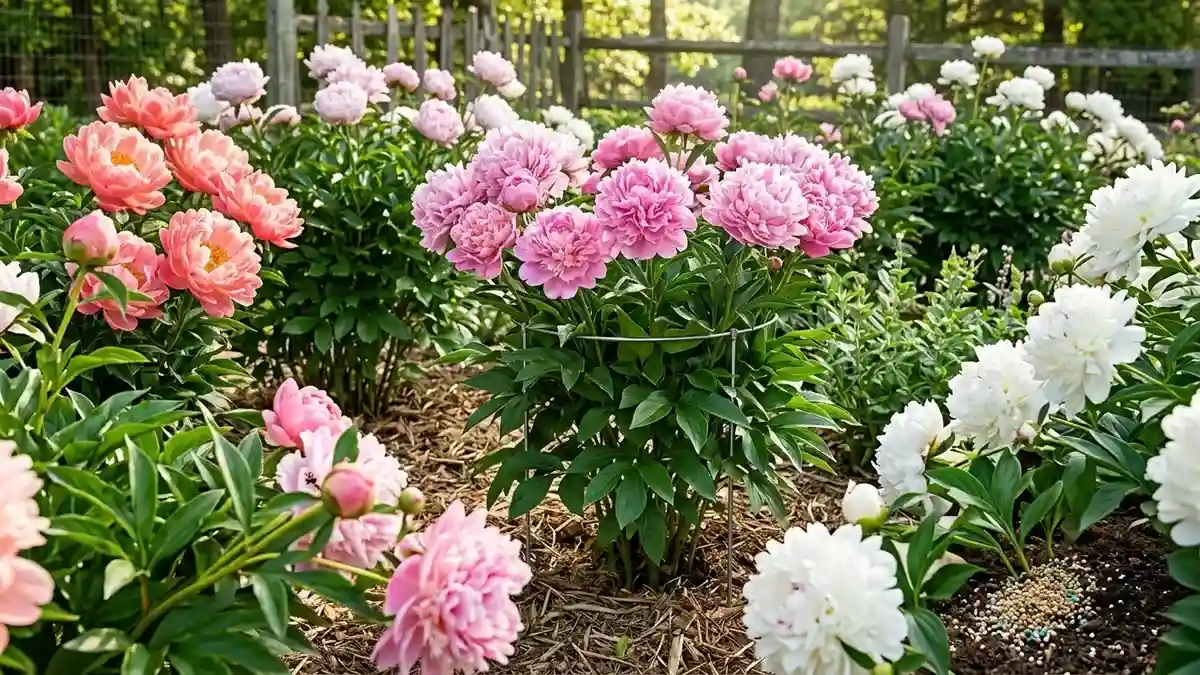
To preserve the clean beauty of your flowers, install structural supports early in the spring when the new shoots are only a few inches tall. Placing a traditional metal peony hoop or a grid-style tomato cage over the crown allows the plant to grow naturally up through the support network. As the foliage fills out, it completely hides the metal frame, keeping your heavy flowers held neatly upright without any unsightly stakes showing.
Advanced Techniques to Enhance and Extend Your Harvest
For gardeners who want to elevate their peony game from ordinary to extraordinary, these advanced techniques manipulate the plant’s natural life cycle for superior results.
7. Practice Strategic Bud Thinning
This is the ultimate insider trick for cultivating truly massive, competition-sized exhibition blooms. If you examine a developing peony stem closely, you will notice a large, primary central bud flanked by several smaller, secondary side buds.
If left untouched, the plant distributes its energy across all of these buds, resulting in one medium flower followed by a few tiny, short-lived side blossoms. To maximize your main flower, use your fingertips to gently pinch off the smaller side buds when they are roughly the size of a pea. This forces the root system to channel 100% of its moisture, carbohydrates, and nutrients into the single remaining central bud, yielding a remarkably giant, breathtaking focal flower.
Pinch Side Buds (Pea-Sized) ──> Channels 100% Energy ──> Giant Central Exhibition Bloom
8. Let the Ants Work Their Magic
It is incredibly common to find an army of ants crawling frantically over sticky peony buds in the late spring. Many well-meaning gardeners panic and spray them down with pesticides, thinking they are dealing with a destructive pest infestation.
This is a harmless, symbiotic relationship. Peony buds secrete a sweet, sugary sap that ants love to harvest. In exchange for this free meal, the ants act as a natural security patrol, driving away destructive pests like thrips and aphids. Furthermore, as the ants move across the tightly wound petals, their physical movement helps loosen the sticky coating, allowing the giant petals to unfurl more smoothly. Leave the ants alone; they are essential partners in your garden ecosystem.
9. Extend the Season by Mixing Cultivars
The only true heartbreak of growing peonies is that an individual bush typically blooms for only 7 to 10 days. However, you can easily enjoy a continuous, rolling parade of fragrant blossoms for up to six full weeks by intentionally selecting a diverse mix of early, mid, and late-season varieties:
| Variety Category | Peak Bloom Window | Top Recommended Cultivars |
| Early-Season | Mid-May | ‘Coral Charm’, ‘Festiva Maxima’ |
| Mid-Season | Late May to Early June | ‘Sarah Bernhardt’, ‘Karl Rosenfield’ |
| Late-Season | Mid-to-Late June | ‘Duchess de Nemours’, ‘Elsa Sass’ |
Post-Bloom and Winter Maintenance
What you do after the flowers fade determines how much energy the plant can save up for the next spring showing.
10. Master Post-Bloom Deadheading
Once a magnificent peony flower finally starts to drop its petals and dry out, it transitions into making seed pods. Creating seeds consumes a tremendous amount of internal energy that should be going down into the root system to form next year’s eyes.
As soon as a flower loses its beauty, use sharp, sanitized pruning shears to deadhead the spent bloom, cutting the stem clean down to the first set of healthy, strong green leaves. Leave the rest of the green bush completely intact through the summer, as those leaves act as solar panels to feed the underground roots.
11. Practice Flawless Garden Hygiene
Peonies are exceptionally resilient, but they can occasionally fall victim to fungal issues like powdery mildew or botrytis blight. Prevention is always easier than a cure. Ensure your individual peony bushes are spaced at least 3 to 4 feet apart to facilitate excellent, uninhibited airflow through the branches. If you notice any spotted, yellowing, or diseased leaves at any point during the summer, prune them off immediately and discard them in the trash—never add diseased peony parts to your backyard compost pile.
12. Execute Clean Winterization
Peonies require a sustained winter chill period to trigger strong bud formation for the next cycle, but they still need protection from extreme conditions. In late autumn, after a heavy hard frost has turned the foliage brown, slice the entire plant down to about 3 to 4 inches above the ground level.
Clear away all fallen leaves and garden debris from the crown to remove overwintering fungal spores. Top the remaining stubble with a light, airy layer of straw or chopped autumn leaves for the winter. As soon as the ground thaws in early spring, rake this winter mulch completely away from the crown to prevent moisture from trapping against the emerging new growth.
Conclusion: Patience Rewarded in Silk and Fragrance
Growing magnificent peonies is a masterclass in the rewards of patient, attentive gardening. By respecting their preferred planting depths, offering them a nutrient-rich, well-draining home in the full sun, and implementing specialized tricks like bud thinning and proactive staking, you transform these classic perennials into unforgettable garden centerpieces. Implement these twelve expert strategies this season, and your garden will be rewarded with a spectacular, long-lasting explosion of color and fragrance that gets better with each passing year.
Frequently Asked Questions (FAQ)
Can peonies be grown successfully indoors or in small pots?
Peonies are generally not suited for long-term indoor growth because they require a distinct, freezing winter dormancy period to set flower buds. However, you can grow certain compact or dwarf herbaceous peony varieties outdoors in large, deep containers (at least 5 to 10 gallons) filled with premium, fast-draining potting soil, provided the pots are left outdoors through the winter.
Why are my peony buds turning black and drying up before they even open?
This common frustration is typically caused by a fungal disease known as Botrytis blight, which thrives in cool, overly wet, and stagnant spring weather. To combat this, never water your peonies from above, ensure your plants have 3 to 4 feet of space between them for maximum airflow, and immediately prune off and discard any blackened buds or spotted leaves.
Do I need to dig up and divide my peony roots every few years?
No. Unlike many other garden perennials that require frequent division to stay healthy, peonies actively prefer to be left completely undisturbed. A peony bush can happily remain in the exact same spot for 20, 30, or even 50 years without ever needing to be split. Only divide them if you explicitly want to propagate new plants or if you are forced to relocate the bed.
How can I make cut peonies last longer inside a vase?
For maximum vase life, harvest your peonies when the buds are in the “marshmallow stage”—meaning the bud is fully colored and feels soft and squishy like a marshmallow, but has not yet opened. Cut the stems at a 45-degree angle under water, strip away any lower leaves that would sit submerged in the vase, and place them in cool water with floral preservative. This technique can give you up to a week or more of fresh indoor blooms.
Will my newly planted peony bloom during its very first year?
Peonies are notorious for throwing a bit of a tantrum when first introduced to a new environment. A newly planted bare-root peony often spends its entire first year focusing exclusively on establishing its underground root architecture. You may get one small bloom or none at all. By the second and third years, however, the plant will settle in and reward you with a heavy, reliable abundance of giant flowers.