
Table of Contents
- 1. The Psychology of the Peck: Why Birds Target Your Tomatoes
- 2. The Science of Disappointment: How the Ornament Hack Works
- 3. Step-by-Step Guide to Setting Up Your Decoy System
- 3.1. 1. Source Safe, Weatherproof Materials
- 3.2. 2. Hang the Decoys Early
- 3.3. 3. Fasten and Distribute Securely
- 4. Pro-Tips for Maximizing Your Ornament Decoys
- 5. Frequently Asked Questions
- 5.1. Will this trick work if my tomatoes are already turning red?
- 5.2. How many ornaments should I put on each tomato plant?
- 5.3. Can I use this same Christmas bauble hack for other garden crops?
- 5.4. Will the shiny ornaments attract more birds to my yard initially?
- 5.5. What should I do if the birds figure out the trick?
How to Use the Red Christmas Bauble Trick to Protect Your Tomatoes
There is nothing quite like the anticipation of watching your backyard tomato crop grow throughout the summer. But if you have ever gone out to harvest a perfect, sun-ripened fruit only to find it ruined by a gaping beak wound, you know how incredibly frustrating pest birds can be.
Before you spend a fortune on tangled nylon bird netting, chemical repellents, or plastic owls that birds quickly learn to ignore, you can outsmart them using an incredibly cheap, brilliant holiday leftover: plastic red Christmas baubles. By introducing these shiny ornaments into your garden early in the season, you can tap into basic animal psychology to condition local birds to leave your ripening vines completely alone.
How to Use the Red Christmas Bauble Trick to Protect Your Tomatoes
The Psychology of the Peck: Why Birds Target Your Tomatoes
To successfully defend your garden, you have to understand exactly what the birds are looking for when they raid your tomato cages. Contrary to popular belief, birds rarely peck at your tomatoes because they are starving for food. Instead, this destructive behavior peaks during the hottest, driest weeks of mid-summer due to two specific biological drivers:
Hydration: Tomatoes are packed with water. When natural puddles and dew streams dry up, birds view a juicy tomato as a convenient, elevated water balloon.
Visual Triggers: Birds have exceptional color vision. As a tomato transitions from green to soft pink and vibrant red, the changing hue acts as a massive visual beacon that signals high sugar content and optimal ripeness.
Unfortunately, birds do not politely consume a single fruit. They will take one or two exploratory pecks out of a dozen different tomatoes, exposing the flesh to immediate fungal rots, fruit flies, and bacterial decay, effectively ruining your entire harvest.
The Science of Disappointment: How the Ornament Hack Works
The red holiday bauble trick relies entirely on operative conditioning—a method of learning where a specific behavior is modified by its consequences.
[Bird Sees Red Bauble] ──> Expects Soft, Juicy Fruit ──> Pecks Hard Plastic ──> Associates Color Red with Disappointment
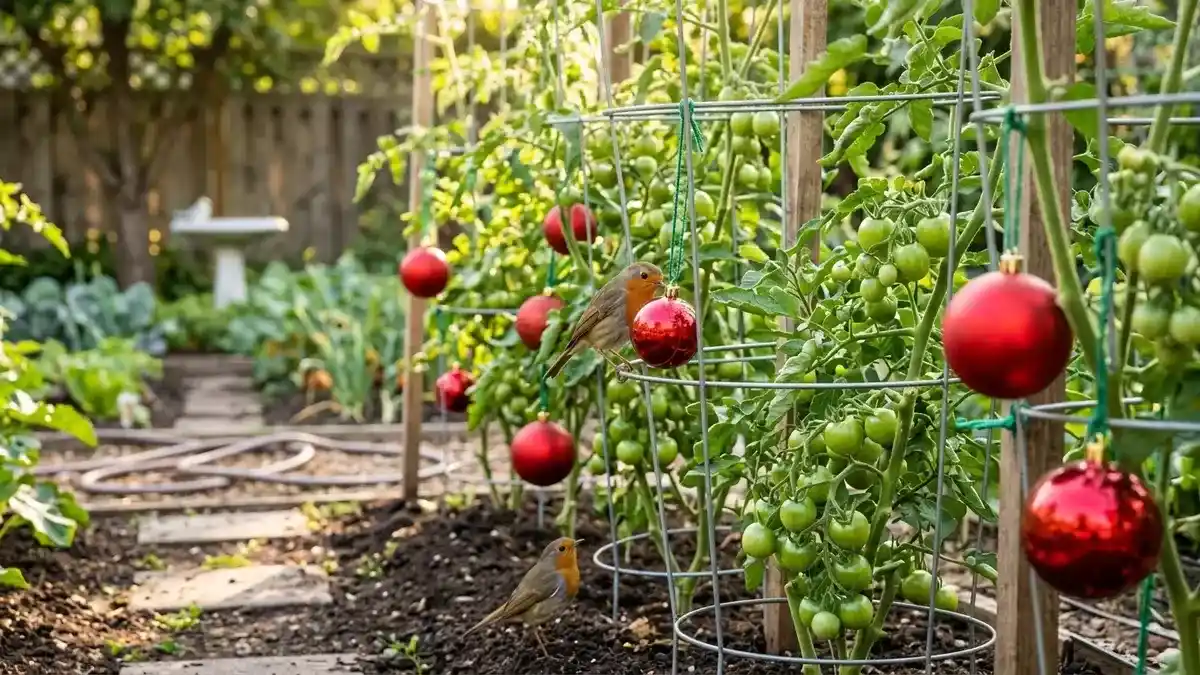
When you hang solid, hard plastic red Christmas ornaments around your green tomato vines, you create a brilliant visual illusion. Foraging birds spot the red shapes from the sky and swoop down, fully expecting a soft, water-rich, delicious meal. Instead, their beaks strike an unyielding, solid plastic shell.
After repeatedly hammering their beaks against the hard ornaments, the birds experience zero nutritional or hydration reward. Over a couple of weeks, this repetitive cycle of frustration rewires their behavior. They mentally associate the specific visual trigger—the color red on a tomato vine—with pure disappointment. By the time your actual, living green tomatoes naturally begin to ripen and blush red, the local bird population has already been trained to look elsewhere for water.

Step-by-Step Guide to Setting Up Your Decoy System
Executing this garden hack requires minimal effort, but your timing must be absolutely precise for the conditioning to take permanent root.
1. Source Safe, Weatherproof Materials
Take a trip to your holiday storage bins or visit a local discount store and purchase a few packs of plain, medium-sized Christmas ornaments.
Safety First: Avoid using traditional glass ornaments under any circumstances. High summer winds, heavy rain, or aggressive bird strikes can easily shatter glass baubles, showering your edible vegetable soil with microscopic, dangerous shards. Stick exclusively to shatterproof, heavy-duty plastic or acrylic ornaments.
2. Hang the Decoys Early
This is the most critical step of the entire strategy. You must hang the red baubles on your plants while your real tomatoes are still completely small, green, and rock-hard. If you wait until your real fruit begins to turn pink, the trick will fail entirely. The goal is to establish the negative mental association in the birds’ minds before any actual, edible food exists on the vine.
3. Fasten and Distribute Securely
Using heavy-duty green garden twine, vinyl-coated wire, or zip ties, lash the baubles directly onto your metal tomato cages, wooden support stakes, or sturdy interior branches. Make sure they are tied tightly so they do not easily blow away or detach during a summer storm. Distribute the ornaments evenly throughout your garden plot, placing roughly two to three baubles on every individual tomato plant to ensure maximum visual coverage from all flight angles.
Pro-Tips for Maximizing Your Ornament Decoys
To keep your backyard birds from eventually solving the puzzle, apply these advanced behavioral tweaks:
Ditch the Glitz: Stick strictly to solid, matte, or basic glossy red ornaments. Avoid anything featuring glitter, snowflakes, or complex metallic patterns. You want these decoys to realistically mimic the look of an actual round tomato from a distance.
Vary the Hues: If you are growing multiple unique varieties of tomatoes—such as pink brandywines, classic red beefsteaks, or orange cherry tomatoes—match your ornaments to your crop. Mix in a few varying shades of deep crimson, hot pink, and dark orange baubles to expand the birds’ negative conditioning across the entire color spectrum.
Provide an Alternative Water Source: Remember that the birds are primarily searching for hydration. While driving them away from your food crops with decoys, give them an easy out by placing a clean, fresh birdbath or a shallow dripping water dish on the opposite side of your yard. They will happily choose the accessible water source over the frustrating plastic “tomatoes.”
Once your harvesting season draws to a close in the autumn, simply snip the ties, wipe down the plastic baubles, and pack them away with your standard holiday decorations, ready to protect your soil food web again next summer.
Frequently Asked Questions
Will this trick work if my tomatoes are already turning red?
No. If local birds have already tasted a real, ripe, juicy tomato from your garden, they have already established a positive reward loop. Hanging plastic ornaments at this stage will not deter them, as they will easily learn to distinguish the soft, real fruit from the hard plastic decoys through trial and error.
How many ornaments should I put on each tomato plant?
For maximum efficiency, aim to hang two to three plain red ornaments per mature vine. Place them at varying heights throughout the support cage, ensuring some are clearly visible on the exterior perimeter to catch the eyes of birds flying overhead.
Can I use this same Christmas bauble hack for other garden crops?
Yes! Home gardeners have successfully adapted this psychological conditioning trick to protect a wide array of fruit crops. For example, hanging smaller, shiny red plastic beads or mini ornaments around strawberry beds or low-hanging cherry tree branches early in the spring can easily deter birds before the real fruit matures.
Will the shiny ornaments attract more birds to my yard initially?
Yes, the bright red color will initially pique the curiosity of local foraging birds, drawing them in to investigate. However, this is exactly what you want to happen. The initial attraction ensures that the birds actively peck the hard plastic, experience instant disappointment, and quickly lose all interest in the area.
What should I do if the birds figure out the trick?
If you notice highly intelligent birds (like crows or jays) starting to bypass the ornaments to look for real greening fruit, simply alter the look of your decoys. Every couple of weeks, slide the ornaments to different branches or swap out standard glossy red baubles for a matte finish to constantly reset their visual tracking patterns.