
Table of Contents
**The Hidden Psychology Behind Stacking Plates at Restaurants**
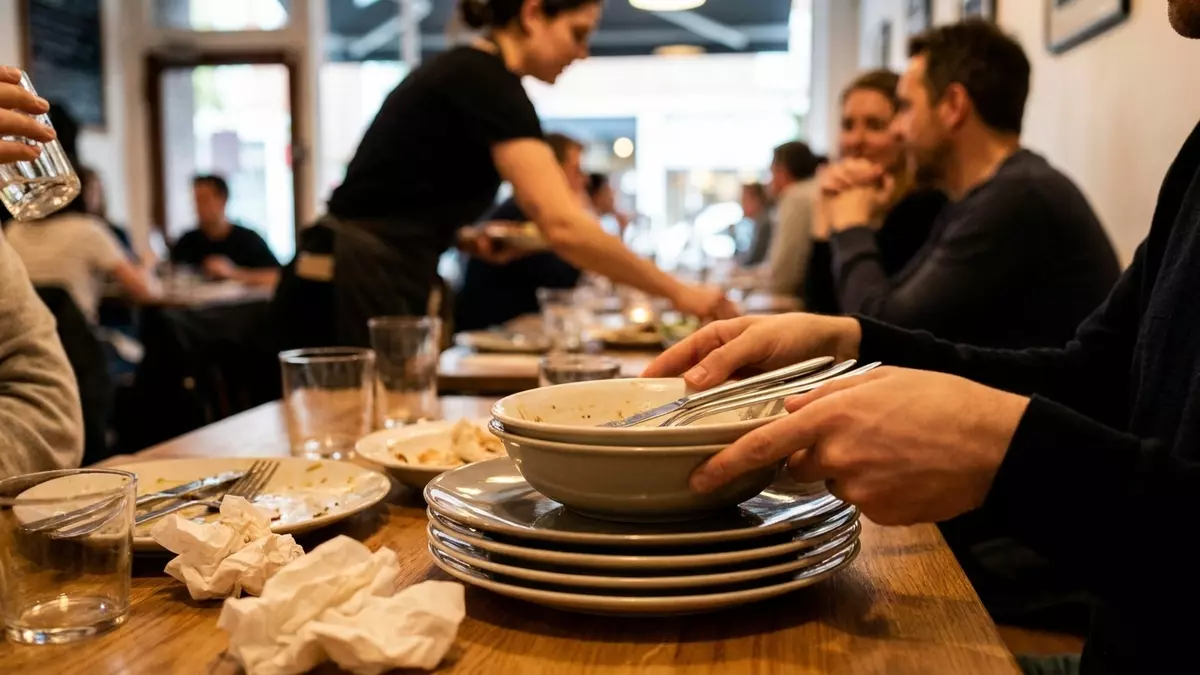
That familiar moment arrives at the end of nearly every restaurant meal. Someone at the table begins gathering silverware, sliding glasses closer together, and neatly stacking empty plates as the server approaches. What seems like basic courtesy might actually reveal deeper insights into personality, social instincts, and emotional drivers.
Psychologists suggest this small act of plate stacking goes far beyond good manners. It can signal empathy, a desire for order, or even subtle anxiety about social judgment. Understanding this everyday habit offers surprising lessons about human behavior that extend well beyond the dining room.
The Hidden Psychology Behind Stacking Plates at Restaurants

### What Plate Stacking Really Reveals About You
The seemingly simple gesture of clearing the table has caught the attention of behavioral experts. Spanish psychologist Francisco Tabernero highlights how such actions often blend genuine care with other underlying motivations. Helping without being asked can demonstrate strong prosocial tendencies—the willingness to support others in small but meaningful ways.
Prosocial behavior, as defined by the American Psychological Association, involves actions that benefit other people. In a busy restaurant, noticing a server’s heavy workload and stepping in to ease it fits this definition perfectly. It shows awareness of another person’s effort and a desire to reduce their burden.

Yet motives vary. For some, plate stacking stems from true empathy—the ability to imagine the server’s long shift, aching feet, and constant demands. For others, it might reflect a quieter need for approval or fear of being perceived as inconsiderate. Tabernero notes that the line between altruism and seeking social validation can sometimes blur, especially for those highly sensitive to others’ opinions.
### The Empathy Factor in Everyday Actions
Empathy drives many of these restaurant rituals. Diners who have worked service jobs themselves often feel a strong pull to help. They understand the physical toll of carrying multiple plates through crowded aisles while managing multiple tables.

This small act of consideration communicates respect for the server’s time and labor. In fast-paced environments where staff often feel invisible, such gestures can provide a meaningful morale boost. It transforms an ordinary meal into a brief moment of human connection.
However, not every instance of helping comes from pure empathy. Some people stack plates because they feel uncomfortable leaving a mess, regardless of who cleans it. This internal drive for neatness reflects a preference for order that brings personal calm rather than solely benefiting others.
### Why Businesses Value These “Soft Skills”
Restaurant behavior offers a window into workplace dynamics. Employers across industries— from corporate offices to healthcare settings—actively seek individuals who notice needs and act without prompting. These prosocial habits contribute to smoother team operations and stronger collaboration.
Research underscores the real-world impact. A notable study involving researchers like Lalin Anik, Lara B. Aknin, Michael I. Norton, Elizabeth W. Dunn, and Jordi Quoidbach explored “prosocial bonuses.” Participants received money to spend either on themselves or on others. Results across diverse groups, including Australian bank employees, Canadian dodgeball teams, and Belgian sales professionals, proved illuminating.
Teams where members spent prosocially saw measurable performance gains. In sports teams, every $10 spent helping others correlated with an 11% increase in win rate, while self-focused spending linked to a decline. These findings suggest that cultures encouraging helpful behavior often outperform those centered purely on individual gain.
While the study didn’t focus on restaurants specifically, it illustrates broader patterns. People who naturally engage in small helpful acts like plate stacking often bring similar energy to professional environments, fostering better teamwork and results.
### The Potential Downsides of Over-Helping
Helping isn’t always purely positive. Excessive plate stacking or similar behaviors can sometimes mask underlying anxiety or a compulsive need to control situations. When helping becomes habitual to the point of discomfort when not doing it, it may indicate deeper emotional patterns worth exploring.
In team settings, overstepping boundaries by taking on tasks outside one’s role can create confusion or resentment. Effective helping requires balance—offering support while respecting established workflows and personal responsibilities.
A broader meta-analysis led by Huiyao Liao examined prosocial motivation in professional contexts. It found consistent links to improved well-being, increased helpful actions, stronger job performance, and greater career advancement. However, these benefits depend heavily on context. Voluntary helping yields better outcomes than forced or obligatory actions that create internal stress.
### When It’s Simply About Avoiding Clutter
Not every instance of clearing the table involves deep psychological motives. Some diners simply dislike visual chaos. Crumbs scattered across the tablecloth, sauce-stained bowls, and scattered utensils create mental friction for those who thrive in organized spaces.
For these individuals, stacking plates serves a practical purpose: restoring calm and clarity to the immediate environment. This preference for order can improve focus and reduce cognitive load, making the end of the meal more pleasant for everyone at the table.
### How to Help Thoughtfully in Restaurants
The most effective plate stacking respects the server’s expertise. Restaurants have specific systems for clearing tables efficiently and safely. Building unstable towers of plates or mixing silverware in ways that complicate sorting can inadvertently create more work.
Best practices include:
– Moving empty plates closer together without stacking excessively
– Keeping utensils visible and grouped
– Separating glasses to prevent breakage risks
– Simply asking, “Would this help?” before diving in
These small adjustments demonstrate consideration while acknowledging the server’s professional knowledge. Thoughtful help enhances rather than disrupts service flow.
### Broader Life Lessons from Restaurant Habits
Plate stacking psychology extends to many areas of life. It reflects how we navigate social spaces, respond to others’ needs, and manage our own internal states. People who consistently show these small courtesies often excel in roles requiring emotional intelligence and collaboration.
At the same time, one habit doesn’t define an entire personality. Someone who stacks plates might do so out of habit, cultural upbringing, or momentary impulse rather than fixed character traits. Context always matters.
The primary research on prosocial spending appeared in *PLOS ONE*, providing valuable data on how generosity impacts performance and satisfaction.
### Conclusion: Small Gestures, Big Insights
The next time you reach to stack plates at a restaurant, pause for a moment. That simple action might reveal your capacity for empathy, your discomfort with disorder, or your desire to create positive social impressions. Most often, it signals healthy awareness of the people around you and a willingness to contribute to smoother shared experiences.
These everyday moments offer gentle reminders about human connection. In a world that can feel increasingly disconnected, small prosocial acts like thoughtful table clearing help build bridges between strangers and strengthen community bonds—one cleared table at a time.
Understanding these psychological nuances doesn’t just make us better diners. It encourages more mindful interactions across all areas of life, fostering environments where everyone—from restaurant staff to colleagues—feels seen and supported.
### FAQ: Plate Stacking Psychology and Prosocial Behavior
**Is stacking plates at restaurants always a sign of good personality traits?**
Not necessarily. While it often reflects empathy or consideration, it can also stem from personal preference for order or mild social anxiety. Context and frequency provide better clues than a single action.
**What does psychology say about people who never help clear the table?**
Lack of plate stacking doesn’t automatically indicate selfishness. Some individuals simply feel uncomfortable intervening in professional service roles or prefer leaving tasks to trained staff to avoid mistakes.
**How can I develop more prosocial habits like helping in restaurants?**
Start small by observing needs around you and offering help respectfully. Practice in low-stakes environments, gradually building comfort with balancing personal boundaries and supportive actions.
**Do restaurant servers appreciate when customers stack plates?**
Many do, especially when done thoughtfully. However, overly complicated stacking can slow them down. Clear communication and simple gestures tend to be most helpful.
**Can understanding plate stacking psychology improve my workplace relationships?**
Absolutely. Recognizing prosocial patterns helps build stronger teams. Small acts of noticing and addressing others’ needs often lead to better collaboration, higher morale, and improved collective performance.
**Is there scientific evidence linking helpful behaviors to success?**
Yes. Studies on prosocial motivation, including meta-analyses and experiments with prosocial bonuses, show connections to better well-being, performance metrics, and career outcomes when helping feels authentic and voluntary.