
Table of Contents
- 1. The Benefits of Citric Acid for Snake Plants
- 1.1. 1. Restoring Optimal Soil pH for Nutrient Absorption
- 1.2. 2. Eliminating Dusty Film and Hard Water Spots
- 1.3. 3. Creating a Hostile Environment for Pests
- 1.4. 4. Reducing Fungal Mold and Mineral Crusts
- 2. The Golden Rule of Application: Deep Dilution
- 2.1. For Soil and Root Maintenance
- 2.2. For Foliar Cleansing and Polishing
- 3. Mistakes to Avoid: Protecting Your Plant from Citrus Burn
- 4. Summary: A Subtle Boost for Your Houseplants
- 5. Frequently Asked Questions
- 5.1. 1. Can I use bottled lemon juice, or does it have to be fresh?
- 5.2. 2. Will lemon juice make my snake plant grow faster?
- 5.3. 3. Can I use this lemon juice trick on other types of houseplants?
- 5.4. 4. How can I tell if I used too much lemon juice on my plant?
- 5.5. 5. Does the lemon juice wipe leave a sticky residue on the leaves?
The Surprising Reason Experienced Gardeners Use Lemon Juice on Snake Plants
Snake plants (Sansevieria) have earned a well-deserved reputation as the ultimate low-maintenance houseplant. They are legendary for their ability to thrive on neglect, tolerate dim corners, and forgive you when you forget to water them for weeks at a time.
Yet, even the most resilient houseplants can eventually lose their luster. When structural growth stalls or the signature upright leaves begin to look dull, seasoned indoor gardeners reach for an unexpected kitchen staple: fresh lemon juice. While it might sound like an odd addition to a plant care routine, this citrus fruit contains natural properties that can revitalize your greenery from root to tip.
The secret lies in the precise application. When used correctly and diluted properly, lemon juice can serve as a powerful tonic for your snake plant—but going overboard can lead to disaster.

The Surprising Reason Experienced Gardeners Use Lemon Juice on Snake Plants
The Benefits of Citric Acid for Snake Plants
Lemon juice is packed with natural citric acid, which introduces a mild, beneficial acidity to the plant’s immediate environment. Here is a closer look at the science behind why this household ingredient is so highly valued in indoor gardening circles.
1. Restoring Optimal Soil pH for Nutrient Absorption
Snake plants naturally thrive in a growing medium that is slightly acidic to neutral. However, standard municipal tap water is frequently alkaline and loaded with hard minerals. Over several months of continuous watering, these alkaline elements accumulate in the soil, slowly driving the pH level upward.
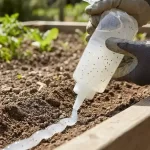
When the soil becomes too alkaline, it creates a chemical lock, preventing the roots from absorbing vital nutrients like iron and magnesium. Introducing a few drops of acidic lemon juice to your watering can breaks down these alkaline barriers, rebalancing the soil chemistry so your snake plant can grow stronger, greener, and more resilient.
2. Eliminating Dusty Film and Hard Water Spots
Because snake plants feature broad, sword-like leaves that stand completely upright, they act as natural dust magnets. A heavy layer of dust does more than just make your plant look unkempt; it actively blocks sunlight, crippling the plant’s ability to photosynthesize efficiently.
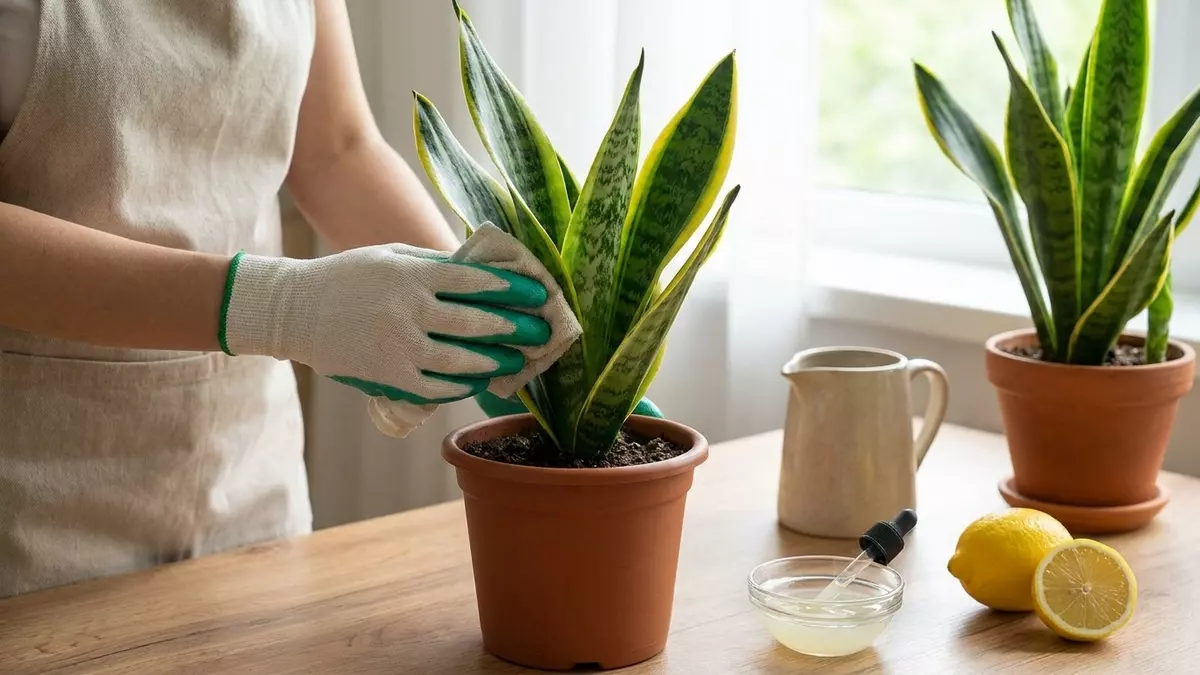
Wiping down the foliage with a cloth dampened with a mild lemon juice solution is highly effective. The natural acid cuts through greasy dust particles and effortlessly dissolves the chalky white mineral spots left behind by tap water misting, leaving the leaves with a brilliant, healthy sheen.
 Baking Soda Overuse Damages Houseplants
3. Creating a Hostile Environment for Pests
While snake plants are rarely targeted by insects, opportunistic pests like mealybugs, spider mites, and fungus gnats can still occasionally invade. Lemon juice possesses natural antibacterial and antifungal properties.
While it is not powerful enough to eradicate a severe infestation, maintaining a clean environment with occasional citrus wipes makes the leaf surfaces highly unattractive to invading insects, acting as a gentle, non-toxic preventative shield.
4. Reducing Fungal Mold and Mineral Crusts
If the air circulation in your home is poor or the potting mix remains damp for too long, a fuzzy white layer of mold can form on the surface of the soil. Additionally, excess fertilizer salts can accumulate, forming a hard, crusty white ring around the inside of the pot.
A targeted application of diluted lemon juice safely dissolves these stubborn salt accumulations and disrupts the growth of surface mold spores without the need for harsh, synthetic chemical treatments.
The Golden Rule of Application: Deep Dilution
The absolute most important factor when introducing lemon juice to your plant care routine is moderation. Pure, undiluted lemon juice is highly corrosive to living plant tissue and will instantly scorch roots and dissolve leaf cells. To use it safely, you must create a highly diluted solution.
          [ The Safe Citrus Formula ]
   2-3 Drops of Lemon Juice + 1 Quart of Water
For Soil and Root Maintenance
When your goal is to optimize soil pH or flush out mineral salts, mix 2 to 3 drops of fresh lemon juice into one quart (about a liter) of room-temperature water. Use this mixture to water your snake plant, ensuring you only do so once every month or two. Because snake plants require infrequent watering anyway, this occasional flush is more than enough to maintain a healthy baseline.
For Foliar Cleansing and Polishing
To clean and brighten the leaves, dip a soft microfiber cloth or a clean cotton pad into the same diluted solution. Wring the cloth out thoroughly so it is damp, not dripping wet, and gently support each leaf from behind as you wipe downward.
Important Sunlight Warning: Never spray the solution directly onto the plant, and avoid treating the leaves if the plant sits in a spot that receives bright, direct sunlight. The combination of intense sun and citric acid can create a magnifying glass effect, leaving permanent, unsightly scorch marks on the foliage.
Mistakes to Avoid: Protecting Your Plant from Citrus Burn
Because snake plants are so slow-growing, a mistake made today can take years for the plant to outgrow. Keep these strict boundaries in mind to keep your plant safe:
Avoid heavy-handed pouring: Adding too much lemon juice will drop the soil pH to dangerously acidic levels. This stresses the root system, causing the leaves to pucker, wrinkle, and lose their rigidity.
Do not rely on it as a primary pest cure: If your plant is suffering from a major, widespread insect infestation, lemon juice will not be strong enough to stop it. Switch to dedicated organic treatments like neem oil or insecticidal soap.
Never apply it straight from the fruit: Squeezing a lemon directly onto the soil or leaves is a guaranteed way to kill the root system and destroy the foliage. Always mix it thoroughly with water first.
Summary: A Subtle Boost for Your Houseplants
Think of lemon juice as an occasional spa treatment for your snake plant rather than a mandatory fertilizer. It is a subtle, natural helper that clears away dust, dissolves stubborn hard water spots, and gently recalibrates the soil chemistry to maximize nutrient uptake.
If you prefer to skip it entirely, your snake plant will continue to grow just fine. But if you want to give your greenery a polished, vibrant edge, a few drops of lemon juice used sparingly will work wonders.
Frequently Asked Questions
1. Can I use bottled lemon juice, or does it have to be fresh?
Freshly squeezed lemon juice is preferred because it is entirely pure. Bottled lemon juices often contain chemical preservatives, artificial colorings, or concentrated sugars that can attract unwanted pests like ants or encourage mold growth in the potting soil.
2. Will lemon juice make my snake plant grow faster?
Not directly. Lemon juice is not a fertilizer and does not contain nutrients like nitrogen or phosphorus. However, by lowering the soil pH back to an optimal range, it makes it significantly easier for the plant to absorb existing nutrients, which indirectly supports healthier, steadier growth.
3. Can I use this lemon juice trick on other types of houseplants?
Yes, but you must know the preferences of the specific plant. Mildly acidic solutions are fantastic for other acid-loving or neutral-soil houseplants like pothos, philodendrons, and monsteras. However, you should avoid using it on indoor plants that explicitly prefer alkaline soil, such as certain varieties of ferns or cacti.
4. How can I tell if I used too much lemon juice on my plant?
If the soil has become overly acidic or the root system has been irritated by the acid, your snake plant will start showing signs of stress. Look for yellowing lower leaves, drooping or soft stems, wrinkles along the main blades, or a complete stagnation of growth. If this happens, flush the soil thoroughly with plain, clean water and halt all lemon applications.
5. Does the lemon juice wipe leave a sticky residue on the leaves?
If you follow the proper dilution ratio (2 to 3 drops per quart of water), it will not leave any sticky residue behind. The acid will evaporate cleanly, leaving only a smooth, matte shine. If the leaves feel tacky to the touch after drying, it means you used too much lemon juice and need to wipe the foliage down once more with pure water.