
Table of Contents
- 1. 1. Honey: The Ultimate Throat Soother and Cough Suppressant
- 1.1. The Power of a Natural Demulcent
- 2. 2. Lemon, Ginger, and Turmeric: The Bioactive Triad
- 2.1. Vitamin C and Citrus Support
- 2.2. The Anti-Nausea Powerhouse
- 2.3. Maximizing Curcumin Bioavailability
- 3. 3. Black Elderberry: The Viral Replication Blocker
- 3.1. How Anthocyanins Fight the Flu
- 4. 4. Chicken Soup: Thermal Dynamics and Cellular Rest
- 4.1. Electrolytes and Mucus Clearance
- 5. 5. Folklore to Forget: Onions on Feet and Sweating Out Fevers
- 5.1. The Foot-Onion Fallacy
- 5.2. The Dangers of Forced Sweating
- 6. The Proactive Blueprint for Rapid Flu Recovery
- 7. Shifting Focus to Additive Nutritional Care
- 8. Frequently Asked Questions
- 8.1. Can I give raw honey to a child who has the flu?
- 8.2. Does boiling ginger and lemon destroy their beneficial vitamins?
- 8.3. Is store-bought elderberry syrup just as effective as homemade options?
- 8.4. Should I stop eating solid food if I have a high flu fever?
- 8.5. Why do I need to add black pepper to turmeric to get the health benefits?
5 Natural Flu Remedies to Restore Your Energy This Season
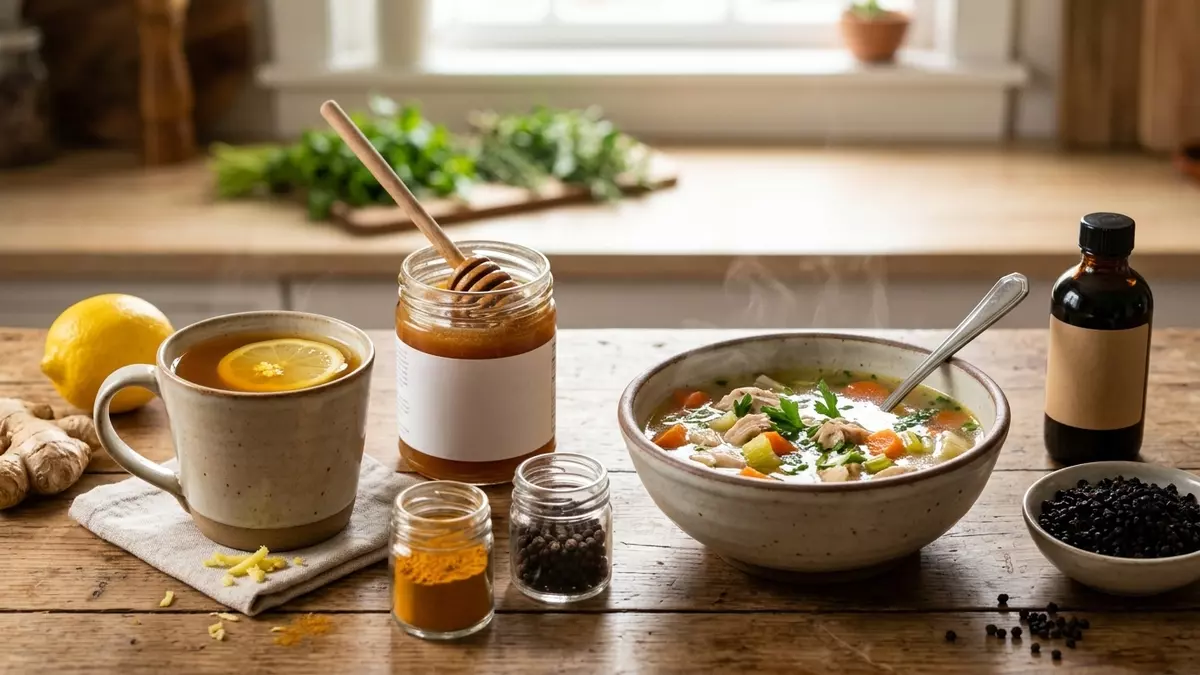
When the first signs of the seasonal flu arrive—the sudden body aches, the chills, and the scratchy raw feeling in the back of your throat—our collective human instinct is to turn to the comfort of the kitchen pantry. For generations, families have passed down deeply entrenched home remedies designed to fight off winter illnesses. We brew pots of pungent ginger tea, squeeze fresh lemons into warm mugs, and simmer pots of homemade chicken broth just like our parents and grandparents did before us.
However, in an era of rapid medical advancement, it is natural to wonder whether these traditional practices truly offer therapeutic value or if they are simply psychological placebos wrapped in nostalgia.
To help separate genuine medical science from lingering folklore, prominent health professionals are speaking out with an evidence-based breakdown of the spice rack. According to certified nutritional therapist Rakhi Lad, a surprising number of age-old staples have successfully withstood the intense scrutiny of modern laboratory testing. Conversely, several popular historical practices are not only useless but could actively delay your body’s natural healing timeline.

Here is a comprehensive look at the traditional flu treatments that are scientifically proven to accelerate your recovery, alongside the myths you should officially retire this winter.
5 Natural Flu Remedies to Restore Your Energy This Season
1. Honey: The Ultimate Throat Soother and Cough Suppressant
When it comes to managing a persistent, hacking cough that disrupts your sleep, look no further than high-quality honey. Far from just a sweet addition to your evening beverage, raw or specialized Mānuka honey acts as an incredibly effective, bio-active medicine.

The Power of a Natural Demulcent
“Honey has been a go-to for soothing sore throats and coughs for centuries, and science agrees it’s a good choice,” Lad notes. When consumed, honey acts as a natural demulcent—a substance that forms a thick, soothing physical coating over the sensitive, raw mucous membranes of your throat. This physical barrier immediately dampens the irritation that triggers involuntary coughing fits.
Furthermore, clinical research indicates that high-quality honey possesses potent anti-inflammatory and antimicrobial properties. In multiple comparative pediatric and adult trials, a single dose of honey before bed outperformed several common over-the-counter dextromethorphan cough syrups at reducing nighttime cough frequency and improving overall sleep quality.
2. Lemon, Ginger, and Turmeric: The Bioactive Triad
While a simple mug of warm water can provide mild comfort, transforming your hydration routine into a targeted, botanical infusion can significantly alter how your immune system responds to a viral infection.

Vitamin C and Citrus Support
Freshly squeezed lemon juice introduces a rich supply of bioavailable vitamin C directly into your system. Vitamin C is a critical fuel source for your body’s white blood cells, optimizing their ability to locate and destroy invading viral particles. While it won’t instantly cure the flu, consistent intake can help slightly shorten the overall duration and severity of your symptoms.
The Anti-Nausea Powerhouse
To maximize the efficacy of your warm citrus drinks, integrate freshly grated ginger root into the mix. Lad refers to ginger as a true “medicinal powerhouse” because it is packed with active compounds like gingerols and shogaols. These phytochemicals deliver powerful anti-inflammatory and antiviral effects directly to the circulatory system. This makes ginger exceptionally valuable if your influenza strain presents with gastrointestinal distress, nausea, or a deeply unsettled stomach.
Maximizing Curcumin Bioavailability
To take this a step further, consider brewing a structured turmeric tea. Turmeric contains curcumin, a compound widely celebrated for its robust anti-inflammatory properties. However, curcumin is notoriously difficult for the human digestive tract to absorb on its own.
To unlock its full potential, always pair your turmeric tea with a tiny pinch of freshly cracked black pepper. The piperine contained within black pepper has been shown to increase curcumin absorption in the human bloodstream by up to 2,000%, providing rapid relief from systemic muscle aches and nasal congestion.
3. Black Elderberry: The Viral Replication Blocker
Long before modern antiviral prescriptions were synthesized in laboratories, elderberry extracts were highly prized across Europe and North America as a premier treatment for respiratory illnesses. Today, clinical trials are confirming these historic observations.
How Anthocyanins Fight the Flu
The deep purple pigments found within elderberries and elderflowers are packed with unique flavonoids and antioxidants called anthocyanins. Clinical studies suggest that these compounds can bind directly to the outer surface of the influenza virus, effectively throwing a wrench into its machinery. By hindering the virus’s ability to pierce healthy human cells and replicate, elderberry can drastically reduce both the duration and the overall physical severity of the flu—provided you begin taking the extract within the first 48 hours of symptom onset.
4. Chicken Soup: Thermal Dynamics and Cellular Rest
The idea that a hot bowl of chicken soup can heal a cold is perhaps the most universally cherished piece of culinary wisdom in the world. Fortunately, this is far from a myth; the benefits of a hot bowl of soup are deeply rooted in physical biochemistry.
Electrolytes and Mucus Clearance
Registered dietitian Nichola Ludlam-Raine highlights that “a warm bowl of chicken soup or honey, lemon, and ginger tea can indeed help to soothe flu symptoms.” From a strictly nutritional perspective, real chicken broth delivers an optimal blend of easily absorbable hydration, vital electrolytes (like sodium and potassium), and essential amino acids such as cysteine. Cysteine bears a striking chemical similarity to common pharmacological compounds used to thin out stubborn, thick mucus in the respiratory tract.
Furthermore, the physical thermal dynamics of inhaling the hot steam rising from your soup bowl actively dilates the nasal passages, accelerating mucus clearance and easing sinus pressure far better than drinking cold fluids.
5. Folklore to Forget: Onions on Feet and Sweating Out Fevers
While turning to the pantry is highly supported by modern science, certain historical DIY practices belong firmly in the history books.
The Foot-Onion Fallacy
One enduring internet myth suggests that slicing raw onions and placing them inside your socks against the soles of your feet overnight can “draw out toxins” and cure the flu. This practice has zero basis in human anatomy or microbiology. Onions cannot magnetically attract viruses through layers of thick skin.
However, you should absolutely continue eating onions during flu season. Onions are highly concentrated in a powerful antioxidant called quercetin, which boasts documented antiviral and immune-supportive effects when processed through your digestive tract.
The Dangers of Forced Sweating
Similarly, attempting to “sweat out a fever” by piling on heavy winter blankets or sitting in an intense sauna while actively sick is a dangerous mistake. A fever is your body’s controlled, natural defense mechanism designed to create an inhospitable environment for a virus.
Artificially forcing your body temperature higher while restricting airflow does not kill the virus any faster; instead, it places immense cardiovascular strain on your organs and rapidly accelerates dangerous dehydration.
The Proactive Blueprint for Rapid Flu Recovery
If you find yourself facing a confirmed case of the flu this season, skip the risky historical gimmicks and construct a simple, science-backed recovery strategy:
Practice Intensive Hydration: Continuously sip clean water, antioxidant-rich herbal teas, and nutrient-dense bone broths to keep your mucous membranes hydrated and flush out cellular waste.
Commit to Radical Rest: Sleep is the exact time when your adaptive immune system manufactures its primary defense cells. Prioritize absolute physical rest over work or screen time.
Deploy Guided Steam Inhalation: Add two to three drops of pure eucalyptus oil to a bowl of steaming hot water, drape a towel over your head, and breathe deeply to clear congested sinus cavities.
Shifting Focus to Additive Nutritional Care
| Remedy Source | Core Active Component | Primary Physiological Benefit | Best Time to Administer |
| Mānuka Honey | Methylglyoxal / Demulcent | Suppresses cough reflex; coats inflamed throat tissue. | Before bed or throughout the day. |
| Fresh Ginger | Gingerols & Shogaols | Quells viral-induced nausea; lowers systemic inflammation. | At the very first sign of an upset stomach. |
| Elderberry Extract | Anthocyanins | Inhibits viral replication pathways within host cells. | Within the first 48 hours of symptoms. |
| Chicken Broth | Cysteine & Electrolytes | Thins out stubborn respiratory mucus; restores hydration. | During peak congestion phases. |
The most valuable lesson we can take from modern nutritional science is that recovering from the seasonal flu doesn’t require overcomplicating your routine with unproven, risky health trends. Nature has already provided an incredible array of tools directly within our kitchens. By pairing the natural, comforting chemistry of honey, ginger, and hot broths with ample rest and steady hydration, you give your immune system the exact structural support it needs to conquer the virus and get you back on your feet safely.
Frequently Asked Questions
Can I give raw honey to a child who has the flu?
While honey is an exceptional, science-backed remedy for older children and adults, it must never be given to infants under twelve months old. Raw honey can naturally contain trace amounts of Clostridium botulinum spores. While an adult’s mature digestive system destroys these spores easily, an infant’s developing gut can allow them to grow, leading to a rare but severe illness known as infant botulism.
Does boiling ginger and lemon destroy their beneficial vitamins?
Boiling fresh ginger root is highly encouraged, as the intense heat is required to extract the tough, anti-inflammatory gingerols from the fibrous root. However, vitamin C is a delicate, heat-sensitive nutrient. To preserve the maximum potency of your fresh lemon juice, boil your ginger water first, remove it from the heat source, let it cool for a minute, and then squeeze the fresh lemon juice into the warm mug right before drinking.
Is store-bought elderberry syrup just as effective as homemade options?
High-quality, commercially prepared elderberry syrups from reputable brands are excellent and highly effective, provided they do not contain excessive amounts of artificial preservatives or corn syrup. If you choose to brew your own elderberry remedies at home, ensure you use dried, fully cooked berries; raw, unprocessed elderberries contain compounds that can cause severe nausea and digestive upset.
Should I stop eating solid food if I have a high flu fever?
You should always listen to your body’s natural hunger cues. It is completely normal to experience a temporary loss of appetite during the peak of a viral infection, as your body redirects its energy away from heavy digestion and toward immune defense. If solid food feels unappealing, do not force a heavy meal; instead, focus entirely on consuming nutrient-dense liquids like chicken broth or warm honey-infused teas.
Why do I need to add black pepper to turmeric to get the health benefits?
The primary active health compound in turmeric is curcumin, which has a very low absorption rate in the human digestive system. Black pepper contains an alkaloid called piperine. Piperine temporarily alters certain metabolic enzymes in your gut, allowing your body to absorb the healing curcumin molecules far more efficiently.