
Table of Contents
- 1. What is Qigong?
- 2. The Evidence: Why It Works for Stability
- 2.1. Why Qigong is Unique for Seniors:
- 3. Practical Tips for Starting Your Practice
- 3.1. How to Begin Safely:
- 4. A Complementary Approach to Wellness
- 5. Frequently Asked Questions (FAQ)
- 5.1. 1. Is Qigong the same as Tai Chi?
- 5.2. 2. Do I need to be flexible to start Qigong?
- 5.3. 3. Will this help if I already have chronic health conditions?
- 5.4. 4. Can I practice Qigong if I use a cane or walker?
- 5.5. 5. How long will it take to see improvements in my balance?
Qigong: The Secret to Balance and Fall Prevention After 65
Falls remain one of the most significant health risks for adults over 65, often leading to injuries that compromise long-term independence. While standard approaches like resistance training and walking are essential, they sometimes miss a crucial element of fall prevention: the integration of mind, breath, and movement. Enter Qigong—a centuries-old practice that is increasingly being recognized by the medical community as a “missing link” in stability training for older adults.
Qigong The Secret to Balance and Fall Prevention After 65
What is Qigong?
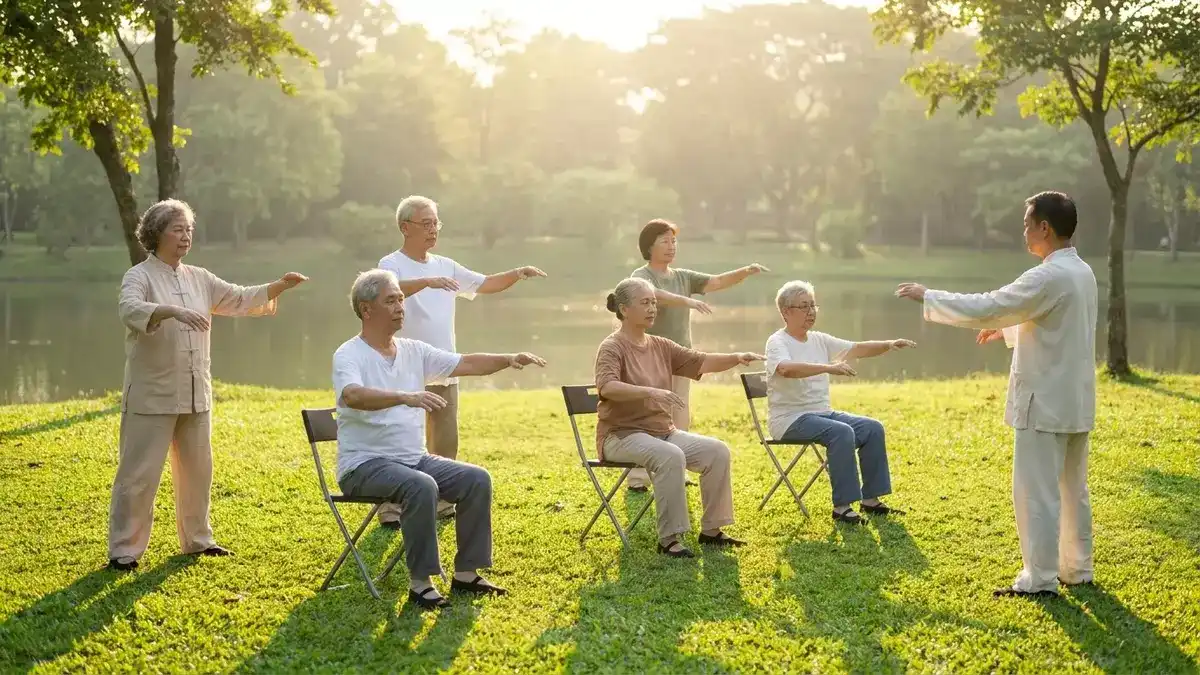
Pronounced “chi gong,” this traditional Chinese practice is a movement-based therapy that integrates smooth, slow motions with deep abdominal breathing and focused mental attention. While it may appear deceptively simple compared to high-intensity gym workouts, it is a sophisticated system designed to improve physical balance, joint mobility, and energy flow.
Unlike traditional exercise that targets individual muscles, Qigong trains the nervous system, muscles, and joints to work in concert. For seniors, this is a game-changer: the practice emphasizes controlled weight transfers and postural shifts, which teach the body how to react more effectively if you encounter an unexpected trip or slip in daily life.
The Evidence: Why It Works for Stability
Research is validating what practitioners have claimed for millennia. A 2019 review of clinical evidence found that Qigong improves balance and physical functioning in older populations, often matching—and sometimes exceeding—the benefits of exercise programs specifically designed for fall prevention.
Why Qigong is Unique for Seniors:
Neural Coordination: By moving slowly and deliberately, Qigong helps sharpen the connection between the brain and the body, enhancing proprioception (the body’s ability to sense its position in space).
Low-Impact Accessibility: Because it lacks high-impact movements, it is accessible to those with arthritis, high blood pressure, or chronic heart issues, providing a path to strength and mobility without stressing already-compromised joints.
Mental Clarity and Confidence: Falling is often a psychological barrier as much as a physical one. The meditative nature of Qigong reduces anxiety and builds the confidence required to move through the world with assurance.

Practical Tips for Starting Your Practice
You do not need specialized equipment to begin—only a stable space and a bit of patience. To see the benefits highlighted in clinical research, experts suggest aiming for 2–3 sessions per week, lasting 40–60 minutes each.
How to Begin Safely:
Seek Expert Guidance: Start by looking for a local class specifically designed for older adults. An instructor who understands geriatric movement can provide the necessary adjustments to keep you safe.
Start with Support: If you have concerns about your standing balance, many Qigong movements can be practiced from a seated position or while holding onto a stable chair for support.
Focus on the Breath: The movement should be guided by your breath. Inhale and exhale deeply into the abdomen to calm the nervous system, which helps lower blood pressure and reduce tension.
Dress for Stability: Wear flat, comfortable shoes with good traction. Avoid restrictive clothing; you want to be able to move your limbs freely.
Listen to Your Body: Do not push through sharp pain. Progress gradually, increasing your range of motion and the duration of your sessions over several weeks.

A Complementary Approach to Wellness
It is important to view Qigong as a cornerstone of a broader wellness plan. While it is highly effective on its own, it pairs beautifully with other low-impact activities like walking or gentle resistance training.
By integrating Qigong into your routine, you are doing more than just “exercising.” You are cultivating a body that is supple, a mind that is calm, and a sense of balance that will help you stay mobile and independent for years to come.
Frequently Asked Questions (FAQ)
1. Is Qigong the same as Tai Chi?
They are closely related. Both involve gentle, slow movements and deep breathing. Tai Chi is often considered a form of “moving meditation” that grew out of martial arts, while Qigong is generally simpler and focuses more directly on healing and energy cultivation. Both are excellent for balance.
2. Do I need to be flexible to start Qigong?
Not at all. One of the main goals of Qigong is to build flexibility. You begin exactly where you are, and the slow, controlled nature of the practice ensures that you are never pushing your body into a position that feels unsafe.
3. Will this help if I already have chronic health conditions?
Yes. Qigong is frequently used as a complementary therapy for conditions like arthritis and heart disease. However, as with any new exercise program, always clear it with your physician or primary care provider first.
4. Can I practice Qigong if I use a cane or walker?
Yes, many Qigong movements are adaptable. Instructors can teach you how to perform the movements while seated or while supported by a mobility aid, ensuring the practice is accessible to everyone.
5. How long will it take to see improvements in my balance?
Every individual is different, but research participants often report improved confidence and stability within a few weeks of consistent practice. The key is to treat it as a regular habit rather than a one-time activity.