
Table of Contents
- 1. Water Walking: The Joint-Friendly Aquatic Exercise Recommended by Mayo Clinic
- 2. The Physical Benefits of Water Walking
- 2.1. 1. Buoyancy: Defying Gravity to Relieve Pain
- 2.2. 2. Multi-Directional Resistance: Building Safe Muscle
- 3. 4 Additional Pool Exercises to Expand Your Routine
- 3.1. 1. Deep-Water Jogging
- 3.2. 2. Submerged Dumbbell Presses
- 3.3. 3. Kickboard Core Pushes
- 3.4. 4. Noodle Leg Extensions
- 4. Practical Tips for Starting Safely
- 5. Conclusion
- 6. Frequently Asked Questions
- 6.1. Do I need to know how to swim to practice water walking?
- 6.2. How many times a week should a senior practice water walking?
- 6.3. Is water walking better than a traditional treadmill workout?
- 6.4. Why do my muscles feel sore the next day if water walking feels so gentle?
- 6.5. Should the pool water be heated for arthritis patients?
Water Walking: The Joint-Friendly Aquatic Exercise Recommended by Mayo Clinic
Staying physically active after the age of 60 can often feel like a frustrating catch-22. Regular exercise is absolutely essential for preserving bone density, maintaining muscle mass, and keeping joints lubricated. However, common age-related conditions like osteoarthritis, stiff hips, and chronic knee pain can make standard land-based activities—such as walking on concrete sidewalks or logging miles on a treadmill—feel incredibly painful and discouraging.
To bridge this gap, physical therapists and medical experts from the Mayo Clinic frequently recommend a highly effective, low-impact solution: water walking.
By shifting your fitness routine from the gym floor to the swimming pool, you can harness the unique physical properties of water to build functional strength, improve cardiovascular health, and protect your joints from high-impact wear and tear.
Water Walking The Joint-Friendly Aquatic Exercise Recommended by Mayo Clinic

The Physical Benefits of Water Walking
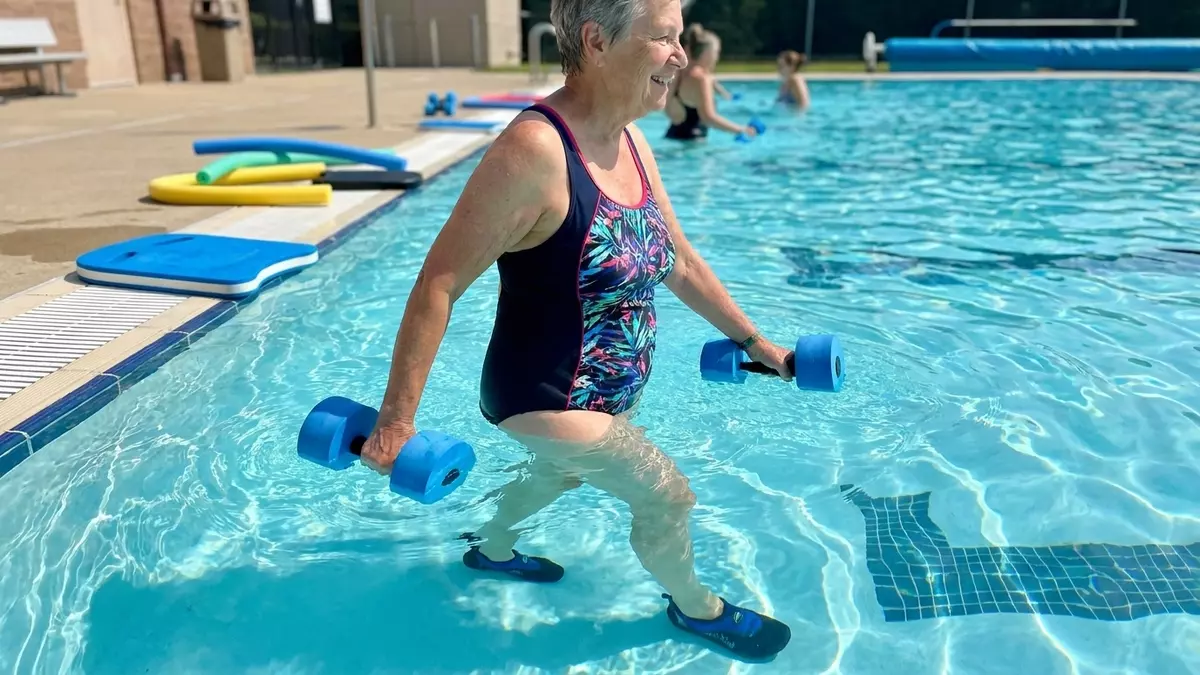
Water walking is beautifully straightforward: you simply walk through waist- to chest-deep water, moving your arms and legs in a natural, rhythmic cadence exactly as you would on dry land.
Despite its simplicity, exercising in water introduces two powerful physical principles that land workouts cannot replicate: buoyancy and hydrostatic resistance.
[Buoyancy]            ➔ Reduces Up to 50-80% of Body Weight ➔ Relieves Joint Pressure
[Hydrostatic Pressure] ➔ Provides Continuous 360° Resistance   ➔ Strengthens Muscles Safely
1. Buoyancy: Defying Gravity to Relieve Pain
When you stand in waist-deep water, the water dynamically supports a massive portion of your body weight. This dramatic reduction in gravitational pull instantly unloads the pressure resting on your lower back, hips, knees, and ankles. It allows retirees managing severe joint degeneration to move through a full, pain-free range of motion that would be completely impossible on land.

2. Multi-Directional Resistance: Building Safe Muscle
Air offers very little physical resistance when you walk down the street. Water, on the other hand, is roughly 800 times denser than air. This means every single step you take in the pool forces your quadriceps, hamstrings, glutes, and core muscles to push against a continuous, gentle wall of resistance. Because this resistance is perfectly uniform and multi-directional, it tones and strengthens your muscles without the risk of dropping heavy weights or straining a tendon.
Additionally, water walking provides an excellent, low-stress workout for your cardiovascular system. The pressure of the water naturally assists your veins in pumping blood back up to your heart, boosting systemic circulation and lung capacity while keeping your resting heart rate highly controlled.
4 Additional Pool Exercises to Expand Your Routine
Once you feel completely comfortable and balanced with baseline water walking, you can easily amplify your pool session by introducing a few target movements. Utilizing simple aquatic tools like foam noodles, kickboards, and water weights can help isolate different muscle groups:

1. Deep-Water Jogging
The Movement: Fasten a supportive buoyancy belt securely around your waist and venture into the deep end of the pool where your feet can no longer touch the bottom. Perform a slow, exaggerated jogging motion.
The Benefit: This completely eliminates all joint impact while forcing your cardiovascular system to work harder, making it a superb endurance builder for active seniors.
2. Submerged Dumbbell Presses
The Movement: Grip a pair of specialized foam water dumbbells (which are lightweight on land but highly buoyant and resistant underwater). Submerge them completely and perform slow bicep curls, chest presses, or tricep extensions under the surface.
The Benefit: This builds upper-body strength, helping you maintain the functional power needed for daily tasks like lifting grandchildren or carrying heavy groceries.
3. Kickboard Core Pushes
The Movement: Hold a standard swimming kickboard vertically in front of your chest with both hands. Walk forward through the water while keeping the flat side of the board facing forward, pushing a wall of water ahead of you.
The Benefit: The board acts like a sail, drastically increasing front-facing resistance. This targets your chest, shoulders, and deeply engages the abdominal core muscles essential for balance.
4. Noodle Leg Extensions
The Movement: Stand near the pool wall for stability, loop a flexible foam pool noodle under the arch of one foot, and slowly push your leg downward and outward against the noodle’s natural desire to float.
The Benefit: This targeted motion isolates and strengthens your quadriceps and hamstrings, providing better stability around the kneecaps.
Practical Tips for Starting Safely
To get the most out of your Mayo Clinic-inspired pool routine, keep these quick safety guidelines in mind:
Watch the Water Depth: For standard walking, ensure the water level rests safely between your waist and your chest. If the water is too shallow, you lose the joint-saving benefits of buoyancy; if it is too deep, your feet will lift off the floor, compromising your posture.
Maintain Proper Posture: Keep your spine completely straight, your shoulders relaxed and down, and your eyes looking forward. Avoid leaning forward or hunching over, and ensure you land gently on your heel before rolling forward onto your toes with every stride.
Wear Aquatic Shoes: Investing in a pair of rubber-soled water shoes provides excellent traction against slick pool floors, protecting you from slipping while shielding sensitive feet from rough concrete textures.
Stay Hydrated: Because the pool constantly cools your skin, you may not notice that your body is actively sweating. Always keep a water bottle at the edge of the pool and take regular sips throughout your workout.
Conclusion
Reaching retirement shouldn’t mean stepping back from a vibrant, independent life. Mayo Clinic’s recommendation of water walking proves that low-impact exercise can deliver heavy-duty health benefits. By utilizing the natural support and smooth resistance of a swimming pool, you can successfully bypass joint pain, rebuild foundational muscle mass, and protect your cardiovascular health. Jump into a local pool routine this week, and claim your physical strength and daily independence back.
Frequently Asked Questions
Do I need to know how to swim to practice water walking?
No. Because water walking is performed strictly in the shallow end of the pool where your feet remain firmly planted on the floor, swimming skills are not required. If you feel nervous about your balance, you can simply walk along the edge of the pool where you can lightly hold onto the safety handrails, or wear a certified flotation vest for extra peace of mind.
How many times a week should a senior practice water walking?
For optimal health benefits, medical experts generally recommend aiming for 30-minute pool sessions, 3 to 5 times per week. However, if you are recovering from surgery or managing severe arthritis flare-ups, starting with just 10 to 15 minutes twice a week is a fantastic, safe way to build baseline stamina.
Is water walking better than a traditional treadmill workout?
For individuals over 60 managing joint pain, water walking is significantly superior. A treadmill subjects your lower joints to repetitive, hard impacts that can worsen arthritis over time. The pool delivers the exact same cardiovascular and caloric benefits while removing the physical impact, making it far more sustainable long-term.
Why do my muscles feel sore the next day if water walking feels so gentle?
Water provides continuous, 360-degree resistance, meaning it engages both your primary muscles and the tiny, stabilizing muscles around your joints that rarely get used during normal land walking. This mild delayed-onset muscle soreness (DOMS) is a completely normal, healthy sign that your body is successfully adapting and growing stronger.
Should the pool water be heated for arthritis patients?
Yes. Exercising in a warm water pool—typically heated between 83°F and 88°F (28°C to 31°C)—is highly beneficial for older adults. The gentle warmth instantly relaxes tight muscles, increases local blood circulation, and soothes stiff joints, making the movements significantly more comfortable from the very first step.