
Table of Contents
- 1. The Chemistry Behind the Color Shift
- 2. Step 1: Establish a Baseline With a Soil pH Test
- 3. How to Coax Your Hydrangeas Into True Blue
- 3.1. 1. Apply Aluminum Sulfate
- 3.2. 2. Introduce Acidifying Organic Materials
- 3.3. 3. Watch Your Water Source
- 4. How to Transform Your Hydrangeas Into Radiant Pink
- 4.1. 1. Incorporate Garden Lime
- 4.2. 2. Choose the Right Fertilizer Formula
- 4.3. 3. Rethink Your Mulch
- 5. Aiming for the Sweet Spot: The Purple Hydrangea
- 6. Pro-Tips for Successful Color Transformation
- 7. Frequently Asked Questions
- 7.1. Can I turn any variety of hydrangea blue or pink?
- 7.2. Will putting pennies or nails in the soil turn my hydrangeas blue?
- 7.3. Can I use vinegar to turn my hydrangeas blue quickly?
- 7.4. Why did my blue hydrangea turn purple instead of bright blue?
- 7.5. How often should I test my soil’s pH when trying to change flower colors?
The Science of Hydrangea Alchemy: How to Shift Your Blooms From Pink to Blue
There is an undeniable, almost mystical charm to hydrangeas. It is not just their cloud-like clusters of blossoms or their expansive, vibrant green foliage that captivate gardeners—it is their unique ability to act as living, blooming chameleons. If you have ever planted a vibrant pink hydrangea only to witness it unfurl into a striking sky-blue the following summer, you are not losing your mind.
This dramatic transformation is not magic; it is a fascinating display of soil chemistry. Better yet, once you understand the underlying science of your garden beds, you can intentionally guide and control this color-shifting process yourself.
The Science of Hydrangea Alchemy How to Shift Your Blooms From Pink to Blue

The Chemistry Behind the Color Shift
The secret to a hydrangea’s changing hue lies completely beneath the surface of the earth. Specifically, it depends on your soil pH—the measurement of how acidic or alkaline your soil is—and how that pH affects the movement of a single metal: aluminum.
Only specific varieties possess this remarkable shapeshifting ability. Bigleaf hydrangeas (Hydrangea macrophylla) and Mountain hydrangeas (Hydrangea serrata) are the primary types that respond to chemical adjustments.
Here is how the soil environment dictates the pigment of your flowers:
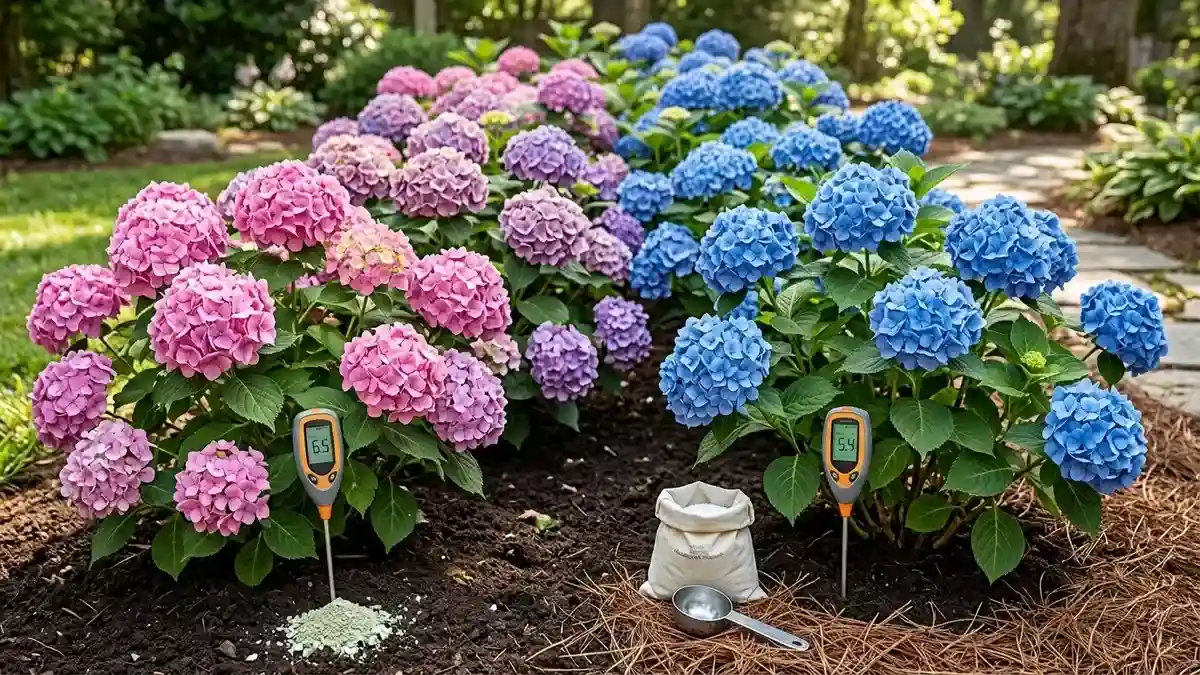
Acidic Soil (pH below 6.0): In acidic conditions, aluminum naturally present in the earth dissolves, becoming easy for the plant’s root system to absorb. This aluminum uptake triggers a chemical reaction inside the petals, turning the blossoms cool shades of blue, lavender, or deep violet.
Alkaline to Neutral Soil (pH 6.0 to 7.0+): In alkaline conditions, aluminum binds tightly to soil particles and becomes chemically unavailable to the plant. Without aluminum absorption, the blossoms default to their natural, warm pigments: light pink, hot pink, or even rich crimson.
Note: White hydrangea varieties, such as the popular ‘Annabelle’ (Smooth hydrangea) or ‘Limelight’ (Peegee hydrangea), do not contain the pigments necessary to change color. Their snowy white or lime-green tones will remain beautifully constant regardless of your soil chemistry.

Step 1: Establish a Baseline With a Soil pH Test
Before you begin adding amendments to your garden beds, you must determine exactly where your soil currently stands. Introducing random chemicals without a baseline can stress your plants or throw your garden ecosystem completely out of balance.
Pick up a digital pH meter or a reliable soil testing kit from your local garden center. Dig down about 6 inches near the root zone of your hydrangea, gather a small soil sample, and follow the testing instructions carefully.
Use this quick reference guide to see what your results mean for your future blooms:
How to Coax Your Hydrangeas Into True Blue
If you are dreaming of a garden filled with cool, ocean-blue tones, your goal is twofold: increase the acidity of your soil and ensure there is ample, accessible aluminum for the roots to drink in.
1. Apply Aluminum Sulfate
To lower your soil’s pH efficiently, dissolve 1 tablespoon of aluminum sulfate in a gallon of water. Apply this liquid solution directly to the soil at the base of the plant once a month throughout the active spring and summer growing season. Avoid splashing the leaves, as the concentrated solution can cause cosmetic foliage burns.
2. Introduce Acidifying Organic Materials
Layering the soil with organic matter will help maintain low pH levels naturally over time. Mulch around your hydrangeas using pine needles, composted coffee grounds, or sphagnum peat moss.
3. Watch Your Water Source
Whenever possible, irrigate your blue-tinted hydrangeas with stored rainwater. Municipal tap water is frequently treated to be slightly alkaline to protect city pipes from corrosion. Over time, heavy tap water irrigation can gradually pull your soil back into a neutral pH range. For the brightest, truest blues, aim to hold your soil pH strictly between 5.2 and 5.5.
How to Transform Your Hydrangeas Into Radiant Pink
If your heart is set on a lush display of romantic, bright pink blossoms, you need to reverse the process: raise the soil’s pH to lock away any underground aluminum.
To Achieve Brilliant Pink Blooms:
[ Raise Soil pH to 6.0–6.4 ] ──> [ Locks Away Aluminum ] ──> [ Promotes Pink Pigment ]
1. Incorporate Garden Lime
In the early days of spring, gently work agricultural lime (dolomitic limestone) into the top few inches of soil surrounding the base of your hydrangea. The lime will gradually neutralize the natural acidity of the earth, raising the pH into the ideal 6.0 to 6.4 range.
2. Choose the Right Fertilizer Formula
When feeding pink-tinted hydrangeas, select a high-phosphorus fertilizer. Phosphorus binds exceptionally well with aluminum in the dirt, further preventing the plant from absorbing the metal. Look for fertilizer ratios where the middle number (Phosphorus) is high, and ensure the product does not accidentally include added aluminum elements.
3. Rethink Your Mulch
Steer clear of acidifying organic mulches like pine needles or raw peat moss. Instead, opt for standard hardwood mulches or neutral composts that won’t counteract your efforts to raise the pH.
Aiming for the Sweet Spot: The Purple Hydrangea
What if you cannot decide between pink and blue? You can aim directly for the middle ground. Purple, mauve, and bi-color violet blossoms occur when the soil pH sits in a delicate transitional zone between 5.5 and 6.0.
Because this middle-ground chemistry is inherently unpredictable, achieving a perfectly uniform purple bush can be a fun challenge. If you enjoy a touch of garden whimsy, simply let nature take its course without heavy chemical adjustments, and enjoy the unique, multi-toned mosaic of colors that emerges.
Pro-Tips for Successful Color Transformation
Modifying the look of your landscape is an incredibly rewarding project, but keeping these practical insights in mind will ensure your plants remain thriving and healthy throughout the transition:
Try Container Gardening for Easy Control: Shifting the pH of an entire open garden bed can be an uphill battle against local geology. If your native soil is stubbornly alkaline or heavily acidic, try growing your hydrangeas in large patio pots. Managing the soil mix, fertilizer, and water chemistry in a contained environment is significantly easier.
Practice Patience: Soil chemistry shifts happen slowly. It can easily take an entire growing season, or even two full years, for an established hydrangea to fully transition from one side of the color spectrum to the other.
Prioritize Overall Plant Health: A stressed, dehydrated, or improperly fed hydrangea will never produce vivid colors, regardless of how perfect your soil pH is. Ensure your plants receive adequate morning sun, afternoon shade, and consistent moisture.
Avoid Over-Correcting: Never flood your soil with massive amounts of chemicals all at once in an attempt to rush the process. Drastic, sudden chemical spikes can destroy beneficial soil microbes, damage delicate root hairs, and permanently stunt your plant’s growth. Go slow, monitor with regular tests, and let the transformation happen naturally.
Frequently Asked Questions
Can I turn any variety of hydrangea blue or pink?
No. This color-shifting ability is exclusive to Bigleaf (Hydrangea macrophylla) and Mountain (Hydrangea serrata) varieties. Other common types, like Oakleaf, Panicle (Limelight), and Smooth (Annabelle) hydrangeas, lack the specific pigments required to alter their color based on soil composition.
Will putting pennies or nails in the soil turn my hydrangeas blue?
This is a classic gardening myth. While old copper pennies or rusty iron nails do introduce metals into the dirt, they do not provide the soluble aluminum that hydrangeas require to turn blue. Additionally, they do not lower the soil pH efficiently. Stick to agricultural aluminum sulfate for reliable, safe results.
Can I use vinegar to turn my hydrangeas blue quickly?
While diluted white vinegar can temporarily lower soil pH due to its acetic acid content, it is a fleeting fix. Vinegar breaks down incredibly fast in the soil and can harm beneficial soil organisms if used in high concentrations. Using organic amendments like peat moss or pine needles is a much safer, long-term strategy.
Why did my blue hydrangea turn purple instead of bright blue?
If your blooms are stopping at purple or lavender, your soil is likely sitting in the transitional pH range of 5.5 to 6.0. To push the color completely over into a true, deep blue, you will need to slightly lower the pH further (down toward 5.2) by adding another light application of aluminum sulfate and mulching with pine needles.
How often should I test my soil’s pH when trying to change flower colors?
It is best to test your soil twice a year: once in the early spring just as the plant wakes up from winter dormancy, and once in the mid-summer during the peak of the blooming cycle. This cadence allows you to track how your amendments are performing and make gentle adjustments for the following season.