
Table of Contents
- 1. The Secret Weapon: How the Trap Exploits Mosquito Behavior
- 2. Why Target Larvae Instead of Adult Mosquitoes?
- 3. Gathering Your Materials
- 4. Step-by-Step Assembly Guide
- 5. Long-Term Maintenance and Troubleshooting
- 5.1. Monitor Water Levels
- 5.2. Refresh the Organic Bait
- 5.3. Reapply the Larvicide
- 6. Pros and Cons at a Glance
- 7. Frequently Asked Questions
- 7.1. Will this trap attract more mosquitoes to my yard?
- 7.2. Is the water dangerous if my dog drinks from the bucket?
- 7.3. How long does it take to see a reduction in mosquitoes?
- 7.4. Can I use a lid on the bucket to prevent accidental spills?
- 7.5. What should I do with the bucket when winter arrives?
How to Eradicate Mosquitoes at the Source with a DIY Mosquito Bucket of Doom
Summer evenings are meant for relaxing on the porch, firing up the grill, and enjoying the cooler twilight air. Unfortunately, a relentless cloud of buzzing, biting mosquitoes can quickly drive even the most dedicated outdoorsman back inside. While most homeowners instinctively reach for chemical foggers, backyard bug sprays, or costly propane traps, these options often provide only temporary relief and can inadvertently harm local wildlife and beneficial pollinators.
If you want a highly effective, budget-friendly, and ecologically safe alternative, look no further than a viral pest-control hack with a dramatically accurate name: The Mosquito Bucket of Doom. Far from being a dangerous chemical weapon, this simple DIY setup works by turning a mosquito’s natural breeding instincts against itself, decimating local mosquito populations before they ever get the chance to grow wings and bite.
Here is a comprehensive guide on the science behind the Mosquito Bucket of Doom, why it outperforms conventional pesticide sprays, and a step-by-step blueprint to build and maintain your own backyard trap.

How to Eradicate Mosquitoes at the Source with a DIY Mosquito Bucket of Doom
The Secret Weapon: How the Trap Exploits Mosquito Behavior
To truly appreciate the genius of this method, you have to understand how a female mosquito thinks. Female mosquitoes are constantly searching for stagnant, nutrient-rich water to lay their eggs. They are highly attracted to the smell of decaying organic material, which signals a plentiful food supply for their future offspring.
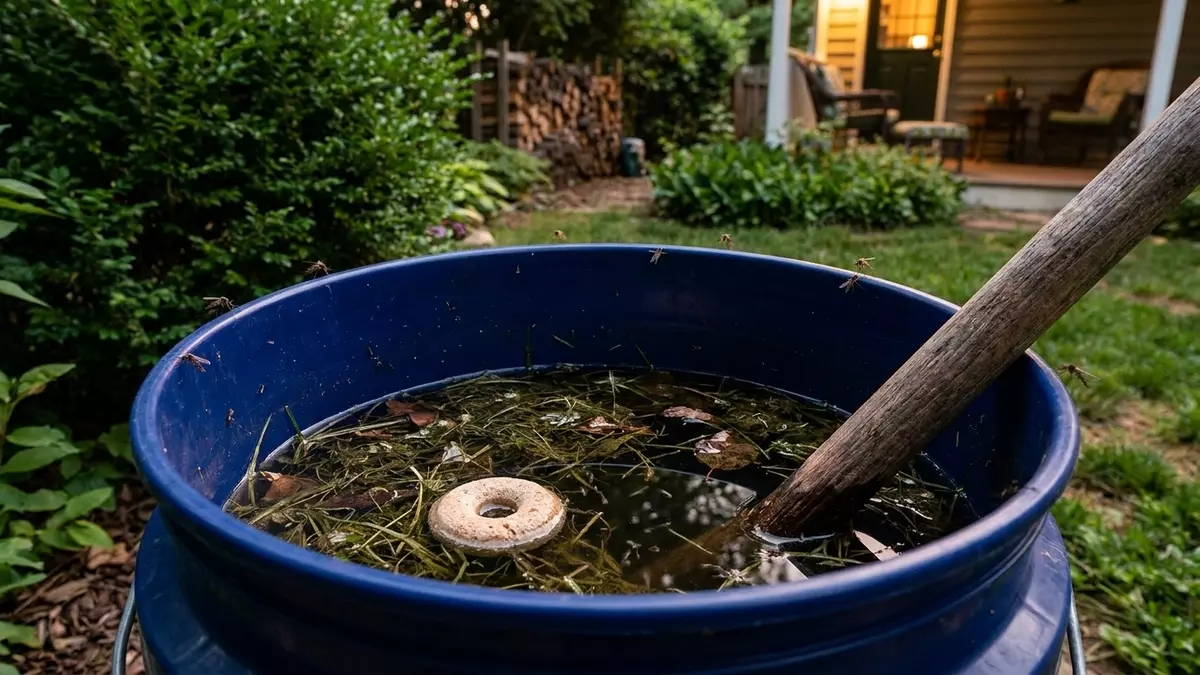
The Mosquito Bucket of Doom mimics this ideal environment perfectly by creating a fragrant, fermenting “mosquito tea.”

The trap’s secret weapon, however, is a naturally occurring soil bacterium called Bacillus thuringiensis israelensis (Bti). While completely non-toxic to humans, dogs, cats, birds, and vital pollinators like bees and butterflies, Bti produces crystalline proteins that specifically target the digestive systems of mosquito, blackfly, and fungus gnat larvae.
When mosquitoes lay their eggs in your bucket, they believe they have found the ultimate nursery. But as soon as the larvae hatch and begin feeding on the organic particles in the water, they ingest the Bti and die within a matter of hours. Instead of a safe haven, the bucket becomes a biological dead end for the entire next generation of pests.
Why Target Larvae Instead of Adult Mosquitoes?
Most consumer pest-control products focus on killing adult mosquitoes. While a spray might clear your patio for an afternoon, it does nothing to stop the thousands of eggs waiting to hatch nearby. Furthermore, broadcast chemical sprays are non-selective; they kill butterflies, honeybees, ladybugs, and the very spiders and dragonflies that naturally hunt mosquitoes.

The Mosquito Bucket of Doom uses a highly targeted approach:
Breaks the Lifecycle: By eradicating the pests in their aquatic larval stage, you prevent them from ever transforming into biting adults.
Eco-Friendly Precision: Bti is completely harmless to standard backyard wildlife, fish, frogs, and mammals.
Passive, Continuous Protection: Once established, the trap works for you 24 hours a day, 7 days a week, drawing breeding females away from your patio and into a controlled environment.
Gathering Your Materials
Building this trap requires zero specialized tools and costs only a few dollars in basic supplies.
A 5-Gallon Bucket: Dark colors (like black, dark green, or blue) are highly preferred, as mosquitoes naturally seek out dark, shaded cavities to lay their eggs.
Water: Ordinary tap water or collected rainwater works beautifully.
Organic Material: A large handful of fresh grass clippings, straw, hay, or dried autumn leaves. This will act as the bait.
Bti Larvicide: Look for commercial products like Mosquito Dunks (solid rings) or Mosquito Bits (granules) at your local garden center or hardware store.
A Sturdy Stick or Branch: This provides a safe escape route for small animals and serves as a landing pad for the mosquitoes.
Optional Protective Screen: A piece of chicken wire, wide-mesh netting, or a modified bucket lid with large holes drilled into it to prevent curious pets or wildlife from drinking the water.
Step-by-Step Assembly Guide
Setting up your trap takes less than ten minutes. Follow this sequence to brew the perfect mosquito counter-measure.
Long-Term Maintenance and Troubleshooting
While the Bucket of Doom is incredibly low-maintenance, a completely neglected bucket can eventually run out of active Bti. If that happens, the bacteria will no longer be present to kill the larvae, turning your trap into an accidental mosquito breeding ground. Follow these simple upkeep rules:
Monitor Water Levels
During hot summer stretches, evaporation can quickly drain your bucket. Check the water level once a week and top it off as needed to keep it roughly half full.
Refresh the Organic Bait
If the water begins to lose its signature funky smell or looks clear, add a fresh handful of grass or leaves to keep the fermentation going.
Reapply the Larvicide
A standard Mosquito Dunk lasts for roughly 30 days. To keep the trap active, add a fresh quarter-dunk or a sprinkle of Mosquito Bits once a month, or immediately following an unusually heavy rainstorm that overflows the bucket.
Pros and Cons at a Glance
| Advantages | Considerations |
| Highly Cost-Effective: A single package of dunks lasts an entire season for just pennies a month. | Delayed Results: It does not kill existing adult mosquitoes immediately; it takes a few weeks to break the population cycle. |
| Eco-Safe: Zero risk to honeybees, butterflies, family pets, or children. | Requires Routine Upkeep: Must be topped off with water and refreshed with Bti monthly. |
| Zero Chemicals: Uses natural biological warfare rather than synthetic neurotoxins. | Property Size Limitations: Large acreages may require two or three buckets placed at opposite corners for complete coverage. |
Frequently Asked Questions
Will this trap attract more mosquitoes to my yard?
The trap uses the natural scent of stagnant water to attract female mosquitoes that are already in your yard looking for a place to lay eggs. By placing the bucket on the perimeter of your property, you pull them away from your living spaces, ensuring they lay their eggs in a toxic trap rather than in your gutters or flower pots.
Is the water dangerous if my dog drinks from the bucket?
No. Bti is incredibly specific to the digestive tracts of larval gnats, blackflies, and mosquitoes. It has no effect on mammals, birds, or reptiles. However, because stagnant water can harbor other wild bacteria, it is always a good practice to place a mesh screen or chicken wire over the top of the bucket to keep pets from using it as a water bowl.
How long does it take to see a reduction in mosquitoes?
Because this method targets larvae, you will not see an overnight drop in the adult mosquito population. However, within two to three weeks, as the older generation of adult mosquitoes naturally dies off and no new adults emerge to replace them, you will notice a drastic reduction in biting activity.
Can I use a lid on the bucket to prevent accidental spills?
You can use a lid only if you modify it first. Drill several large holes (at least 1 to 2 inches in diameter) through the lid to allow female mosquitoes to fly inside freely. Alternatively, wrapping the top in wide-mesh chicken wire keeps larger animals out while leaving plenty of room for bugs.
What should I do with the bucket when winter arrives?
Once the first hard frost hits your region, adult mosquitoes will die off and the survivors will go into hibernation. Dump the contents of the bucket into an out-of-the-way garden bed, rinse the container, and store it in your garage or shed until next spring.