
Table of Contents
- 1. Know Your Variety: Cut-and-Come-Again vs. Head Lettuces
- 1.1. Loose-Leaf Lettuce (The Ultimate Repeat Producers)
- 1.2. Romaine Lettuce (The Semi-Head Option)
- 1.3. Crisphead and Butterhead Lettuce (The One-and-Done Varieties)
- 2. Timing Your Harvest for Maximum Crispness and Flavor
- 2.1. Harvest in the Morning
- 2.2. Catch Leaves at Peak Maturity
- 3. The Cut-and-Come-Again Method: A Step-by-Step Harvesting Blueprint
- 4. Post-Harvest Care to Prevent Bolting
- 4.1. Provide Afternoon Shade
- 4.2. Mulch the Root Zone
- 4.3. Apply Weak Organic Fertilizer
- 5. Pro Tip: Implement Succession Planting for an Unending Supply
- 6. Common Lettuce Harvesting Mistakes to Avoid
- 7. Frequently Asked Questions
- 7.1. How many times can you use the cut-and-come-again method on one plant?
- 7.2. Why did my homegrown lettuce turn incredibly bitter?
- 7.3. Can you regrow lettuce from a grocery store stump?
- 7.4. How much water does lettuce need after it has been cut?
- 7.5. What is the best way to store fresh leaves so they stay crisp?
How to Harvest Lettuce so It Keeps Growing All Season Long
Few things match the simple satisfaction of walking out to your backyard, clipping a handful of crisp, vibrant greens, and tossing together a fresh salad for dinner. Lettuce is one of the most rewarding and straightforward crops you can grow in a home garden. However, many beginners mistakenly believe that harvesting lettuce is a one-time event—that you must yank the entire plant out of the dirt and start over from scratch.
By mastering a few proper harvesting techniques, you can enjoy a continuous, abundant supply of fresh salad greens for months without ever having to replant. Treating your crops with the right care allows them to keep producing. This comprehensive guide details how to unlock a perpetual lettuce harvest, understand your specific variety, and maintain your plants for peak summer production.
How to Harvest Lettuce so It Keeps Growing All Season Long

Know Your Variety: Cut-and-Come-Again vs. Head Lettuces
Before grabbing your garden shears, identify the specific type of lettuce growing in your garden beds. Not all lettuce varieties behave the same way when harvested, and understanding their growth habits is essential to encouraging successful regrowth.
Loose-Leaf Lettuce (The Ultimate Repeat Producers)
If your goal is a continuous harvest, loose-leaf varieties are your absolute best option. Popular cultivars like Black Seeded Simpson, Red Salad Bowl, and Green Leaf do not form a tight, compact central head. Instead, they grow in open, loose clumps of individual leaves. These varieties are perfectly adapted to the “cut-and-come-again” method, allowing you to repeatedly remove the mature outer foliage while the inner leaves continue to develop.
Romaine Lettuce (The Semi-Head Option)
Romaine varieties grow in an upright, elongated fashion. While they do eventually form a dense heart, they can absolutely be managed as a repeat-harvest crop if you are careful. If you harvest only the outer leaves early on, Romaine will continue pushing out new upright growth from the center, though its recovery time is slightly slower than that of loose-leaf varieties.

Crisphead and Butterhead Lettuce (The One-and-Done Varieties)
Varieties like Iceberg or Bibb/Butterhead are structurally different. They focus their energy on forming a tightly packed, dense ball of leaves. Trying to strip individual leaves off an intact Iceberg head generally compromises the plant’s structure. These are traditionally treated as a single-harvest crop: you let the head mature fully, slice it off at the soil line, and clear the space for a new planting.
Timing Your Harvest for Maximum Crispness and Flavor
To get the most delicious flavor out of your greens, pay close attention to the clock and the weather. Lettuce quality degrades quickly under heat stress, making timing a critical element of your gardening routine.
Harvest in the Morning
Always harvest your lettuce leaves early in the morning, right as the sun is coming up and before the heat of the day sets in. Overnight, the plant drinks heavily from the soil, filling its cells with water. Morning leaves are cool, crisp, structurally firm, and bursting with moisture. If you wait until a hot afternoon, the leaves will be slightly wilted, limp, and far more prone to tasting bitter.

Catch Leaves at Peak Maturity
Do not wait for your lettuce leaves to become massive. Young, tender leaves between 4 and 6 inches tall offer the sweetest flavor and most delicate texture. If you let the leaves grow too large, they become tough, fibrous, and bitter. Furthermore, leaving overgrown foliage on the plant signals that it is time to shift from leaf production to seed production, which ruins the crop’s culinary value.
The Cut-and-Come-Again Method: A Step-by-Step Harvesting Blueprint
The secret to keeping your lettuce growing continuously lies in protecting the plant’s vegetative engine: the central crown. Follow this precise sequence to gather your greens without shocking the plant.
By following this method, you can easily enjoy 3 to 4 separate rounds of harvests from a single loose-leaf lettuce planting before the plant naturally reaches the end of its lifespan.
Post-Harvest Care to Prevent Bolting
Once you have taken your cut, providing proactive care ensures the plant bounces back with vigor. Because lettuce thrives in cool weather, summer heat requires specific management techniques.
Provide Afternoon Shade
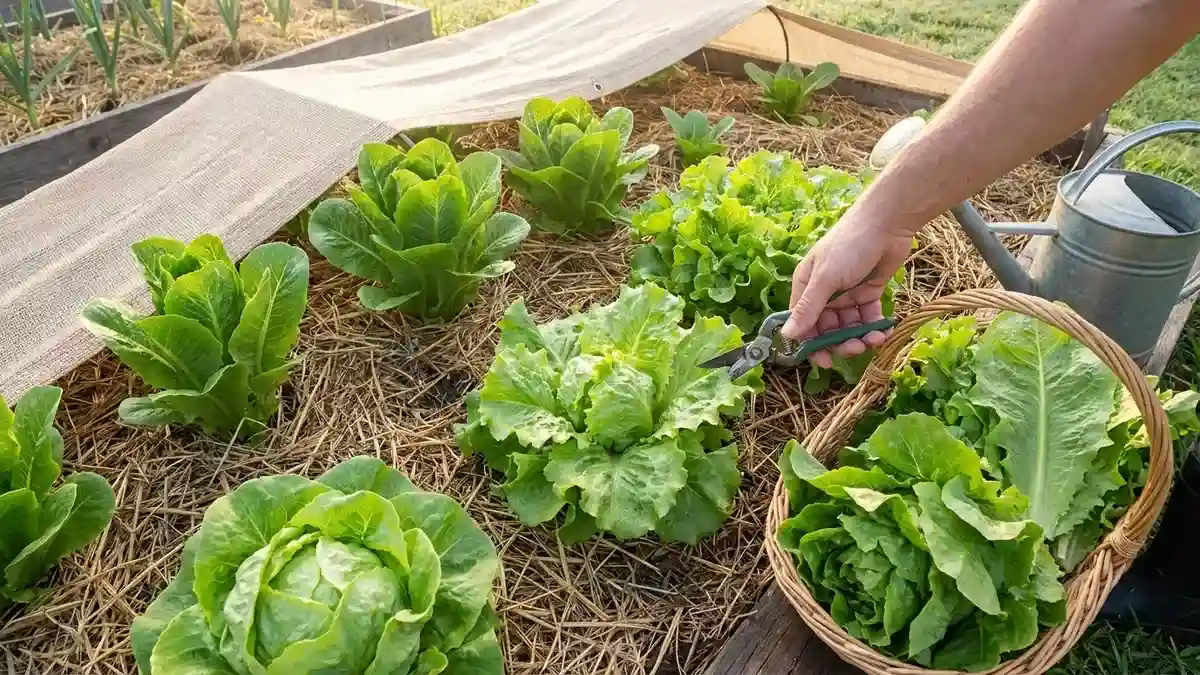
Lettuce prefers temperatures between 60°F and 70°F. When summer temperatures regularly climb past 80°F, the plant enters survival mode and begins to “bolt.” Bolting means the plant shoots up a tall, central flower stalk to produce seeds, making all existing leaves incredibly bitter and inedible. To prevent this, erect a stretch of 40% shade cloth over your lettuce beds, or plant them in the natural shadow of taller crops like tomatoes or corn to block the brutal afternoon sun.
Mulch the Root Zone
Spread a 1-inch layer of clean straw, shredded leaves, or organic compost around the base of your lettuce plants. This mulch layer acts as a barrier, keeping the soil cool and retaining precious moisture so the roots do not dry out between waterings.
Apply Weak Organic Fertilizer
Because you are asking the plant to continuously rebuild its foliage, it requires steady nutrition. Every two weeks after a major harvest, feed your lettuce with a diluted, nitrogen-rich organic liquid fertilizer, such as compost tea or fish emulsion. This provides an immediate energy boost to fuel the next flush of leaf growth.
Pro Tip: Implement Succession Planting for an Unending Supply
While the cut-and-come-again method drastically extends the life of your crop, no lettuce plant will last forever. Eventually, the plant will age out or succumb to summer heat.
To ensure your salad bowl is never empty, practice succession planting. Sow a small, fresh batch of lettuce seeds every 2 to 3 weeks throughout the spring and summer. By utilizing this strategy, your first batch of lettuce will be ready for harvesting while your second batch is maturing, and your third batch is safely germinating in the soil. This creates a seamless, overlapping cycle of fresh produce.
Common Lettuce Harvesting Mistakes to Avoid
Pulling Up the Whole Root System: Unless you are clearing space at the absolute end of the fall season or harvesting a full head variety, never yank the entire plant from the dirt.
Cutting Too Close to the Ground: Slicing the lettuce off flush with the dirt destroys the growing crown, killing the plant and preventing any future regrowth.
Harvesting Heat-Stressed or Wilted Plants: If your lettuce is drooping under a baking afternoon sun, do not cut it. Wait until the next morning when the plant has fully rehydrated and stabilized.
Letting the Crop Over-Mature: Leaving older leaves on the plant forces it to expend energy maintaining old growth rather than pushing out tender new sprouts.
Frequently Asked Questions
How many times can you use the cut-and-come-again method on one plant?
On average, a healthy loose-leaf lettuce plant can be harvested 3 to 4 times before it begins to slow down production or attempt to bolt. Once you notice the central stem expanding upward and forming a thick stalk, the plant is finished and should be replaced.
Why did my homegrown lettuce turn incredibly bitter?
Bitterness is almost always caused by stress—most notably high heat, lack of water, or over-maturity. When the plant gets too hot or dry, it produces compounds called lactucarium, which protect the plant but taste terrible to humans. Keep the soil moist and provide shade to preserve a sweet flavor.
Can you regrow lettuce from a grocery store stump?
Yes, you can sprout a grocery store Romaine heart stump by placing it in a shallow dish of fresh water on a sunny windowsill. It will quickly push out a few inches of new, tender green leaves from the center. However, because it lacks a true root system and soil nutrients, this method will only yield a small snack rather than a full garden harvest.
How much water does lettuce need after it has been cut?
Lettuce has a very shallow root system and is made up of over 95% water. It needs consistent moisture to rebuild its leaves. Aim for roughly 1 inch of water per week, making sure the soil stays damp like a wrung-out sponge, but never waterlogged.
What is the best way to store fresh leaves so they stay crisp?
After harvesting, submerge the leaves in a bowl of ice-cold water to wash away dirt and crisp up the cells. Run them through a salad spinner until they are completely dry. Wrap the dry leaves loosely in a clean paper towel, seal them inside a plastic zip-top bag, and store them in your refrigerator crisper drawer. They will stay fresh for up to two weeks.