
Table of Contents
- 1. The Hidden Science: Why Cinnamon Works on Plants
- 2. 5 Creative Ways to Use Cinnamon in Your Garden
- 2.1. 1. Eradicate Damping-Off Disease in Seed Trays
- 2.2. 2. A Safe, Natural Rooting Agent for Propagations
- 2.3. 3. Disrupter of Pest Scent Trails and Soil Molds
- 2.4. 4. An Organic Protective Bandage for Pruning Wounds
- 2.5. 5. A Homemade Foliar Spray for Leaf Spots
- 3. Crucial Cautions: Avoid These Common Mistakes
- 4. Conclusion: A Smarter, Greener Way to Garden
- 5. Frequently Asked Questions
- 5.1. 1. Can I use expired cinnamon from my pantry in the garden?
- 5.2. 2. Is cinnamon safe to use around garden earthworms and beneficial microbes?
- 5.3. 3. Which type of cinnamon is best for the garden: Ceylon or Cassia?
- 5.4. 4. Will rain wash away the cinnamon I applied to my outdoor plants?
- 5.5. 5. Can cinnamon completely cure a severe, advanced plant infestation?
5 Reasons to Use Cinnamon in Your Garden This Spring
Every passionate gardener knows the sinking feeling of checking on a tray of healthy seedlings only to find them collapsed at the base overnight. Or the frustration of spotting fuzzy gray patches and yellow halos creeping across prized tomato leaves. When these common plant diseases strike, your first instinct might be to rush to the garden center for synthetic chemical fungicides and rooting hormones.
However, one of the most versatile, effective, and completely natural garden remedies is likely sitting right in your kitchen pantry: cinnamon.
Far more than just a comforting baking spice for your morning coffee, this humble organic staple is a powerful agricultural tool. Packed with natural antimicrobial compounds, cinnamon is quietly becoming the ultimate eco-friendly secret weapon for home horticulturists looking to protect their plants without harsh chemicals.
5 Reasons to Use Cinnamon in Your Garden This Spring
The Hidden Science: Why Cinnamon Works on Plants
It might sound like an old wives’ tale, but the effectiveness of cinnamon in the garden is backed by solid plant biology and chemical science. The spice contains potent, naturally occurring organic compounds—most notably cinnamaldehyde and eugenol.
Laboratory studies focusing on organic crop management have revealed that cinnamon solutions can suppress destructive fungal pathogens, such as Botrytis cinerea (commonly known as gray mold or noble rot), by more than 80%.

Furthermore, data indicates that young seedlings treated with cinnamon solutions develop significantly stronger, more extensive root architectures compared to untreated control groups. A light dusting of this kitchen spice provides a natural, breathable shield that wards off pathogens while encouraging vigorous cellular growth.
5 Creative Ways to Use Cinnamon in Your Garden
Whether you are starting seeds indoors on a windowsill or managing an expansive outdoor vegetable patch, incorporating cinnamon into your routine can solve several common gardening headaches.
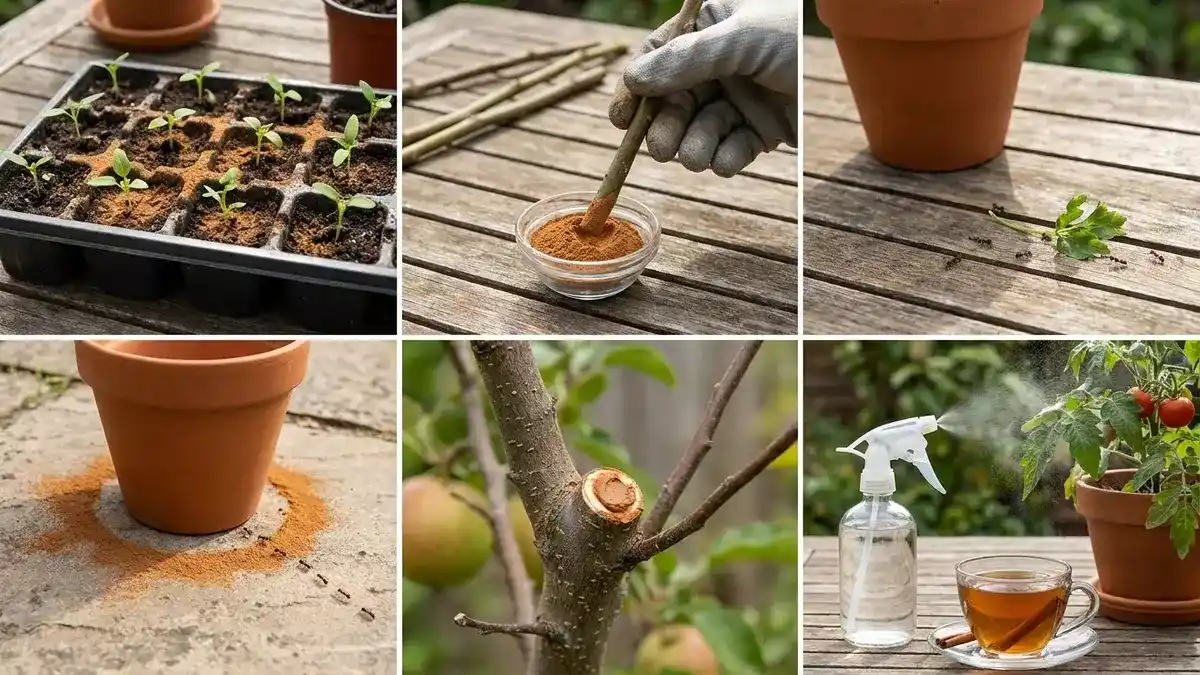
1. Eradicate Damping-Off Disease in Seed Trays
Damping-off is a heartbreaking fungal condition that attacks newly sprouted seeds, causing the tender stems to rot at the soil line and collapse. It thrives in the warm, humid, and still air conditions typical of indoor seed-starting setups.
How to Apply: After sowing your seeds and watering the soil for the first time, take a fine mesh sieve and lightly dust the surface of the soil mix with ground cinnamon.
Why It Works: The spice creates a microscopic antifungal barrier on the soil surface. This layer prevents mold spores from germinating around the base of your vulnerable sprouts without restricting vital oxygen flow to the emerging root systems.
2. A Safe, Natural Rooting Agent for Propagations
When duplicating your favorite houseplants, herbs, or perennials via stem cuttings, protecting the raw, exposed tissue is critical to successful propagation. While commercial synthetic rooting powders work well, they often contain artificial chemicals.
How to Apply: Take your fresh plant cutting, moisten the tip slightly with water, and dip the exposed raw edge directly into a small dish of pure ground cinnamon before planting it into your potting medium or rooting plug.
Why It Works: Cinnamon acts as a gentle, broad-spectrum antiseptic. It effectively cauterizes and seals the open plant wound, blocking out waterborne bacteria and rot-inducing fungi, giving the cutting a clean, healthy head start to develop its own roots.
3. Disrupter of Pest Scent Trails and Soil Molds
If you notice a white, fuzzy mold developing on the surface of your container plants, or if ants have turned your raised beds into a highway system, cinnamon can restore order.
How to Apply: Generously sprinkle the dry spice directly over any fuzzy patches of soil mold, or form a continuous line of cinnamon around the perimeter of pots and planters.
Why It Works: The strong, pungent aroma of the spice completely masks the pheromone scent trails that ants rely on for navigation, forcing them to abandon the area. Simultaneously, the direct contact of the powder neutralizes surface molds and discourages irritating pests like fungus gnats from laying eggs in the topsoil.
4. An Organic Protective Bandage for Pruning Wounds
Every time you use your bypass pruners to shape a fruit tree, trim back woody herbs, or pinch off tomato suckers, you leave behind an open wound. In humid or rainy weather, these open cuts are prime entry points for airborne disease spores.
How to Apply: Immediately after making a pruning cut, press a fingertip covered in ground cinnamon directly onto the raw, exposed stem or branch wound.
Why It Works: The powder absorbs excess moisture from the sap, accelerating the plant’s natural callousing process. It essentially acts as a plant-safe bandage that keeps pathogens at bay while the plant heals itself.
5. A Homemade Foliar Spray for Leaf Spots
When faint brown spots, powdery mildew, or yellow rings begin to distort the leaves of your houseplants or garden vegetables, catching the infection early is paramount.
DIY Fungal Spray Recipe
1 Teaspoon of Pure Ground Cinnamon
2 Cups of Warm Water
1 Fine Mesh Strainer or Coffee Filter
1 Clean Spray Bottle
Application Directions
Steep the cinnamon in the warm water for several hours to extract the active cinnamaldehyde. Pour the mixture through a coffee filter or fine strainer to remove any solid grit that could clog your equipment, and transfer the liquid into your spray bottle. Mist the solution lightly over the tops and bottoms of the affected leaves once every few days to halt the spread of mild fungal issues.
Crucial Cautions: Avoid These Common Mistakes
While cinnamon is an outstanding natural remedy, it must be used with care. Applying it incorrectly can inadvertently harm your garden.
Avoid Over-Application: It can be tempting to heavily coat your soil, but a thick layer of cinnamon will dry into an impermeable, hard crust. This crust blocks water from penetrating down to the root zone, inadvertently dehydrating your plants. A light, translucent dusting is all that is required.
Stick to Pure Baking Cinnamon: Only use 100% pure ground cinnamon. Never use cinnamon sugar blends, pumpkin spice mixes, or flavored varieties. The added sugars in these kitchen mixes will feed harmful bacteria and attract unwanted pests like wasps and rodents to your garden beds.
Be Careful with Concentrated Essential Oils: High-quality cinnamon essential oil is vastly more potent than the dry powder. If sprayed directly onto foliage without massive dilution, the concentrated oils will cause severe chemical burns on delicate leaf tissues.
Know Your Sensitive Plants: Certain exotic houseplants with thin, delicate foliage—such as prayer plants (Marantaceae) and certain varieties of orchids—can react poorly to direct cinnamon applications. Always test a single leaf before treating the entire plant.
Conclusion: A Smarter, Greener Way to Garden
Embracing cinnamon in your seasonal garden care is an excellent way to transition toward a more sustainable, organic lifestyle. By replacing synthetic chemicals with this affordable, aromatic pantry staple, you can safely protect seedlings, encourage root development, and ward off destructive pests. The next time your plants face a fungal threat, skip the commercial chemical aisle and look no further than your spice rack.
Frequently Asked Questions
1. Can I use expired cinnamon from my pantry in the garden?
Yes! While cinnamon loses its culinary potency and aroma over years of sitting in a cupboard, it still retains its core antifungal and antibacterial chemical properties. Using older, expired cinnamon is a fantastic, zero-waste way to utilize the spice rather than throwing it away.
2. Is cinnamon safe to use around garden earthworms and beneficial microbes?
When applied in recommended, light amounts, pure ground cinnamon will not harm earthworms or deep-soil microbiomes. Because it remains primarily on the surface or right at the point of a cutting, it selectively targets surface molds and specific plant pathogens without disrupting the complex ecosystem living underneath the dirt.
3. Which type of cinnamon is best for the garden: Ceylon or Cassia?
Both common commercial varieties work well for gardening purposes. Cassia cinnamon (the standard, highly affordable variety found in most U.S. grocery stores) actually tends to have a slightly higher natural concentration of cinnamaldehyde than the more expensive Ceylon (“true”) cinnamon, making it both the more effective and budget-friendly choice for outdoor use.
4. Will rain wash away the cinnamon I applied to my outdoor plants?
Yes. Because ground cinnamon is a loose, natural powder, outdoor rainstorms or heavy overhead watering will eventually wash it off the leaves and into the soil. For continuous protection against pests or leaf spots during rainy seasons, you will need to reapply a light dusting or spray once the foliage dries completely.
5. Can cinnamon completely cure a severe, advanced plant infestation?
Cinnamon is primarily a preventative measure and a treatment for early-stage issues. If a plant is suffering from a massive, systemic fungal infection or a severe pest infestation, cinnamon alone will not save it. In those advanced scenarios, prune away heavily damaged sections, improve air circulation, and combine cinnamon with other targeted organic remedies like neem oil or yellow sticky traps.