
Table of Contents
- 1. Beyond the Ovaries: Why PCOS is Officially Being Renamed PMOS
- 2. The Fatal Flaw of the Old Name
- 3. Deconstructing the New Acronym: What PMOS Means
- 3.1. 1. Polyendocrine (Multiple Hormone Systems)
- 3.2. 2. Metabolic (Energy and Insulin Processing)
- 3.3. 3. Ovarian (Reproductive Health)
- 4. The Multi-System Symptoms of PMOS
- 5. A 14-Year Global Effort Published in The Lancet
- 6. The Three-Year Transition Plan: What Patients Should Expect
- 7. Conclusion
- 8. Frequently Asked Questions
- 8.1. Does the name change mean the diagnostic criteria or treatments for my condition are changing right now?
- 8.2. Will I need to get a new medical diagnosis under the name PMOS?
- 8.3. Why is insulin resistance so prominently emphasized in the new PMOS framework?
- 8.4. What is the next linguistic change researchers are trying to solve?
- 8.5. How can a whole-body name improve care at a regular doctor’s office?
Beyond the Ovaries: Why PCOS is Officially Being Renamed PMOS
A complex hormonal and metabolic disorder that affects roughly 1 in 8 women worldwide is undergoing its most significant historical transformation. After decades of medical debate, international confusion, and patient advocacy, the familiar acronym PCOS (Polycystic Ovary Syndrome) is officially being retired.
Moving forward, the medical community is transitioning the condition to a far more accurate title: Polyendocrine Metabolic Ovarian Syndrome, or PMOS.
While a structural name change might initially sound like administrative medical housekeeping, experts emphasize that this shift is a monumental win for patient care. The new label accurately redefines the condition as a systemic, whole-body endocrine and metabolic disorder, moving the diagnostic focus away from a single organ and toward comprehensive, multi-system wellness.
Beyond the Ovaries Why PCOS is Officially Being Renamed PMOS

The Fatal Flaw of the Old Name
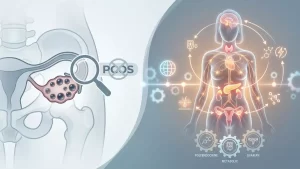
The term “Polycystic Ovary Syndrome” has plagued patients and clinicians since its inception because it is visually and structurally misleading. The word polycystic explicitly implies that a patient must have abnormal, fluid-filled ovarian cysts to qualify for a diagnosis.
In reality, reproductive endocrinologists have long known that individuals with this syndrome do not possess abnormal ovarian cysts.
[Old Misconception: "PCOS"]  ➔ Focuses on Ovarian Cysts (Visually Misleading)
[New Reality: "PMOS"]        ➔ Focuses on Multiple Hormone Systems & Metabolism
What is actually visible on a standard pelvic ultrasound are small, underdeveloped follicles—completely normal, healthy cellular structures where eggs are meant to mature but have paused in their development due to systemic hormone imbalances.
 Why People Are Misting Vinegar Under Their Beds: The Science and Strategy Behind the Trend
This semantic error has caused immense harm. For decades, thousands of women presenting with severe metabolic and hormonal symptoms were routinely dismissed or denied a diagnosis simply because an ultrasound technician did not find “cysts” on their ovaries.
The issue reached a boiling point as early as 2012, when a National Institutes of Health (NIH) panel explicitly declared the name “PCOS” a “distraction and an impediment to progress,” urging a shift toward language that accurately reflected whole-body chemistry.
Deconstructing the New Acronym: What PMOS Means
The transition to Polyendocrine Metabolic Ovarian Syndrome (PMOS) provides a precise roadmap of how the condition actually operates across multiple bodily systems:

1. Polyendocrine (Multiple Hormone Systems)
This component acknowledges that the syndrome is not a localized ovarian problem. It involves a web of competing hormone networks, primarily driven by elevated levels of androgens (male-typed hormones like testosterone) and signaling disruptions in the pituitary gland.
2. Metabolic (Energy and Insulin Processing)
Perhaps the most crucial addition, metabolic underscores that the underlying engine of this condition is frequently insulin resistance. The body struggles to efficiently convert glucose into cellular energy, placing patients at a significantly higher long-term risk for type 2 diabetes, cardiovascular stress, and weight fluctuations.
3. Ovarian (Reproductive Health)
The ovaries are still included in the title, but they are properly positioned as one of several affected endpoints, rather than the absolute root cause of the disorder.
The Multi-System Symptoms of PMOS
Because PMOS impacts both hormones and metabolism, its clinical presentation extends far beyond reproductive health, frequently affecting dermatology, energy levels, and mental well-being.
| Impacted System | Common Clinical Manifestations |
| Dermatological | Severe, stubborn cystic acne along the jawline; unyielding hair thinning on the scalp (androgenic alopecia); and excess coarse hair growth on the face, chest, or back (hirsutism). |
| Metabolic | Rapid, unexplained weight gain; intense sugar or carbohydrate cravings; and difficulty managing blood glucose levels due to hidden insulin resistance. |
| Reproductive | Irregular, highly unpredictable periods; light or completely missing menstrual cycles (amenorrhea); and ovulatory infertility challenges. |
| Psychological | Significantly elevated baseline risks for chronic anxiety, clinical depression, and severe brain fog or fatigue. |
A 14-Year Global Effort Published in The Lancet
The historic renaming of this condition was not decided overnight. It represents the culmination of a massive 14-year global initiative published formally in the prestigious medical journal The Lancet.
The endeavor was spearheaded by Professor Helena Teede, a leading endocrinologist at Monash Health and director of the Monash Centre for Health Research and Implementation. To ensure the new title accurately served the community, the renaming process integrated data from:
Over 22,000 global survey responses from patients and healthcare providers.
Intense international workshops spanning multiple continents.
The unified backing of 56 premier patient advocacy and professional medical organizations, including international leaders like Terhi Piltonen, Anuja Dokras, Rachel Morman, the AE-PCOS Society, and the patient-led group Verity.
“What we now know is that there is actually no increase in abnormal cysts on the ovary,” Professor Teede clarified, highlighting that correcting this core linguistic error will fundamentally change how future generations of doctors approach the syndrome.
The Three-Year Transition Plan: What Patients Should Expect
If you are a patient currently managing this condition, do not expect your medical charts or prescription labels to change by tomorrow morning.
To prevent widespread administrative confusion, public health agencies have established a structured three-year transition period. The medical ecosystem will gradually implement the term PMOS across all documentation, leading up to its official, full deployment in the 2028 International Guideline Update.
[2026: Lancet Publication] ➔ [3-Year Handover Window (Dual-Naming)] ➔ [2028: Full PMOS Guideline Integration]
During this multi-year handover, clinics, period-tracking applications, insurance frameworks, and educational materials will intentionally use both names together (e.g., “PMOS, formerly known as PCOS”). This ensures that individuals searching online databases using the old, decades-old terminology can still easily find up-to-date, accurate care instructions.
Conclusion
Words carry immense weight in medicine. By permanently discarding the misleading label of “polycystic cysts,” the transition to PMOS ensures that future research funding, diagnostic criteria, and clinical treatments will finally prioritize insulin resistance, long-term cardiovascular health, and mental well-being. It validates the lived experiences of millions of women, assuring them that their symptoms are real, systemic, and far broader than a single organ.
Frequently Asked Questions
Does the name change mean the diagnostic criteria or treatments for my condition are changing right now?
No, your current treatments and diagnostic baselines remain the same. The change to PMOS is a linguistic correction designed to improve diagnostic accuracy and broaden clinical perspective. Your existing prescriptions—whether they involve insulin-sensitizing medications (like metformin), hormonal birth control, or specific lifestyle adaptations—will continue to be managed based on your individual symptoms.
Will I need to get a new medical diagnosis under the name PMOS?
No. If you have already been diagnosed with PCOS under the old criteria, your diagnosis automatically transfers over to PMOS. The three-year transition window is purely administrative, designed to update electronic health records, insurance coding systems, and medical textbooks worldwide.
Why is insulin resistance so prominently emphasized in the new PMOS framework?
Insulin resistance is the primary metabolic driver of the condition for the vast majority of patients. When your cells become numb to insulin, your pancreas compensates by pumping out excess amounts of the hormone. These high insulin levels directly signal the ovaries to overproduce androgens (like testosterone), which halts egg maturation and triggers acne, hair changes, and irregular cycles.
What is the next linguistic change researchers are trying to solve?
Now that the overarching syndrome has been renamed, scientists are working to update the foundational ultrasound terminology. The current imaging phrase “polycystic ovarian morphology” (which describes how the ovary looks under a scan) still uses the inaccurate word polycystic. Researchers are actively collaborating to replace this phrase with modern, accurate diagnostic imaging language.
How can a whole-body name improve care at a regular doctor’s office?
Many patients do not begin their medical journey with an endocrinologist; they first seek help from a family practitioner for fatigue, a dermatologist for stubborn acne, or a gynecologist for a missing period. A whole-body name like PMOS prompts doctors across all specialties to look at the big picture—checking metabolic markers and hormone panels—rather than hyper-focusing purely on a reproductive ultrasound.