
Table of Contents
- 1. Why Cats Mess With Your Indoor Plants
- 2. 8 Smart and Safe Ways to Cat-Proof Your Plants
- 2.1. 1. Create a Plastic Fork Guard
- 2.2. 2. Move Greenery Into Glass Terrariums
- 2.3. 3. Seal the Base With Custom Protective Lids
- 2.4. 4. Layer the Topsoil With Decorative Pebbles
- 2.5. 5. Deploy the Toothpick Grid Method
- 2.6. 6. Fasten Fabric Mesh Covers Over the Pots
- 2.7. 7. Showcase Your Plants in Upcycled Birdcages
- 2.8. 8. Isolate Vulnerable Varieties in Wire Pet Crates
- 3. Additional Tips for a Harmonious Home
- 4. Final Thoughts
- 5. Frequently Asked Questions
- 5.1. Will putting coffee grounds in plant soil keep cats away?
- 5.2. Can I use cayenne pepper to stop my cat from digging?
- 5.3. How can I tell if a houseplant is toxic to my cat?
- 5.4. Why does my cat specifically target my hanging plants?
- 5.5. Does spraying water on my cat stop them from eating plants?
8 Clever Ways to Protect Your Houseplants From Curious Cats
If you are a plant parent and a cat lover, you already know the struggle. One moment you are admiring your thriving monstera, and the next, you catch your feline friend using the terra-cotta pot as a personal sandbox. Cats are naturally drawn to houseplants. To a curious kitty, a pot full of loose dirt looks like the ultimate luxury restroom, a perfect spot for a nap, or a fresh snack bar.
While this behavior is completely normal for felines, it can be incredibly frustrating for you and dangerous for them—especially if you own varieties that are toxic to pets. Fortunately, you don’t have to choose between your furry best friend and your indoor jungle.
By understanding feline instincts and implementing a few clever, budget-friendly physical barriers, you can create a peaceful cohabitation space. Here are eight practical, cat-approved strategies to safeguard your indoor garden today.
8 Clever Ways to Protect Your Houseplants From Curious Cats
Why Cats Mess With Your Indoor Plants
Before diving into the solutions, it helps to understand why your cat won’t leave your pothos alone. In the wild, felines use loose soil to bury their waste. Indoors, potting mix mimics this texture perfectly. Furthermore, cats chew on leaves for digestion, to relieve boredom, or simply because they enjoy the rustling sound of the foliage. Identifying whether your cat is a digger, a chewer, or a climber will help you choose the best defense mechanism below.
8 Smart and Safe Ways to Cat-Proof Your Plants
1. Create a Plastic Fork Guard
If your primary issue is a cat digging up potting soil, household plastic forks are a quick and inexpensive deterrent.
By inserting plastic forks directly into the dirt with the prongs facing upward, you create an uncomfortable grid. When your cat reaches into the pot to scratch or dig, their paws encounter the dull prongs, discouraging them from continuing.
Why it works: It does not hurt your pet, but it removes the satisfying texture of loose soil.
Bonus benefit: This method keeps the root systems undisturbed, allowing your plants to absorb nutrients safely.
2. Move Greenery Into Glass Terrariums
For smaller, moisture-loving varieties, a glass terrarium offers the ultimate stylish protection. Enclosing your greenery completely eliminates any chance of nibbling or pawing.
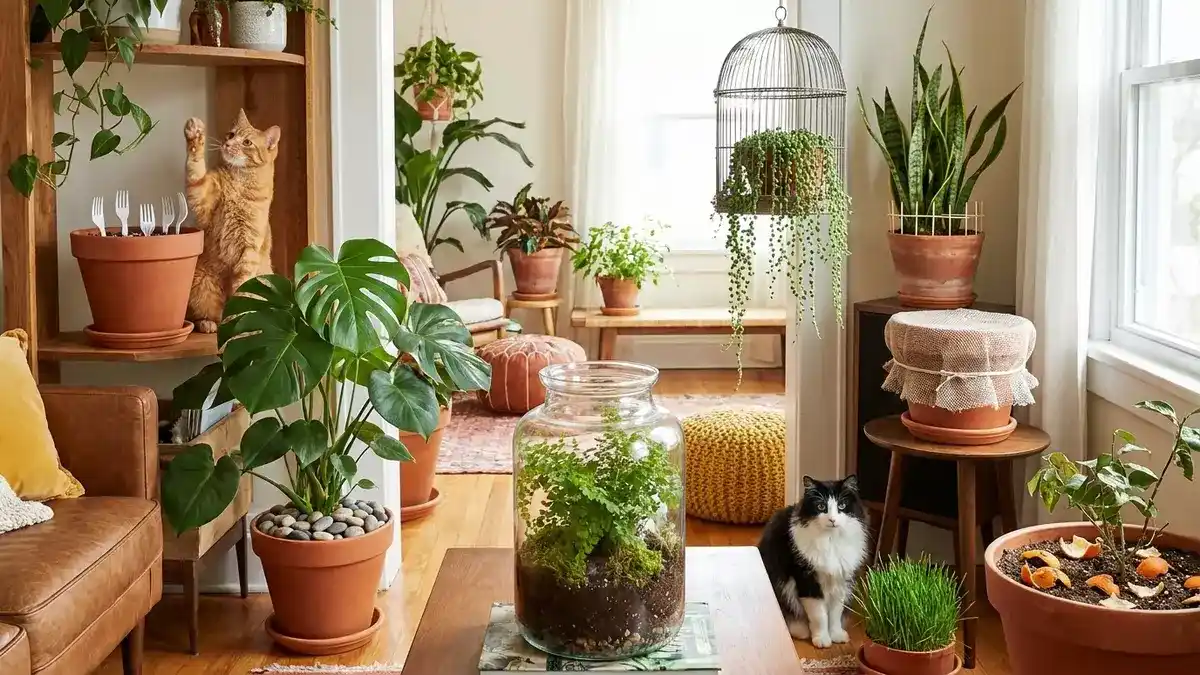
Terrariums act as a beautiful design feature in your home while creating a microclimate that locks in humidity. Plants like nerve plants, ferns, and fittonias thrive in these setups, while your cat is left with nothing but a smooth glass surface to look at.
3. Seal the Base With Custom Protective Lids
If you want a clean, minimalist aesthetic, a rigid plastic or wooden soil lid is an excellent option. These covers fit snugly over the rim of your round planter, featuring a single cutout in the center for the main plant stem.
Because the soil is entirely sealed away, your cat cannot use the pot as a litter box or scratch the dirt onto your clean floors. It effectively removes the temptation by hiding the prize entirely.
4. Layer the Topsoil With Decorative Pebbles
For an eco-friendly and visually appealing barrier, try top-dressing your soil with a thick layer of large, smooth river rocks or decorative pebbles.
Cats love soft, loose earth that is easy to move. They absolutely hate heavy, hard stones that don’t budge under their paws. Ensure the stones are large enough that your cat cannot easily bat them out of the pot, and pack them tightly across the surface. Water will still easily drain through the cracks to nourish the roots.
5. Deploy the Toothpick Grid Method
Similar to the plastic fork trick, utilizing wooden toothpicks is a subtle way to protect medium-sized planters without altering your home decor.
How to apply: Push standard toothpicks halfway into the dirt, spacing them roughly two to three inches apart across the entire surface.
The result: The vertical sticks create a mini “forest” that makes it impossible for a cat to comfortably step into the pot or sit down. Within a few days, your cat will likely lose interest in the area entirely.
6. Fasten Fabric Mesh Covers Over the Pots
For large potted trees like a fiddle leaf fig or a monstera, fine mesh netting is a lifesaver. You can purchase specialized fabric pot covers or simply cut a piece of durable window screen mesh to fit the top of your container.
Secure the edges around the rim of the pot using twine or the planter’s lip. The breathable fabric allows you to pour water directly through it and lets the soil breathe, but completely blocks your cat’s claws from reaching the dirt.
7. Showcase Your Plants in Upcycled Birdcages
Who says pet-proofing can’t be fashionable? If you have cascading or trailing plants like English Ivy or a String of Pearls, an old wire birdcage makes a stunning protective enclosure.
Placing the small pot inside a vintage metal birdcage allows the vines to grow beautifully through the bars while keeping the main root ball and tender leaves completely out of your cat’s reach. Hang the cage from the ceiling or place it on a side table for an instant bohemian decor upgrade.
8. Isolate Vulnerable Varieties in Wire Pet Crates
When dealing with a highly persistent cat or a plant variety that is mildly toxic, maximum security is required. Repurposing a wire pet dog crate into a temporary greenhouse is a foolproof strategy.
The open wire grid ensures your plant still receives 100% of its required sunlight and airflow, but the latched door guarantees your cat cannot chew on the leaves. While it may look a bit industrial, it provides absolute peace of mind when you are away from home.
Additional Tips for a Harmonious Home
While physical barriers are incredibly effective, you can also manage your cat’s behavior through positive redirection.
Grow Cat Grass: Often, cats chew plants because they want greens in their diet. Providing a dedicated tray of fresh wheatgrass or catnip gives them a safe, legal outlet for their cravings.
Utilize Scent Deterrents: Felines have a highly sensitive sense of smell and detest citrus. Placing a few dried orange or lemon peels on top of the soil can naturally repel them away from the area.
Final Thoughts
You do not have to sacrifice your love for indoor gardening just because you own a curious pet. By utilizing simple, humane boundaries like decorative pebbles, mesh screens, or upcycled glass terrariums, you can protect your leafy investments while keeping your cat safe and happy. Experiment with a few of these methods to discover which one works best for your specific pet’s personality!
Frequently Asked Questions
Will putting coffee grounds in plant soil keep cats away?
While the strong scent of coffee grounds can act as a natural deterrent for some cats, it is generally not recommended. Caffeine is highly toxic to dogs and cats if ingested in large quantities. If your cat happens to lick the grounds off their paws, it could lead to a dangerous situation. Stick to safer alternatives like citrus peels or physical barriers.
Can I use cayenne pepper to stop my cat from digging?
It is best to avoid cayenne pepper or hot pepper flakes in your plant pots. While the smell can keep them away, the spicy powder can easily get trapped on their paws or in their fur. When your cat grooms themselves, the pepper can cause severe burning in their mouth and eyes, leading to unnecessary pain and distress.
How can I tell if a houseplant is toxic to my cat?
Before bringing any new greenery into your home, always check the ASPCA’s comprehensive database of toxic and non-toxic plants. Common household favorites like Lilies, Pothos, and Sago Palms are highly hazardous to felines, whereas Calatheas, Spider Plants, and Boston Ferns are completely pet-safe.
Why does my cat specifically target my hanging plants?
Cats are natural climbers and are highly attracted to motion. The dangling vines of a hanging plant moving in a gentle breeze look exactly like a cat toy. If your cat is jumping on shelves to reach them, try trimming the trailing vines shorter so they remain high out of reach, or use a closed terrarium method.
Does spraying water on my cat stop them from eating plants?
Using a spray bottle to discipline your cat is generally ineffective and can damage your bond with your pet. Cats do not connect the water spray with the plant; instead, they learn to associate the negative experience with you. It is much more effective to use passive physical barriers like mesh or pebbles, which protect the plant even when you aren’t in the room.