
Table of Contents
- 1. How to Make a Garlic Snake Plant Planter in 6 Easy Steps
- 2. Frequently Asked Questions
- 2.1. 1. Will the garlic bulbs sprout if left on top of the soil?
- 2.2. 2. How often should I water a snake plant?
- 2.3. 3. Can I use regular potting soil for this project?
- 2.4. 4. Why is a terracotta pot preferred for snake plants?
- 2.5. 5. Do the garlic bulbs help repel insects?
DIY Garlic Snake Plant Planter: A Natural Indoor Plant Styling Idea
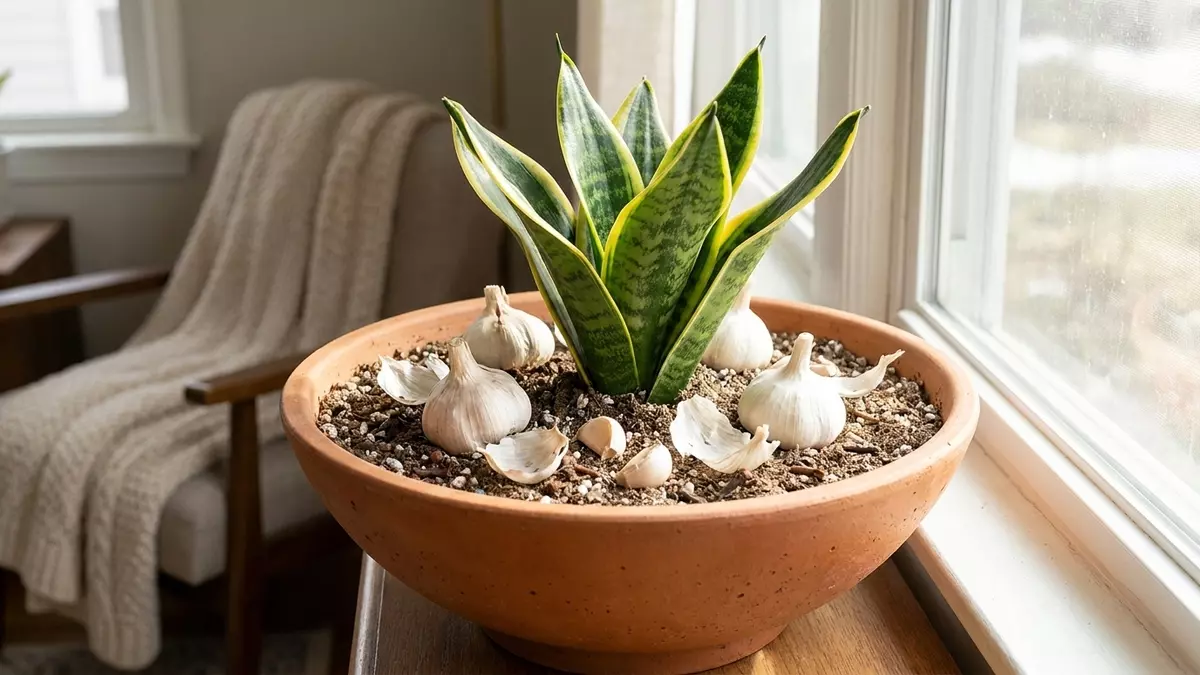
Garlic and snake plants may sound like an unusual pairing, but together they create a simple, earthy planter that looks fresh and practical. The upright leaves bring strong indoor greenery, while the garlic bulbs add a natural garden-inspired touch around the soil surface.
This simple garlic snake plant planter brings a cozy indoor garden feel with very little effort.
DIY Garlic Snake Plant Planter A Natural Indoor Plant Styling Idea
How to Make a Garlic Snake Plant Planter in 6 Easy Steps
Pick a snake plant with firm, upright leaves and no yellowing or mushy spots. A medium-sized plant works best because it leaves enough space around the base for the garlic bulbs.
Use a wide terracotta or ceramic pot with drainage holes. Snake plants dislike wet soil, so good drainage is important. Add a thin layer of small stones at the bottom if needed.
Fill the pot with cactus or succulent potting mix. This type of soil keeps the roots from sitting in water and helps the plant stay healthy indoors.
Place the snake plant in the center of the pot. Hold it upright, then gently fill soil around the roots. Press the soil lightly so the plant feels stable but not packed too tightly.
Place whole garlic bulbs on top of the soil around the snake plant. Keep the bulbs slightly spaced apart for a balanced look. You can also add a few loose garlic cloves and dry skins for a more natural, styled finish.
Place the planter near a bright window, but avoid harsh direct afternoon sun. Water only when the soil feels dry. Wipe the snake plant leaves occasionally so the display stays clean and fresh.
Frequently Asked Questions
1. Will the garlic bulbs sprout if left on top of the soil?
Yes, if the soil becomes damp or if there is high humidity, the garlic bulbs may eventually sprout green shoots. If you prefer to keep them purely decorative without growing new garlic greens, ensure you keep the top layer of soil dry and replace the bulbs when they start to soften or sprout.
2. How often should I water a snake plant?
Snake plants are highly drought-tolerant succulents that are prone to root rot if overwatered. You should only water the planter when the soil has completely dried out. Depending on the humidity and light levels in your home, this usually means watering once every 2 to 4 weeks.
3. Can I use regular potting soil for this project?
It is not recommended. Regular potting soil retains moisture for too long, which can cause the snake plant’s roots to rot and make the decorative garlic bulbs decompose quickly. Always opt for a loose, fast-draining cactus or succulent mix.
4. Why is a terracotta pot preferred for snake plants?
Terracotta is a porous clay material that allows moisture to evaporate through the walls of the pot. This helps the soil dry out more evenly and prevents water from pooling at the bottom, creating an ideal environment for low-water plants.
5. Do the garlic bulbs help repel insects?
Garlic naturally contains sulfur compounds that act as a mild deterrent for certain pests. While laying whole, unpeeled bulbs on the surface won’t fully eliminate an active insect infestation, the natural scent can help discourage annoying soil pests like fungus gnats from settling into the planter.